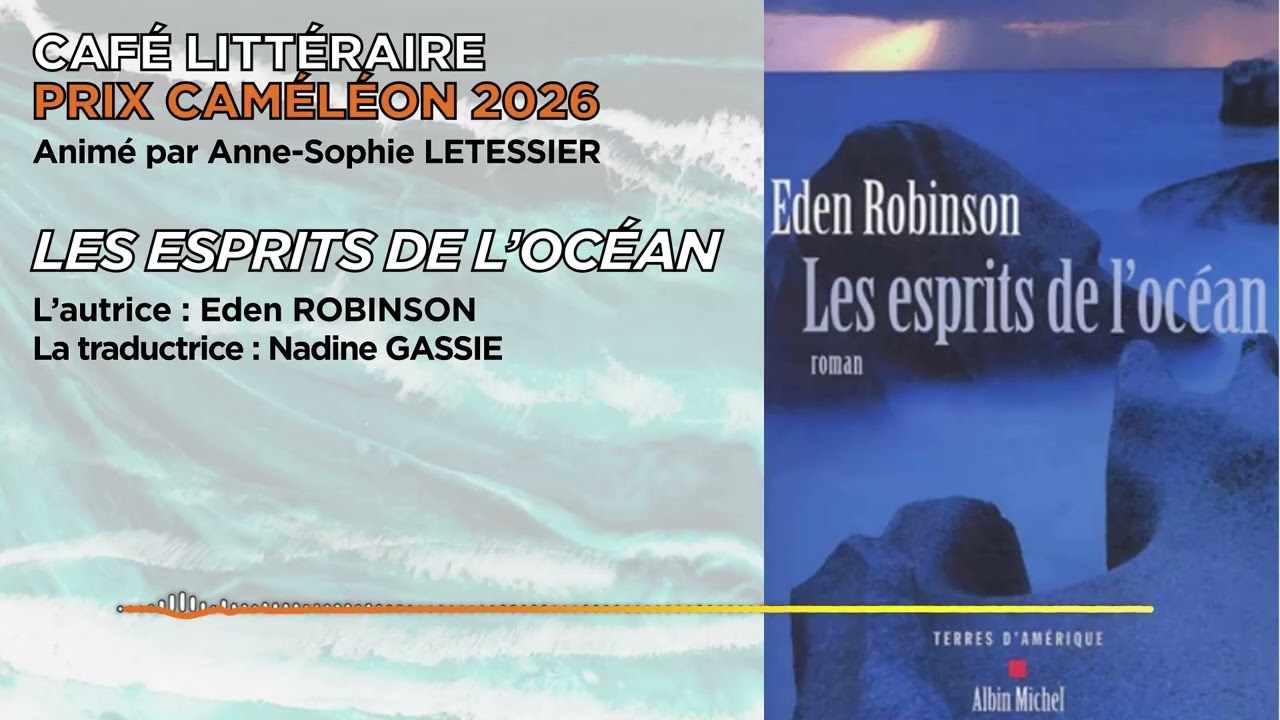
BU | Prix Caméléon 2026 : café littéraire "Les esprits de l’océan" de Eden Robinson par AS Letessier
Keywords
Summary
200 words
Critical Evaluation
Value of the Information & Strength of the Argument
The video provides valuable insights into Eden Robinson’s novel, offering contextual information about Indigenous history and culture that enriches understanding. The speaker’s argumentation is solid, as she grounds her analysis in specific examples from the text and references real events and artworks. She effectively argues that the novel should be read with attention to Indigenous protocols and the politics of representation, avoiding a purely anthropological or appropriative reading. The discussion is well-structured and encourages critical thinking about the reader’s position.
Scientific Rigor, Source Quality, Title Accuracy
The speaker demonstrates scientific rigor by situating her analysis within academic discourse on Indigenous literatures and citing specific works, such as Kent Monkman’s art and Rebecca Belmore’s installation ‘1181’. She also references historical events like the Trail of Broken Treaties and the case of Leonard Peltier. The title accurately reflects the content, as it is a literary café discussion. The sources mentioned are credible, though not all are formally cited with URLs in the video description.
171 words
Title / Content Match
The title accurately reflects the content: a literary café discussion about Eden Robinson's novel, part of the Prix Caméléon series.
Quality & Reliability
8/10
The video is an academic discussion led by a specialist in Canadian literature, providing contextual and critical insights. It is well-structured and references verifiable works and events, though it is not a peer-reviewed source.
Key Moments
Markers derived by PSI from the transcript: the creator did not define chapters.
- Introduction and acknowledgments
- Speaker's background and positionality
- Overview of Eden Robinson's biography and works
- Discussion of themes: residential schools and missing women
- References to American Indian Movement and Leonard Peltier
- Exploration of land, territory, and Indigenous protocols
- Concluding remarks and workshop invitation
Cited Sources
- Prix Caméléon official page — Mentioned as the official page for the Prix Caméléon, providing information about the literary prize and related events.
- BU Lyon 3 LinkedIn page — LinkedIn page of the university libraries, mentioned in the description as a contact point.
Concurring Sources
- Prix Caméléon official page — The official page for the Prix Caméléon, which includes information about the literary café and the novel.
Contribution & Novelties
The video offers a nuanced academic perspective on Eden Robinson’s ‘Monkey Beach’, emphasizing the importance of reading Indigenous literature with cultural sensitivity and awareness of historical contexts. It provides valuable background on the Haisla nation and the political issues surrounding Indigenous rights in Canada, which may be new to many viewers. The discussion encourages a critical examination of the reader’s own position and expectations.
Pour aller plus loin :
- Monkey Beach (novel) — Wikipedia article providing plot summary and background.
- Eden Robinson — Wikipedia article on the author, including her biography and works.
- Residential schools in Canada — Wikipedia article on the residential school system, relevant to the trauma discussed.
- Missing and Murdered Indigenous Women — Wikipedia article on the crisis of missing and murdered Indigenous women in Canada.
- American Indian Movement — Wikipedia article on the activist organization referenced in the novel.
143 words
Radar Profile
The radar profile shows high scores in information quantity, quality, and reliability, with a slightly lower technical level, reflecting the accessible yet scholarly nature of the discussion.