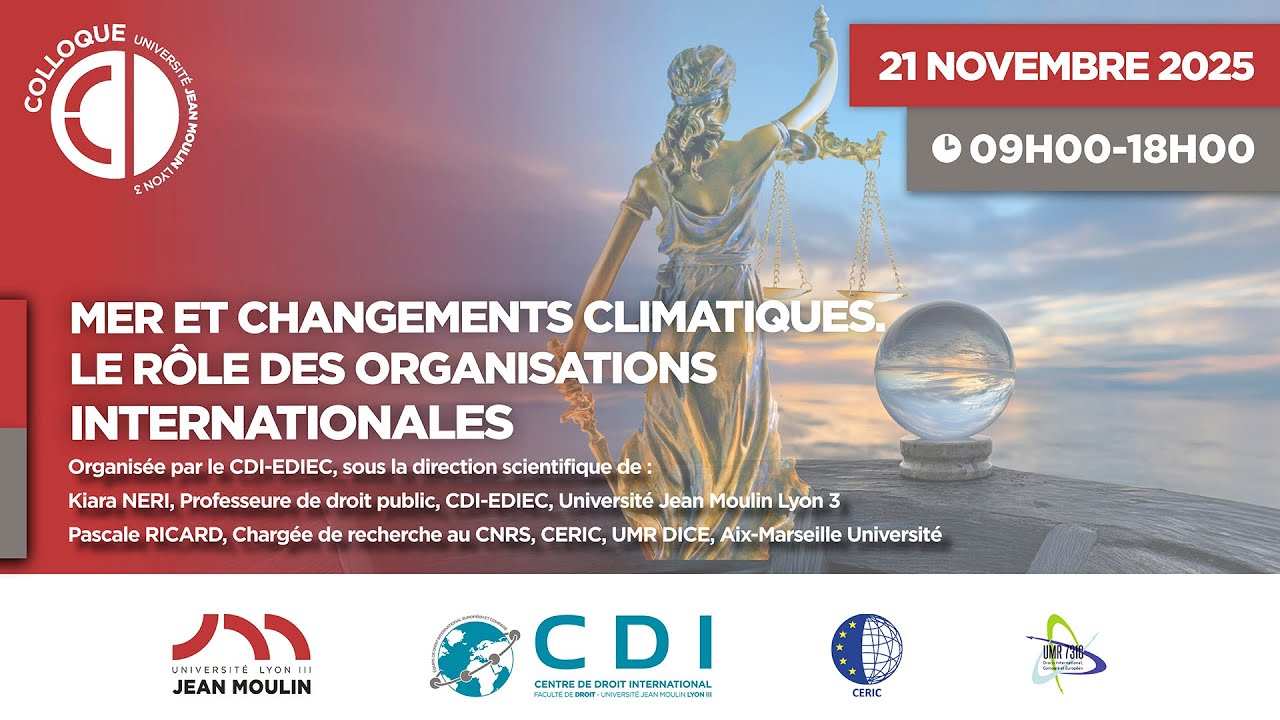
Mer et changements climatiques | Stratégie de l’Organisation maritime internationale, P. MAIZIERES
Keywords
Summary
213 words
Critical Evaluation
Value of the Information & Strength of the Argument
The talk provides valuable insider insights into the IMO negotiations, explaining the technical and political complexities of decarbonizing shipping. The argumentation is solid, based on official data and the speaker’s direct experience. He clearly explains the different policy options and the reasons for the current deadlock, offering a balanced view that acknowledges both the achievements and the shortcomings of the IMO strategy.
Scientific Rigor, Source Quality, Title Accuracy
The speaker references UNCTAD and IMO data, and mentions the IPCC and CITEPA reports. The sources are credible, though not always cited with specific references. The title accurately reflects the content. The talk is an expert opinion, not a peer-reviewed study, but it is grounded in professional experience and official data.
128 words
Title / Content Match
The title accurately reflects the content, which focuses on the IMO's strategy for reducing shipping emissions in the context of climate change.
Quality & Reliability
8/10
The speaker is a practitioner directly involved in IMO negotiations, providing insider perspective. The content is well-structured, references official IMO and UNCTAD data, and acknowledges the non-binding nature of the strategy. However, it is an opinion/expert talk, not peer-reviewed, and some claims lack specific citations.
Key Moments
Markers derived by PSI from the transcript: the creator did not define chapters.
- Introduction: speaker's background and disclaimer.
- Quiz: location of IMO headquarters (London).
- Overview of shipping fleet and emissions: 110,000 ships, 35,000 large vessels responsible for 85% of emissions.
- Shipping accounts for 3% of global emissions, equivalent to 6th largest emitter.
- Three levers: energy, efficiency, sobriety.
- IMO structure and key member states (flag states, shipowners).
- Revised strategy: net-zero by 2050, interim targets.
- Economic measures: carbon pricing, levy vs. credit trading.
- Adoption postponed due to lack of consensus, particularly from US and oil-producing countries.
Cited Sources
- UNCTAD (CNUCED) — Cited for data on number of ships and trade volumes.
- IMO (International Maritime Organization) — Main organization discussed; source of strategy and regulations.
- IPCC (Intergovernmental Panel on Climate Change) — Referenced for global warming potential of greenhouse gases.
- CITEPA — Cited for emission factors and global warming potential.
Concurring Sources
- IMO Fourth GHG Study 2020 — Provides official emission estimates for shipping.
Dissenting Sources
- Critiques of IMO strategy from environmental NGOs — Some NGOs argue the IMO targets are insufficient and lack binding measures.
Contribution & Novelties
The talk provides an insider’s perspective on the IMO negotiations, explaining the technical details of the Net-Zero Framework and the political dynamics that led to its postponement. It highlights the complexity of carbon pricing in a global sector and the challenges of achieving consensus among diverse stakeholders.
Pour aller plus loin :
- IMO Initial GHG Strategy — Official IMO page on GHG reduction.
- UNCTAD Review of Maritime Transport — Annual report with data on shipping and emissions.
- Carbon Pricing Leadership Coalition — Discusses carbon pricing mechanisms globally.
- International Chamber of Shipping — Industry perspective on decarbonization.
96 words
Radar Profile
The radar profile shows high scores in quantity and quality of information, reflecting the speaker's expertise and the comprehensive coverage of the topic. The technical level is moderate, making it accessible to a broad audience. The overall reliability is high due to the use of official data and insider knowledge.
💬 No comments were provided for analysis.