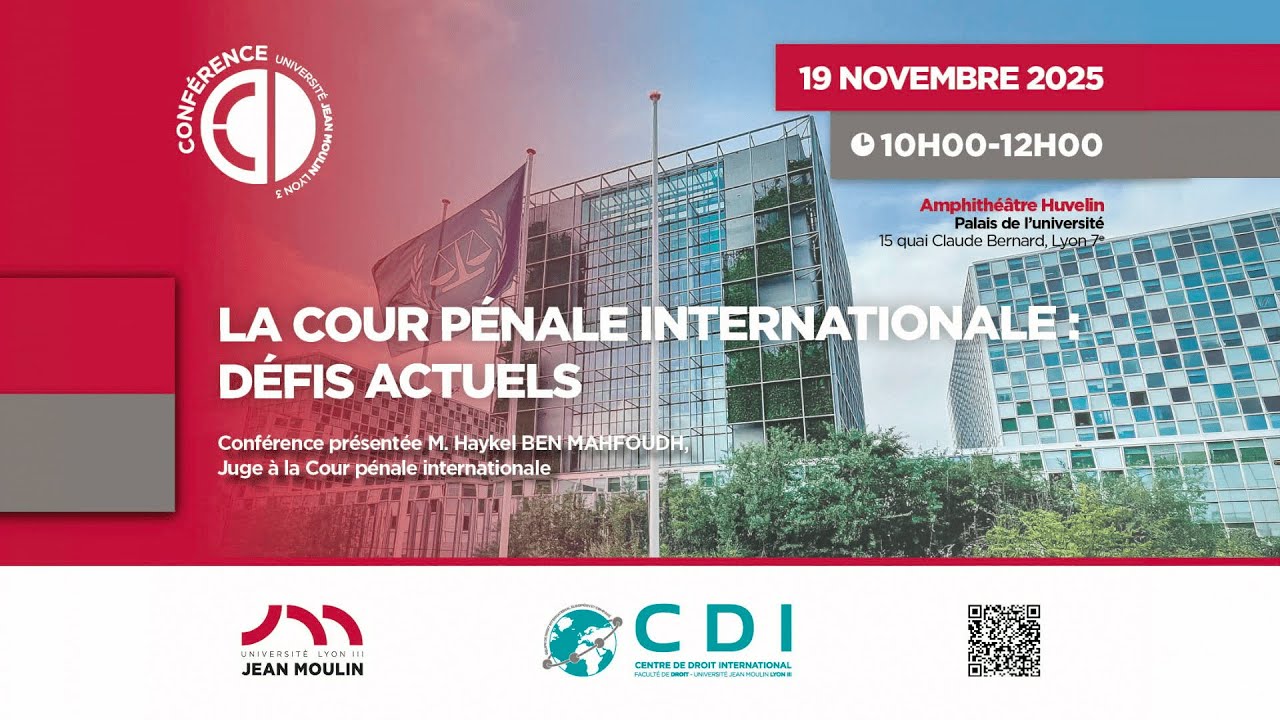
Conférence | La Cour pénale internationale : défis actuels
Keywords
Summary
152 words
Critical Evaluation
Value of the Information & Strength of the Argument
The lecture provides valuable insights from an insider perspective, offering a nuanced analysis of the ICC’s challenges. The argumentation is well-structured, logically progressing from the institutional framework to specific challenges. The speaker supports his points with concrete examples, such as the ICC’s investigations and rulings, and addresses counterarguments, such as criticisms of the Court’s effectiveness. The value lies in its expert testimony and balanced assessment, acknowledging both achievements and shortcomings.
Scientific Rigor, Source Quality, Title Accuracy
The speaker demonstrates scientific rigor by referencing specific legal cases and provisions of the Rome Statute. However, the lecture is primarily based on his professional experience and does not cite external sources. The title accurately reflects the content, focusing on current challenges. The speaker’s position as an ICC judge lends credibility, but the lack of citations limits the verifiability of some claims.
147 words
Title / Content Match
The title accurately reflects the content, which focuses on current challenges facing the ICC.
Quality & Reliability
8/10
The speaker is a judge at the ICC, providing insider perspective. The content is well-structured and grounded in legal expertise, though it is primarily an opinion/expert lecture rather than a peer-reviewed study.
Key Moments
Markers derived by PSI from the transcript: the creator did not define chapters.
- Introduction and thanks by the professor
- Judge BEN MAHFOUDH begins his lecture, outlining the ICC's history and current perception
- Discussion on the ICC's dual nature as an international organization and a judicial body
- Analysis of the ICC's dependence on state cooperation and the principle of complementarity
- Overview of the ICC's achievements, including landmark rulings and investigations
- Examination of political pressures and the absence of major powers from the ICC
- Discussion on the crisis of legitimacy and the existential challenges facing the ICC
- First part conclusion: tensions between independence and legitimacy
- Second part begins: fragmentation of international criminal justice and the need for reinvention
- Concluding remarks on the future of the ICC and the importance of justice
Cited Sources
- Rome Statute of the International Criminal Court — Referenced as the founding treaty of the ICC, establishing its jurisdiction and principles.
Concurring Sources
- ICC official website — Provides official information on the ICC's structure, cases, and activities, consistent with the lecture's content.
Dissenting Sources
- Criticism of the ICC from non-state parties — Some states, such as the US and Russia, have criticized the ICC's jurisdiction and impartiality, which contrasts with the lecture's positive portrayal of the Court's role.
Contribution & Novelties
The lecture provides an insider perspective on the ICC’s challenges, offering a nuanced analysis of its dual nature and the political tensions it faces. It contributes to the discourse on international criminal justice by highlighting the existential crisis and the need for reinvention.
Pour aller plus loin :
- International Criminal Court official website — Official information on the ICC’s mandate and activities.
- Complementarity principle — Explanation of the principle of complementarity in international criminal law.
- Rome Statute — Overview of the treaty establishing the ICC.
85 words
Radar Profile
The radar profile shows high scores in information quantity and quality, reflecting the speaker's expertise and the depth of content. The technical level is moderate, suitable for an academic audience. The overall reliability is high due to the speaker's position, though the lack of citations slightly reduces the score.
💬 Sur les 0 commentaires analysés, aucune tendance n'a pu être dégagée.