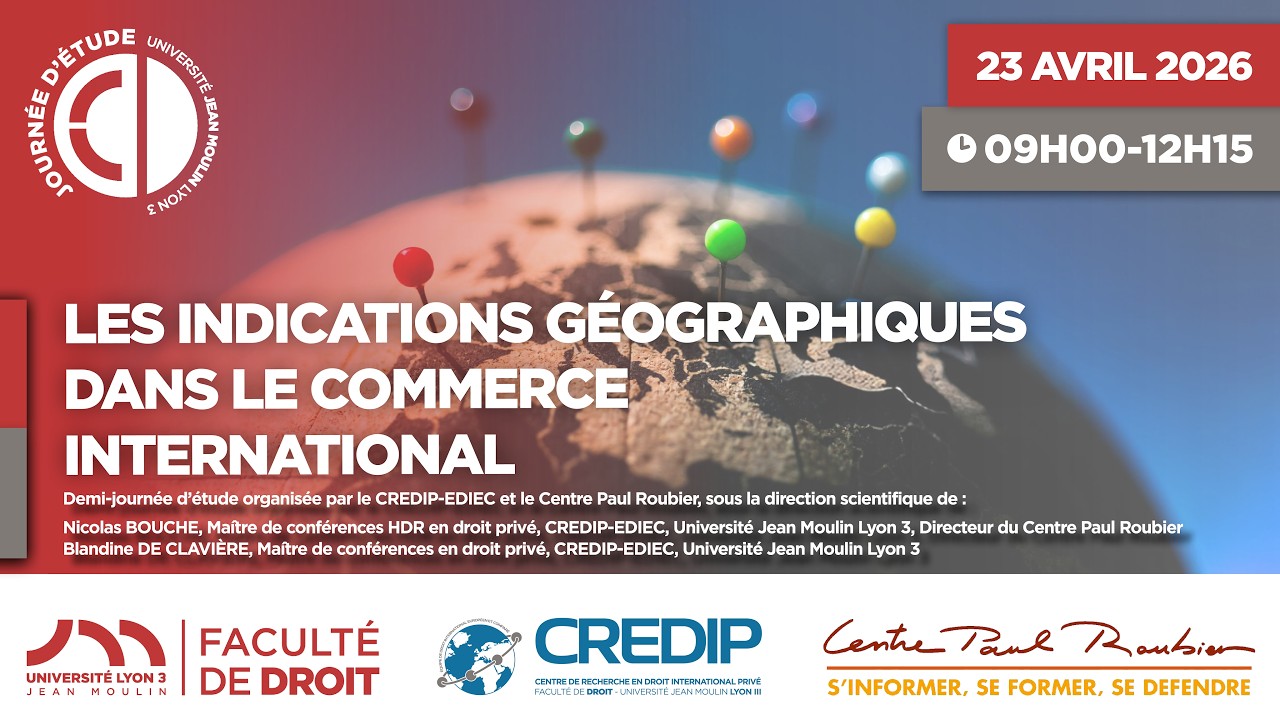
Les indications géographiques dans les traités internationaux de l’Union européenne
Keywords
Summary
185 words
Critical Evaluation
Value of the Information & Strength of the Argument
The presentation provides valuable insights into the EU’s strategic use of geographical indications in international trade. It effectively argues that the EU has shifted from a multilateral to a bilateral approach, using GIs as a key element in trade negotiations. The argumentation is solid, supported by references to specific treaties, regulations, and economic data. The speaker clearly explains the legal basis and the EU’s negotiating power, making a compelling case for the EU’s role as a normative power. However, the presentation is largely descriptive and could benefit from deeper critical analysis of the potential negative consequences of this strategy, such as its impact on developing countries or the risk of trade disputes.
Scientific Rigor, Source Quality, Title Accuracy
The presentation demonstrates scientific rigor through its structured analysis and references to international legal instruments. The speaker cites specific treaties (Paris Convention, Lisbon Agreement, TRIPS) and EU regulations, and mentions sources like the EU’s eAmbrosia database and the Origin GI website. However, the presentation is an oral talk without formal citations, and some claims rely on general sources. The title accurately reflects the content, which focuses on the role of GIs in EU international treaties. The speaker’s expertise and the academic context contribute to the reliability of the information.
216 words
Title / Content Match
The title accurately reflects the content, which focuses on the role of geographical indications in EU international treaties.
Quality & Reliability
8/10
The speaker is a legal scholar (Maître de conférences) specializing in private law, affiliated with CREDIP-EDIEC, and the presentation is part of an academic conference. The content is well-structured, references international treaties and EU regulations, and includes specific data (e.g., number of agreements, economic value of GIs). However, it is an oral presentation without formal citations, and some claims rely on general sources (e.g., EU websites).
Key Moments
Markers derived by PSI from the transcript: the creator did not define chapters.
- Introduction and thanks to organizers
- Discussion of US criticism of EU GI protection, examples of feta and parmesan
- Definition of geographical indications and their common features
- Overview of international legal frameworks: Paris Convention, Madrid Agreement, Lisbon Agreement
- Explanation of the TRIPS Agreement and its limitations
- EU's shift to bilateral agreements after 2006, with quantitative data
- Three functions of GIs in EU trade agreements: offensive, bargaining, normative diffusion
- EU's exclusive competence in trade policy and negotiating procedure
- Challenges and limits of the EU's strategy, including genericness and lack of multilateral register
Cited Sources
- eAmbrosia - EU geographical indications register — Mentioned as source for data on EU GIs
- Origin GI website — Mentioned as source for list of EU bilateral agreements on GIs
Concurring Sources
- European Commission - Geographical indications — Official EU page on GIs, supporting the economic importance and policy approach discussed.
Contribution & Novelties
The presentation offers a comprehensive overview of the EU’s strategy for protecting geographical indications in international treaties, highlighting the shift from multilateral to bilateral approaches. It provides a clear analysis of the legal basis and the EU’s negotiating power. The talk is particularly valuable for its synthesis of historical and contemporary legal frameworks.
Pour aller plus loin :
- TRIPS Agreement — The WTO agreement on Trade-Related Aspects of Intellectual Property Rights, which sets minimum standards for GI protection.
- Lisbon Agreement — WIPO-administered treaty on the protection of appellations of origin, revised by the Geneva Act.
- Geneva Act of the Lisbon Agreement — 2015 revision allowing intergovernmental organizations to join and expanding protection.
112 words
Radar Profile
The radar profile shows high scores in information quantity, quality, and reliability, with a slightly lower technical level, reflecting the presentation's focus on legal and policy aspects rather than technical details. The overall high scores indicate a well-structured and informative talk.