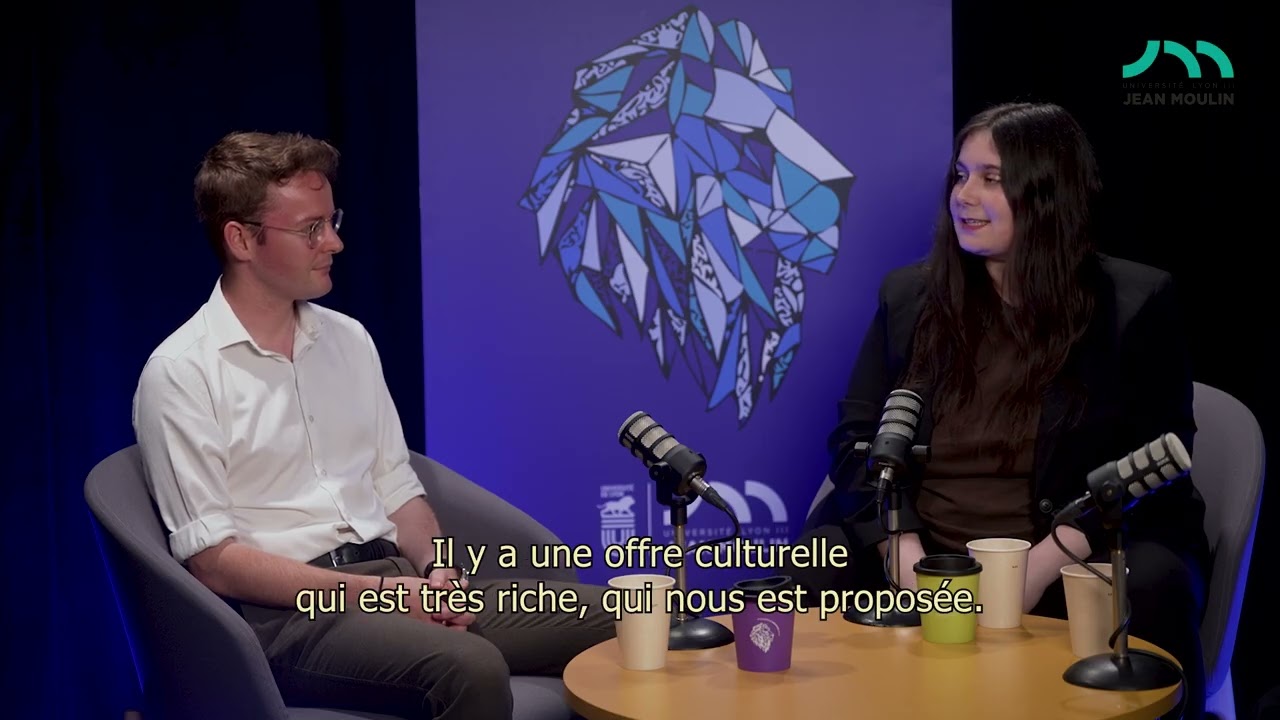
Podcast #1 de la Faculté des Humanités, Lettres et Sociétés
Keywords
Summary
148 words
Critical Evaluation
Value of the Information & Strength of the Argument
The value of the information lies in its authentic, first-hand accounts of the alumni’s experiences, providing practical insights into the humanities programs at Lyon 3. The argumentation is based on personal narratives rather than empirical evidence, but it is coherent and persuasive in illustrating the benefits of the programs, such as the importance of internships, associative engagement, and research opportunities. The alumni effectively argue that these experiences contributed to their professional development and adaptability.
Scientific Rigor, Source Quality, Title Accuracy
The scientific rigor is moderate; the content is testimonial and lacks citations or references to external sources. The quality of sources is limited to the personal experiences of the alumni, which are credible but not generalizable. The title accurately reflects the content, as it is a podcast from the Faculty of Humanities featuring alumni. No comments were provided, so no analysis of public trends is included.
155 words
Title / Content Match
The title accurately reflects the content: a podcast episode from the Faculty of Humanities, Letters, and Societies featuring alumni discussing their journeys.
Quality & Reliability
7/10
The content is a testimonial podcast from university alumni, providing authentic personal experiences and insights into academic and professional paths. It is not a scientific study, but the information is credible as first-hand accounts from graduates of the institution. The discussion is coherent and well-structured, though it lacks external references or data to support broader claims.
Key Moments
Markers derived by PSI from the transcript: the creator did not define chapters.
- Introduction of the podcast and guests, Thibault and Judith.
- Guests share their academic backgrounds: Thibault in history and heritage, Judith in modern literature.
- Discussion on the content of their master's programs, including muséographie and research in modern literature.
- Guests describe their current professional situations: Thibault at a military museum, Judith in a new master's in information science.
- They summarize their student journeys in three words: intense, encounters, curiosity, and intellectual emulation.
- Discussion on the richness of associative life and cultural activities at Lyon 3, including festivals and author visits.
- Thibault shares his experience as president of the Patrimus association, organizing exhibitions and trips.
- Judith talks about research networks, seminars, and the organization of a colloquium on women playwrights.
- Thibault explains how his associative engagement confirmed his interest in project management.
- They discuss a collaborative exhibition project for the 50th anniversary of the journal Texte Image.
Contribution & Novelties
The podcast offers a unique perspective on the value of humanities education through the personal stories of alumni, highlighting the importance of associative engagement and research opportunities. It provides practical advice for prospective students.
Pour aller plus loin :
- Humanities education benefits — Overview of humanities disciplines and their value.
- Muséographie — French Wikipedia article on museography, relevant to Thibault’s master’s.
- VADAT contract — Official French Ministry of Armed Forces page on VADAT contracts, relevant to Thibault’s current role.
79 words
Radar Profile
The radar profile shows moderate scores across all dimensions, with a slightly higher score in quality of information and reliability, reflecting the authentic testimonial nature. The low technical level indicates the content is accessible to a general audience, while the balanced scores suggest a well-rounded but not deeply scientific presentation.