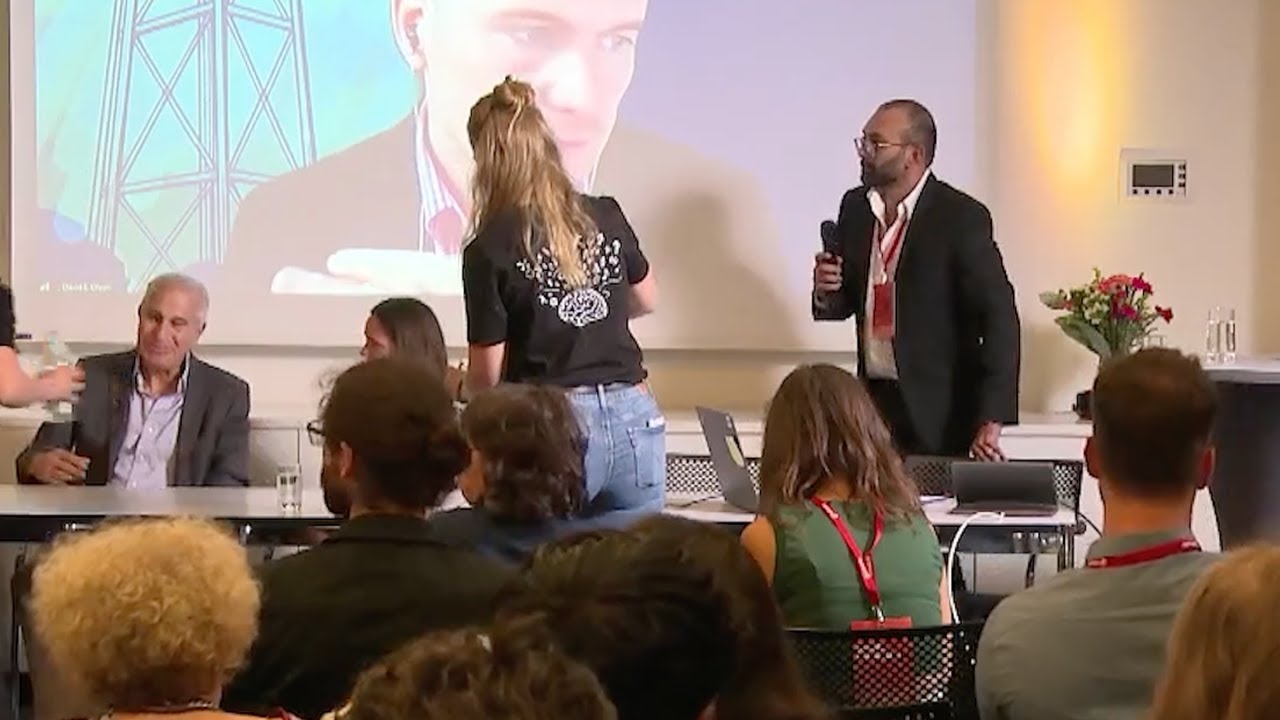
Symposium Bridging the Gap Between Basic Science and Research in Psychedelic Neuroscience (Part 4)
Keywords
Summary
207 words
Critical Evaluation
Value of the Information & Strength of the Argument
The talk provides high-value information, presenting original research that significantly advances understanding of psychedelic mechanisms. The argumentation is solid, built on a logical progression of experiments: from initial observations of neuroplasticity, to pharmacological and genetic validation of the 5-HT2A receptor, to the surprising finding that serotonin lacks effect, leading to the hypothesis of intracellular receptor location. The use of multiple complementary techniques (morphology, electrophysiology, behavioral assays, molecular tools) strengthens the conclusions. The speaker clearly explains the rationale behind each experiment, making the reasoning transparent. The evidence is compelling, and the discussion of potential limitations (e.g., antagonist selectivity) shows scientific rigor.
Scientific Rigor, Source Quality, Title Accuracy
The talk demonstrates high scientific rigor, with detailed methodology and reference to published work. The speaker cites his own studies and those of others (e.g., Kwan, Gonzalez-Maeso) appropriately. The title accurately reflects the content, which is a focused presentation on mechanisms of psychedelic-induced neuroplasticity. The talk is part of a larger symposium, and the description provides context. No external sources are cited in the description beyond the replay bundle, but the talk itself references published research. The adequacy between title and content is excellent.
199 words
Title / Content Match
The title accurately reflects the content: a symposium talk bridging basic science and psychedelic neuroscience research.
Quality & Reliability
8/10
The talk presents original research from a leading academic lab, with detailed methodology and peer-reviewed findings. The speaker is a recognized expert, and the content is consistent with established scientific knowledge. Minor limitations include the lack of full methodological details and potential conflicts of interest (co-founder of a company), but the research appears rigorous.
Key Moments
Markers derived by PSI from the transcript: the creator did not define chapters.
- Introduction to the talk and the importance of cortical neuron growth for treating stress-related neuropsychiatric diseases.
- Comparison with ketamine and its effects on dendritic spines.
- Introduction of the 5-HT2A receptor as a target, with expression patterns in the cortex.
- Experiments showing psychedelics promote cortical neuron growth in culture.
- Sholl analysis and quantification of dendritic complexity.
- Short stimulation periods are sufficient for long-lasting effects.
- In vivo demonstration with DMT: increased spine density and synaptic function.
- Pharmacological and genetic evidence that 5-HT2A receptor is necessary.
- Behavioral assays: forced swim test and sucrose preference test show antidepressant-like effects dependent on 5-HT2A.
- Surprising finding that serotonin does not promote growth, leading to structure-activity relationship studies.
- Correlation of lipophilicity with neuroplasticity, suggesting intracellular access.
- Subcellular localization: 5-HT2A receptor is intracellular in cortical neurons, colocalizing with Golgi.
- Use of membrane-impermeable compounds and electroporation to confirm intracellular action.
- Serotonin transporter expression enables serotonin to promote growth, confirming the hypothesis.
- In vivo validation with viral expression of serotonin transporter and PCA treatment.
- Summary and implications for drug development.
Cited Sources
- INSIGHT 2023 Replays bundle — Mentioned in the description as a way to access full recordings of the conference.
Concurring Sources
- Psychedelics promote structural and functional neural plasticity — Original paper by Ly et al. (2018) showing psychedelics promote neuroplasticity.
Contribution & Novelties
The talk presents a novel mechanistic insight: psychedelics promote neuroplasticity by activating an intracellular pool of 5-HT2A receptors, and this location bias is crucial. This challenges the traditional view that GPCR signaling occurs primarily at the plasma membrane. The finding that serotonin’s lack of effect is due to its inability to cross the membrane, rather than receptor activation, is a significant contribution. This has implications for drug design, suggesting that lipophilic compounds targeting intracellular receptors may be more effective.
Pour aller plus loin :
- 5-HT2A receptor — Overview of the receptor’s structure, function, and signaling.
- Neuroplasticity — General concept of brain plasticity.
- Psychedelic drug — Background on psychedelics and their effects.
- G protein-coupled receptor — General information on GPCRs.
- Dendritic spine — Structural basis of synaptic plasticity.
127 words
Radar Profile
The radar profile shows high scores in information quality, technical level, and reliability, with slightly lower but still strong scores in information quantity. This indicates a dense, expert-level presentation with robust scientific content.
💬 No comments were provided for analysis.