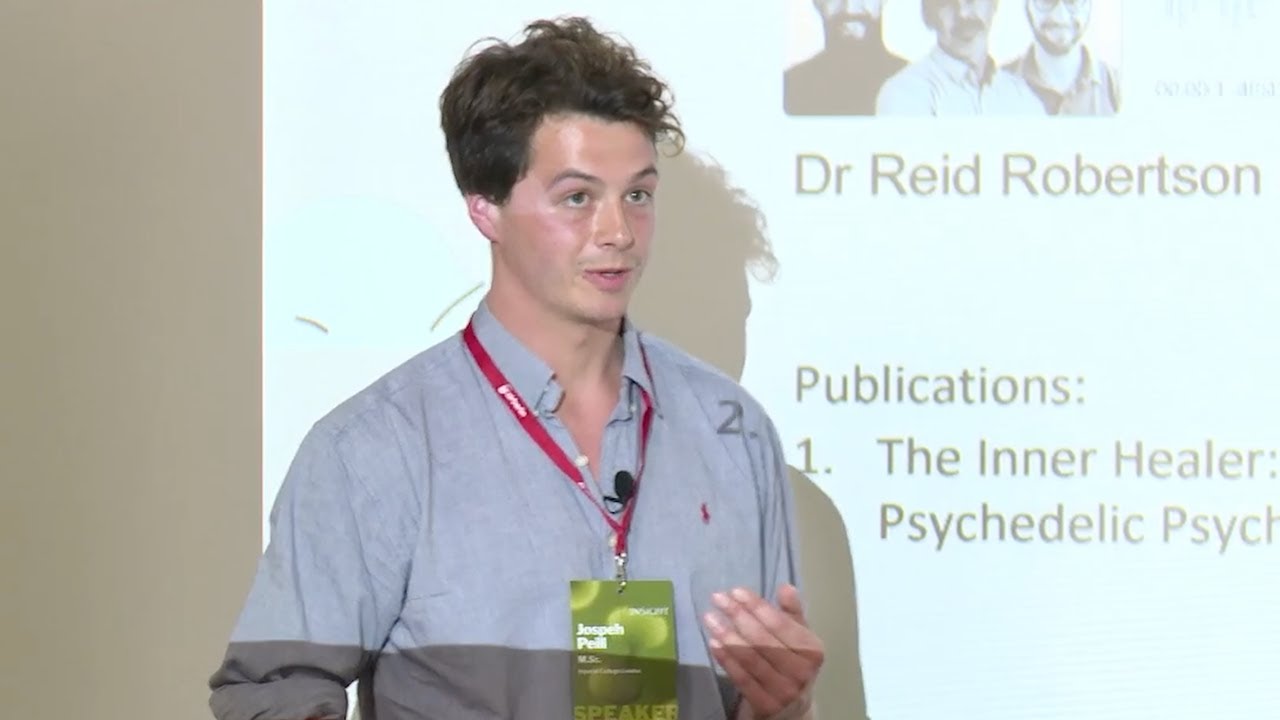
Psychedelics and The ‘Inner Healer’: Myth or Mechanism?
Keywords
Summary
210 words
Critical Evaluation
Value of the Information & Strength of the Argument
The talk provides valuable original data on a relatively unexplored construct in psychedelic research. The argumentation is balanced and critical, acknowledging the limitations of the single-item measure and the need for further validation. The presenter does not overstate the findings, instead framing them as preliminary evidence that warrants further investigation. The discussion of potential mechanisms, such as the salience network and the entropic brain hypothesis, adds depth, though these are speculative. The inclusion of participant quotes and the emphasis on the therapeutic environment enrich the argumentation, but the lack of a fully developed mechanistic theory leaves the central question—whether the inner healer is a myth or a mechanism—partially unanswered.
Scientific Rigor, Source Quality, Title Accuracy
The presentation demonstrates scientific rigor in its methodology, using data from a published clinical trial and clearly describing the measures and analyses. The sources cited are primarily from the presenter’s own research group, which is appropriate for a conference talk, but the lack of external references limits the breadth of sourcing. The title accurately reflects the content, which critically evaluates the concept. The talk does not explicitly cite specific studies beyond the depression trial, but the presenter references the emotional breakthrough inventory and mystical experience questionnaire, which are established measures. Overall, the scientific quality is good, though the single-item measure for the inner healer is a notable weakness.
232 words
Title / Content Match
The title accurately reflects the content, which critically examines the concept of the 'inner healer' in psychedelic therapy.
Quality & Reliability
7/10
The talk presents original data from a clinical study at Imperial College London, with a clear methodology and cautious interpretation. However, the concept of 'inner healer' is measured with a single-item scale, limiting construct validity, and the presenter acknowledges the need for further validation.
Key Moments
Markers derived by PSI from the transcript: the creator did not define chapters.
- Introduction and overview of the talk's structure
- Definition of the inner healer and its historical origins
- Description of the depression study and the single-item inner healer measure
- Results: higher inner healer scores in high-dose group and correlation with depression improvement
- Exploratory analyses: correlations with emotional breakthrough and mystical experience
- Discussion of limitations, future directions, and the importance of the outer healer
Cited Sources
- Psychedelics and the Inner Healing Intelligence (podcast) — Mentioned by the presenter as a resource for further exploration of the inner healer concept.
Concurring Sources
- Psilocybin with psychological support for treatment-resistant depression: six-month follow-up — This study from the same group provides context on the long-term effects of psilocybin, supporting the relevance of the inner healer concept.
Dissenting Sources
- The 'inner healer' as a metaphor: a critical perspective — Some researchers argue that the inner healer is a metaphorical construct without empirical basis, as highlighted in the Q&A session.
Contribution & Novelties
This talk contributes original data on the ‘inner healer’ construct, a concept often discussed anecdotally but rarely measured empirically. The finding that inner healer scores correlate with therapeutic outcomes, independent of intensity, suggests it may be a meaningful psychological mechanism. The presenter’s critical approach and call for a multi-item scale and neural correlates provide a clear roadmap for future research.
Pour aller plus loin :
- Psilocybin for treatment-resistant depression: fMRI-measured brain mechanisms — This study explores neural correlates of psilocybin’s antidepressant effects, relevant to understanding the inner healer’s biological basis.
- The entropic brain: a theory of conscious states informed by neuroimaging research with psychedelic drugs — This paper proposes a framework for psychedelic action that could inform mechanistic interpretations of the inner healer.
- Salience network — The presenter suggests this network may be involved in the inner healer experience; this article provides an overview of its functions.
147 words
Radar Profile
The radar profile shows a balanced performance across all dimensions, with slightly higher scores in quality of information and rigor, reflecting the presenter's scientific approach. The lower score in quantity of information is due to the focused scope of the talk.