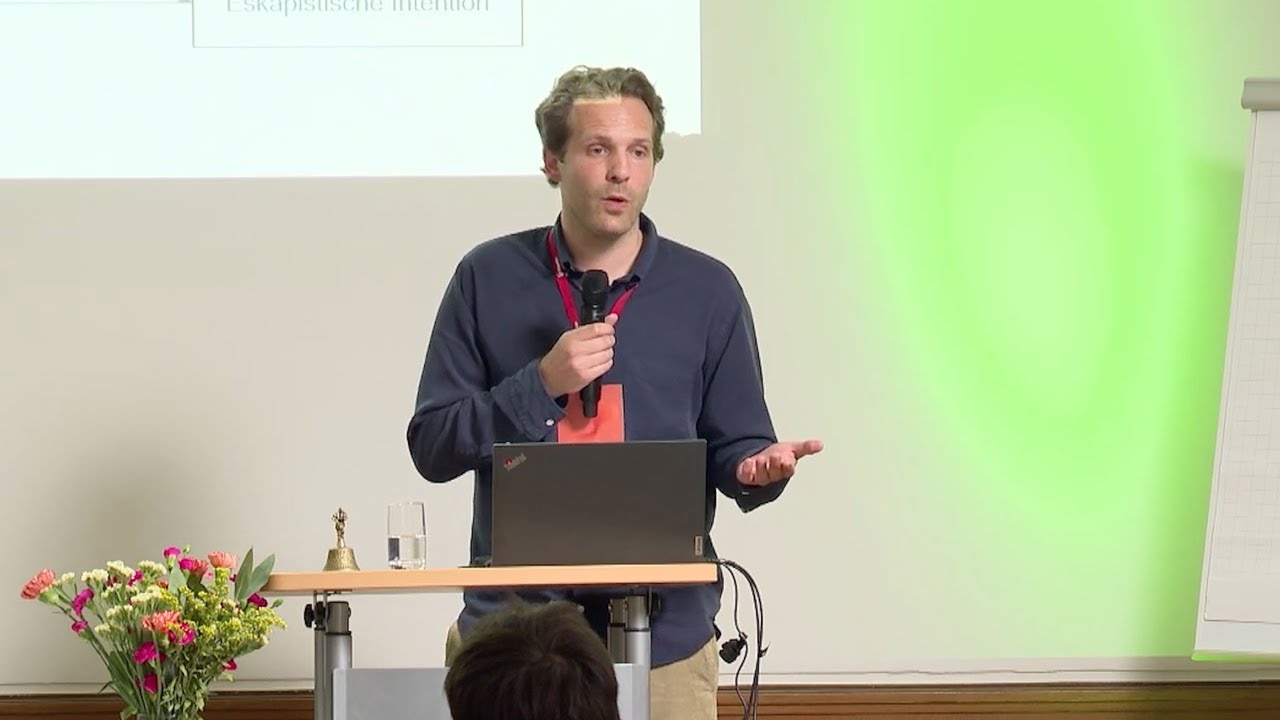
Initiale Validierung eines Fragebogens zu Wirkfaktoren in der Psychedelischen Therapie
Keywords
Summary
204 words
Critical Evaluation
Value of the Information & Strength of the Argument
The presentation provides valuable insights by systematically applying established psychotherapy research concepts to psychedelic experiences. The argumentation is solid, grounded in a large dataset and appropriate statistical methods. The speaker clearly explains the rationale for developing a new instrument and interprets correlations in light of psychotherapy theory. The discussion of how intentions and settings influence therapeutic factors offers practical implications for preparation and integration. The acknowledgment of limitations (retrospective, cross-sectional, non-clinical) demonstrates scientific rigor.
Scientific Rigor, Source Quality, Title Accuracy
The scientific rigor is high: the study uses a large sample, validated psychometric methods, and builds on established theory (Grawe’s common factors). The sources are primarily the presenter’s own study and references to psychotherapy research, though specific citations are not detailed in the talk. The title accurately reflects the content, focusing on the initial validation of the questionnaire. The presentation is well-structured and transparent about limitations.
155 words
Title / Content Match
The title accurately reflects the content: the initial validation of a questionnaire on therapeutic factors in psychedelic therapy.
Quality & Reliability
8/10
The presentation is based on a large sample (N=1867) and uses established psychometric methods, but it is a retrospective survey with self-selection and no clinical sample, limiting generalizability.
Key Moments
Markers derived by PSI from the transcript: the creator did not define chapters.
- Introduction by moderator, highlighting Dr. Wolff's work.
- Dr. Wolff introduces the five common factors according to Grawe.
- Explanation of the need for a new questionnaire due to therapist-interaction-specific items.
- Description of the study design: online survey, inclusion criteria, and sample size (N=1867).
- Presentation of sample characteristics and types of psychedelic experiences.
- Factor analysis results and item examples for resource activation and problem actualization.
- Correlations between factors and with other psychedelic constructs (emotional breakthrough, oceanic boundlessness, challenging experience).
- Predictions of factors by intentions and setting, including nature and party settings.
- Moderation effect of resource activation on well-being and stressful life events.
- Summary, implications for bridging psychedelic and psychotherapy research, and limitations.
Cited Sources
- MIND Foundation — Organizer of the INSIGHT conference and the presenter's affiliation.
Concurring Sources
- MIND Foundation — The organization hosting the conference and supporting the research.
Contribution & Novelties
The presentation introduces a novel questionnaire (GCMQ) that adapts common psychotherapy factors to psychedelic experiences, enabling empirical research bridging the two fields. It provides initial validation data from a large non-clinical sample, showing that these factors are relevant outside formal therapy. The findings on setting and intention effects offer practical guidance for optimizing psychedelic sessions.
Pour aller plus loin :
- Klaus Grawe’s common factors in psychotherapy — Background on the theoretical framework.
- Psychedelic therapy research — Recent clinical trials and mechanisms.
- Oceanic boundlessness and ego dissolution — Related psychedelic constructs.
90 words
Radar Profile
The radar profile shows high scores in information quantity, quality, and reliability, with a slightly lower technical level, indicating a well-balanced presentation accessible to a professional audience.