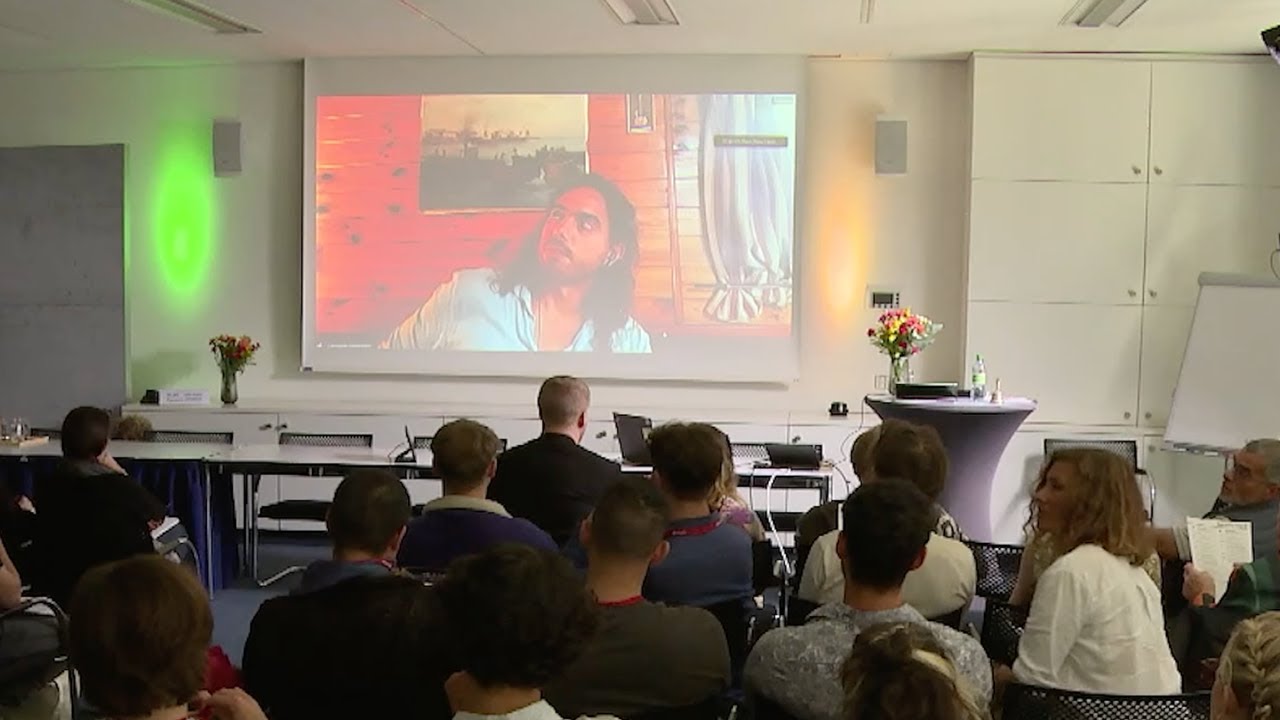
Can Psychedelics Provide Insights into Consciousness?
Keywords
Summary
115 words
Critical Evaluation
Value of the Information & Strength of the Argument
The talk provides valuable insights by synthesizing empirical findings with theoretical frameworks like predictive processing and neurophenomenology. The argumentation is solid, building a coherent case for how psychedelics can deconstruct and reconstruct experience. The speaker supports claims with references to his own research and that of others, and he acknowledges limitations and open questions. The discussion of ethical implications and the concept of apprenticeship adds practical value.
Scientific Rigor, Source Quality, Title Accuracy
The scientific rigor is high, with references to published studies and established theories. The speaker is a recognized expert, and the content aligns with current research in psychedelic science. The title accurately reflects the content. The talk is well-structured and avoids overstatement, though some speculative elements are present. The description provides a link to the conference replays, which is a legitimate source for further context.
147 words
Title / Content Match
The title accurately reflects the content, which directly addresses how psychedelics can contribute to understanding consciousness.
Quality & Reliability
8/10
The talk is given by a leading researcher in psychedelic neuroscience, with references to published studies and theoretical frameworks. The content is well-structured and grounded in empirical evidence, though some claims are speculative and not fully detailed.
Key Moments
Markers derived by PSI from the transcript: the creator did not define chapters.
- Introduction and quote by Stanislav Grof about psychedelics as catalysts.
- Proposal that psychedelics modulate structures of experience via deconstruction and reconstruction.
- Discussion of predictive processing and the REBUS model, with evidence from EEG and fMRI.
- Introduction of 5-MeO-DMT and contentless experience, linking to minimal phenomenal experience.
- Discussion of reconstruction, including unitive experiences and changes in metaphysical beliefs.
- Proposal of neurophenomenological approach to study subjective experience.
- Implications for therapy, including psychedelic apprenticeship and ethical considerations.
Cited Sources
- INSIGHT 2023 Replays — The talk is part of the INSIGHT 2023 conference, and this link provides access to replays.
Concurring Sources
- REBUS and the Anarchic Brain — The REBUS model proposed by Carhart-Harris and Friston is referenced in the talk.
Contribution & Novelties
The talk offers a novel integration of deconstruction and reconstruction in psychedelic experience, proposing a neurophenomenological approach that emphasizes first-person data. It introduces the concept of ‘psychedelic apprenticeship’ as a framework for ethical therapy. The discussion of 5-MeO-DMT as a tool for studying minimal phenomenal experience is particularly innovative.
Pour aller plus loin :
- Predictive processing — Foundational theory for understanding brain function and psychedelic action.
- Neurophenomenology — Methodological approach combining first-person and third-person data.
- Default mode network — Brain network implicated in self-referential processing, relevant to psychedelic effects.
89 words
Radar Profile
The profile shows high scores in information quantity, quality, and reliability, with a slightly lower technical level, indicating a talk that is accessible yet scientifically grounded.