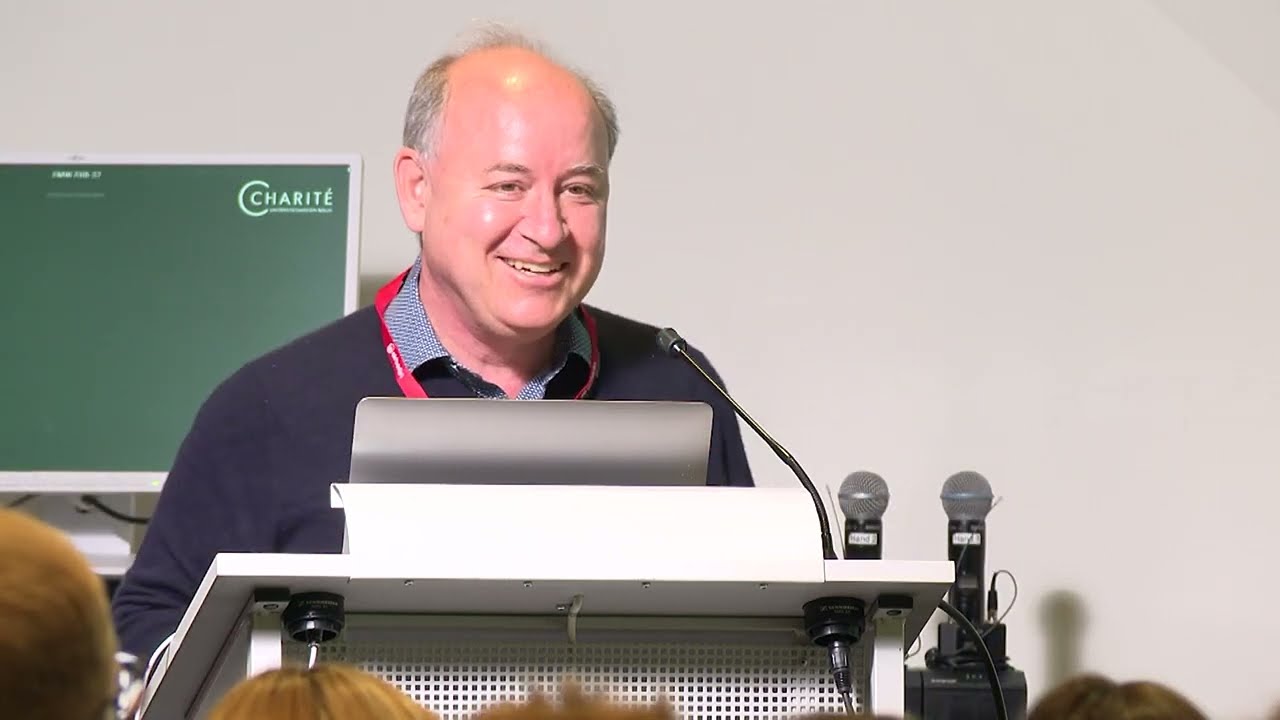
Dendritic Theory of Consciousness
Keywords
Summary
239 words
Critical Evaluation
Value of the Information & Strength of the Argument
The talk provides a compelling synthesis of decades of research on dendritic physiology, offering a novel framework for understanding consciousness. Larkum presents a clear argument, supported by direct experimental evidence from his own lab, including optogenetic manipulations and behavioral assays. He carefully explains the logic behind each step, making the case that dendritic integration is not just a computational detail but a fundamental mechanism for conscious perception. The argument is persuasive, though some extrapolations from rodent models to human consciousness are speculative. The value lies in its ability to unify disparate findings and generate testable predictions.
Scientific Rigor, Source Quality, Title Accuracy
Larkum is a leading expert in dendritic neuroscience, and his talk is grounded in rigorous experimental work published in high-impact journals. He cites specific studies, including his own, and references the work of others, such as Anil Seth’s book ‘Being You’. The title accurately reflects the content, focusing on the role of dendrites in consciousness. The talk is well-structured and scientifically sound, though it is a conference presentation rather than a peer-reviewed review, so some claims are presented as hypotheses rather than established facts.
195 words
Title / Content Match
The title accurately reflects the content, which focuses on the role of dendritic integration in consciousness.
Quality & Reliability
8/10
The talk is based on peer-reviewed research by a leading neuroscientist, with direct experimental evidence. However, it is a conference presentation, not a formal review, and some claims are speculative.
Key Moments
Markers derived by PSI from the transcript: the creator did not define chapters.
- Introduction to the talk and the concept of perception as controlled hallucination.
- Description of pyramidal neuron structure and the segregation of feedforward and feedback inputs.
- Demonstration of dendritic spikes and their role in coincidence detection.
- Presentation of the whisker detection experiment and the role of dendritic calcium activity.
- Discussion of the specific neuronal subtypes involved and their projections to the thalamus.
- Surprising finding that anesthesia abolishes dendritic spikes, linking them to consciousness.
- Conclusion and implications for understanding psychedelic effects on consciousness.
Cited Sources
- Being You: A New Science of Consciousness — Recommended as a compass for understanding consciousness and the concept of controlled hallucination.
Concurring Sources
- Larkum, M. E. (2013). A cellular mechanism for cortical associations: an organizing principle for the cerebral cortex. — Larkum's earlier work proposing the role of dendritic integration in cortical function.
- Takahashi, N., et al. (2020). Active dendritic currents gate descending cortical outputs in perception. — Key experimental evidence for the role of dendritic calcium spikes in perception.
Dissenting Sources
- Integrated Information Theory (IIT) — IIT proposes a different framework for consciousness, focusing on the integration of information rather than specific neural mechanisms.
Contribution & Novelties
The talk presents a novel synthesis of dendritic physiology and consciousness research, proposing that apical dendrites act as comparators between top-down predictions and bottom-up sensory input. This framework offers a mechanistic explanation for phenomena like perception, hallucination, and the effects of psychedelics. The ‘dendritic integration theory’ is a new term coined by Larkum, and it integrates findings from his own lab and others.
Pour aller plus loin :
- Dendritic spike — Overview of dendritic spikes and their computational role.
- Pyramidal neuron — Detailed anatomy and function of pyramidal neurons.
- Predictive coding — Theoretical framework related to the idea of perception as prediction.
- Anil Seth — Neuroscientist who proposed the ‘controlled hallucination’ concept.
112 words
Radar Profile
The radar profile shows high scores in quality and quantity of information, with a strong technical level, indicating a dense and rigorous scientific talk. The overall reliability is high, but the speculative nature of some extrapolations prevents a perfect score.
💬 No comments were provided for analysis.