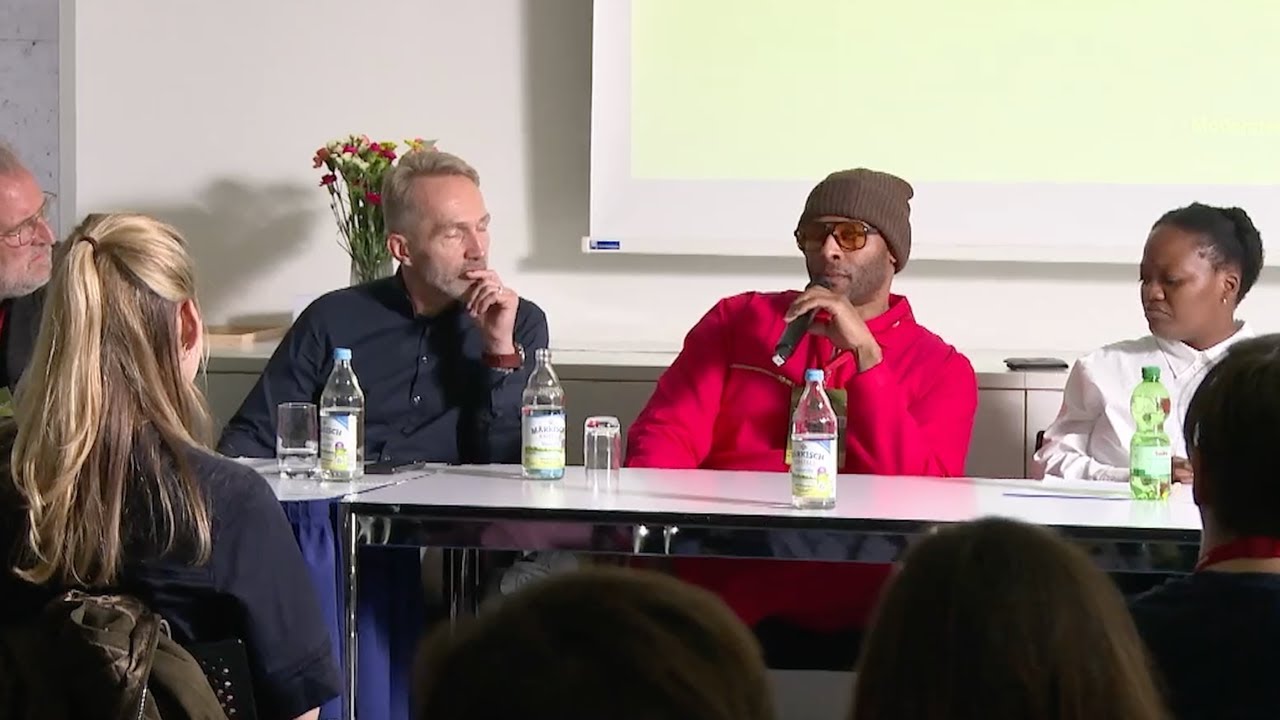
Panel: Transcending Understanding: The Role of Art in Psychedelic Research and Therapy
Keywords
Summary
166 words
Critical Evaluation
Value of the Information & Strength of the Argument
The panel provides valuable insights into the intersection of art and psychedelics, offering diverse perspectives from neuroscience, architecture, poetry, and public health. The argumentation is generally thoughtful and nuanced, with speakers acknowledging the complexity of the topic. Palz’s historical examples and theoretical framework add depth, while Tipado’s skepticism provides a critical counterpoint. Putuma’s personal experience enriches the discussion with practical insights. However, the arguments are largely anecdotal and lack empirical evidence, which limits the scientific rigor. The panel does not present new research but rather synthesizes existing ideas and personal experiences, making it more of a debate than a systematic review.
Scientific Rigor, Source Quality, Title Accuracy
The panel demonstrates moderate scientific rigor. The speakers are credible experts, and Palz references specific artists and movements (e.g., Henri Michaux, outsider art, art brut). However, no formal citations or references are provided, and the discussion relies heavily on personal opinions and experiences. The title accurately reflects the content, focusing on the role of art in psychedelic research and therapy. The video description mentions the INSIGHT 2023 conference and offers a replay bundle, but no direct sources are cited. The lack of formal references reduces the overall reliability, but the expertise of the panelists lends some credibility.
213 words
Title / Content Match
The title accurately reflects the panel's focus on the role of art in psychedelic research and therapy, with discussions on perception, creativity, and cultural meaning.
Quality & Reliability
7/10
The panel features experts from diverse fields (neuroscience, art, architecture, poetry) providing interdisciplinary perspectives. The discussion is largely opinion-based and lacks empirical data, but the speakers are credible and the content is well-articulated. The video is a conference panel, not a peer-reviewed source, but it offers valuable insights into the intersection of art and psychedelics.
Key Moments
Markers derived by PSI from the transcript: the creator did not define chapters.
- Introduction of panelists and topic by moderator Dimitra Mazaraki.
- Palz discusses art as a unique mode of communication, referencing historical uses for ideological purposes.
- Putuma shares her perspective on art as storytelling and demedicalizing language.
- Tipado expresses skepticism about psychedelics enhancing creativity, citing lack of evidence.
- Palz begins his lecture on the history of psychedelic art, mentioning Henri Michaux's mescaline drawings.
- Palz discusses the potential of psychedelics to expand consciousness and influence artistic practice.
- Discussion on ethical complexities, with Putuma describing how psychedelic experiences inform her artistic process.
- Tipado questions the evidence for psychedelics' effects on artistic creativity.
- Jungaberle critiques the medical model of psychedelic use, advocating for a more processual approach.
- Panel concludes with reflections on the future of art and psychedelics.
Cited Sources
- INSIGHT 2023 Replays — The video is a replay from the INSIGHT 2023 conference, and the description links to the replay bundle for purchase.
Concurring Sources
- Psychedelic art — The panel discusses the historical and cultural impact of psychedelics on art, which aligns with the Wikipedia article on psychedelic art.
Dissenting Sources
- No direct discordant sources found — The panel presents diverse opinions, but no specific external sources are cited that contradict the discussion.
Contribution & Novelties
The panel offers a unique interdisciplinary perspective on the role of art in psychedelic research and therapy, bringing together voices from neuroscience, architecture, poetry, and public health. It challenges conventional views by questioning the direct enhancement of creativity by psychedelics and emphasizes the importance of process over product in artistic practice. The discussion also critiques the medicalization of psychedelic experiences, advocating for a more open and processual approach.
Pour aller plus loin :
- Psychedelic art — Overview of the genre and its historical context.
- Henri Michaux — Belgian poet and painter known for his mescaline experiments.
- Outsider art — Art created outside the mainstream, often associated with altered states.
- Psychedelic therapy — Overview of therapeutic uses of psychedelics.
118 words
Radar Profile
The radar profile shows moderate scores across all dimensions, with slightly higher scores in information quantity and quality, reflecting the panel's rich discussion but limited empirical evidence. The technical level is moderate, suitable for a general audience interested in the topic.
💬 No comments were provided for analysis.