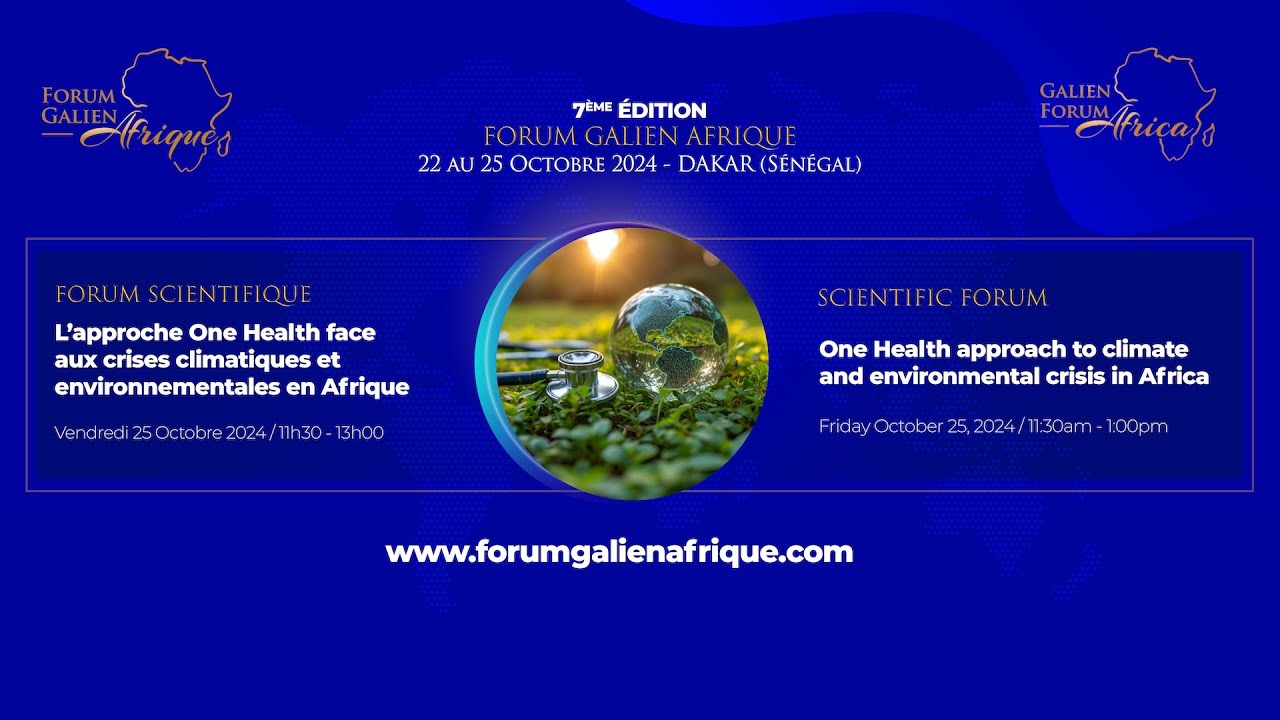
FORUM SCIENTIFIQUE - Sous-thème 2 : L’approche One Health face aux crises climatiques et...
Keywords
Summary
165 words
Critical Evaluation
Value of the Information & Strength of the Argument
The video provides valuable insights into the practical application of the One Health approach in Africa, particularly in the context of climate change. The panelists offer concrete examples of climate-related health challenges, such as livestock mortality due to floods and droughts, the spread of zoonotic diseases, and the impact on food security. The argumentation is based on professional experience and institutional knowledge, which lends credibility to the discussion. However, the arguments are largely anecdotal and lack systematic evidence or data. The panelists advocate for integrated approaches and capacity building, but the discussion remains at a general level without delving into specific implementation strategies or outcomes. The strength of the argumentation lies in the diversity of perspectives and the emphasis on collaboration, but it could be enhanced by more rigorous scientific evidence and case studies.
Scientific Rigor, Source Quality, Title Accuracy
The scientific rigor of the video is moderate. The panelists are experts in their fields, and their statements are generally plausible, but they do not cite specific studies or sources during the discussion. The title accurately reflects the content, which is a scientific forum session on the One Health approach. The video does not include any formal references or citations, which limits its scientific credibility. The discussion is more of an expert opinion exchange than a systematic review or original research. The adequacy between the title and content is good, as the session directly addresses the One Health approach in the context of climate crises in Africa.
256 words
Title / Content Match
The title accurately reflects the content, which is a scientific forum session focused on the One Health approach in the context of climate and environmental crises in Africa.
Quality & Reliability
7/10
The video features expert panelists from various health and academic institutions discussing the One Health approach in the context of climate change in Africa. The content is largely based on professional experience and institutional perspectives, with some references to specific data (e.g., livestock mortality in Sudan, productivity losses). However, the discussion is primarily qualitative and lacks detailed citations or peer-reviewed sources. The information is credible given the expertise of the speakers, but the lack of formal references and the panel format limit its scientific rigor.
Key Moments
Markers derived by PSI from the transcript: the creator did not define chapters.
- Introduction by the moderator, outlining the session's theme and introducing the panelists.
- First panelist (veterinary microbiologist) discusses challenges of climate change on animal health, including heat stress, droughts, and floods.
- First panelist continues, highlighting the impact on livestock productivity and the spread of vector-borne diseases.
- Second panelist (William Bazeyo) introduces AFROHUN and its role in integrating climate change into health education.
- Second panelist elaborates on AFROHUN's initiatives, including curriculum revision, faculty training, and community engagement.
- Third panelist (Cheikh) discusses the role of the Senegalese Academy of Sciences in promoting One Health.
- Third panelist continues, emphasizing the need for research and policy integration.
- Fourth panelist (from OAS) provides additional perspectives on One Health implementation.
- Moderator summarizes key points and opens the floor for questions from the audience.
- Concluding remarks and closing of the session.
Cited Sources
- Forum Galien Afrique 2024 — The video itself is the source of the discussion.
Concurring Sources
- One Health approach (WHO) — The WHO's description of One Health aligns with the panel's emphasis on interconnected health.
- Climate change and health (WHO) — The WHO's fact sheet supports the panel's discussion of climate change impacts on health.
Contribution & Novelties
The video provides a platform for African experts to discuss the One Health approach in the context of climate change, highlighting regional challenges and initiatives. It emphasizes the importance of integrating animal, human, and environmental health, and showcases the role of networks like AFROHUN in capacity building. The discussion offers practical insights into the implementation of One Health in Africa, which is often underrepresented in global discourse.
Pour aller plus loin :
- One Health approach (WHO) — Official WHO page explaining the One Health concept.
- AFROHUN — Website of the Africa One Health University Network, providing information on their programs and initiatives.
- Climate change and health (WHO) — WHO fact sheet on the health impacts of climate change.
118 words
Radar Profile
The radar profile shows relatively high scores in quantity and quality of information, indicating a substantive discussion. The technical level is moderate, reflecting the expert but non-technical nature of the talk. The overall reliability is good, but the lack of formal citations slightly reduces the score.
💬 No comments were provided for analysis.