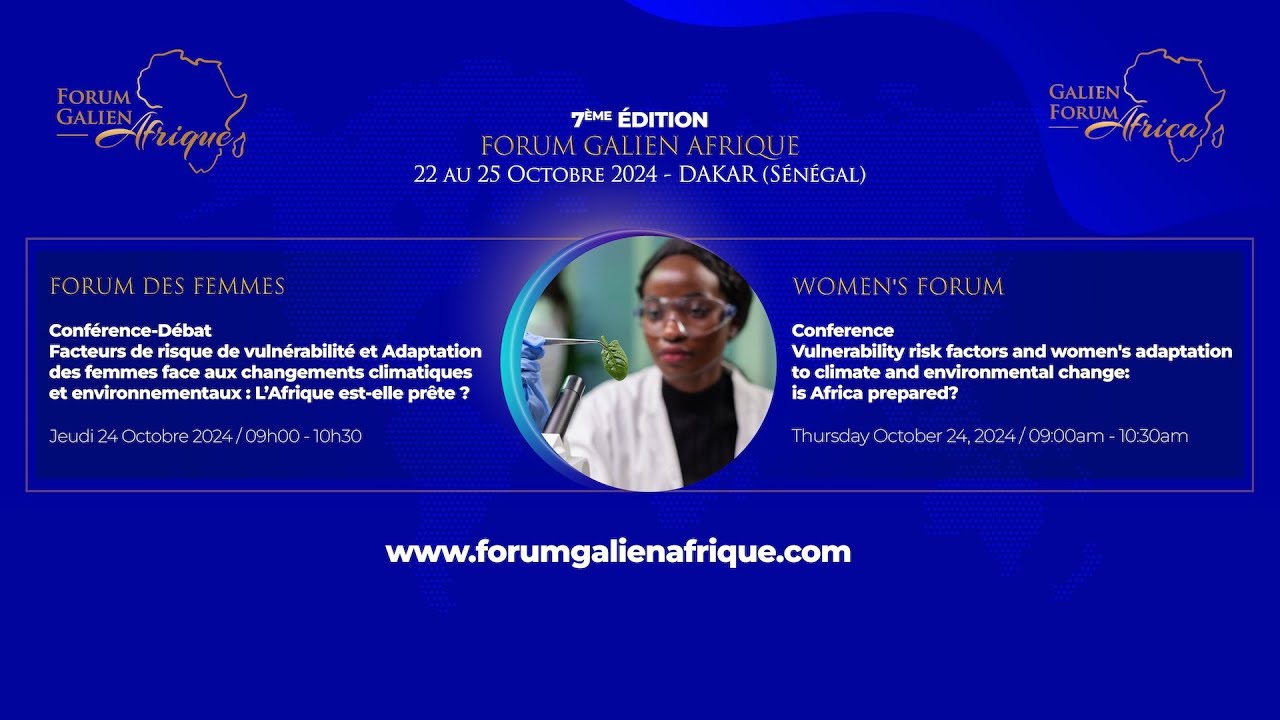
FORUM DES FEMMES - Conférence-Débat : Facteurs de risque de vulnérabilité et Adaptation des femmes..
Keywords
Summary
181 words
Critical Evaluation
Value of the Information & Strength of the Argument
The presentation provides valuable scientific information on climate change, its impacts, and the specific vulnerabilities of women in Africa. The speaker, an IPCC vice-chair, effectively communicates complex concepts in an accessible manner, using clear graphics and examples. The argumentation is solid, grounded in IPCC reports and scientific evidence, and highlights the injustice of Africa’s low emissions yet high vulnerability. The discussion on gender-specific factors is insightful, though it could benefit from more concrete data or case studies. Overall, the value is high for raising awareness and informing policy discussions.
Scientific Rigor, Source Quality, Title Accuracy
The scientific rigor is high, as the speaker references IPCC reports and her own expertise. However, specific sources are not cited during the talk, and the video description lacks links to supporting materials. The title accurately reflects the content, and the conference is well-structured. The video is a live recording with minor technical issues, but the content remains clear. The adequacy between title and content is strong, as the conference directly addresses the stated topic.
179 words
Title / Content Match
The title accurately reflects the content: a conference-debate on risk factors of vulnerability and adaptation of women to climate change, with a focus on Africa's readiness.
Quality & Reliability
7/10
The conference is led by a climate scientist and IPCC vice-chair, providing authoritative information on climate change impacts and vulnerability. However, the discussion is largely qualitative and lacks detailed data or citations during the talk. The video is a recording of a live event with some technical issues, but the content is scientifically sound.
Key Moments
Markers derived by PSI from the transcript: the creator did not define chapters.
- Introduction by moderator, Professor Voué, welcoming participants and highlighting the importance of women.
- Dr. Aïda Diongue-Niang begins her presentation on climate change science, referencing IPCC.
- Discussion of greenhouse gas emissions and Africa's low contribution but high vulnerability.
- Explanation of climate impacts on health, water, and agriculture in Africa.
- Focus on gender-specific vulnerabilities and how women are disproportionately affected.
- Call for adaptation and recommendations to strengthen women's role in climate action.
- Q&A session begins, with participants discussing practical solutions.
Cited Sources
- IPCC Reports — Referenced as the basis for climate science and vulnerability assessments.
Concurring Sources
- IPCC AR6 Synthesis Report — Supports the scientific claims on climate change impacts and vulnerability.
Contribution & Novelties
The video provides a unique perspective by combining climate science with a gender lens, specifically focusing on Africa. It highlights the paradox of Africa’s low emissions yet high vulnerability, and emphasizes the need for gender-responsive adaptation strategies. The speaker’s role as IPCC vice-chair adds authority. The discussion is timely given the increasing climate impacts in the region.
Pour aller plus loin :
- IPCC Sixth Assessment Report — Comprehensive assessment of climate change impacts and adaptation.
- UN Women and Climate Change — Overview of gender dimensions in climate action.
- World Bank: Gender and Climate — Analysis of gender-specific vulnerabilities and policy responses.
101 words
Radar Profile
The radar profile shows high scores in quality of information and global reliability, reflecting the scientific authority of the speaker. The quantity of information is moderate, and the technical level is appropriate for a general audience. The overall balance indicates a reliable and informative presentation.
💬 No comments were provided for analysis.