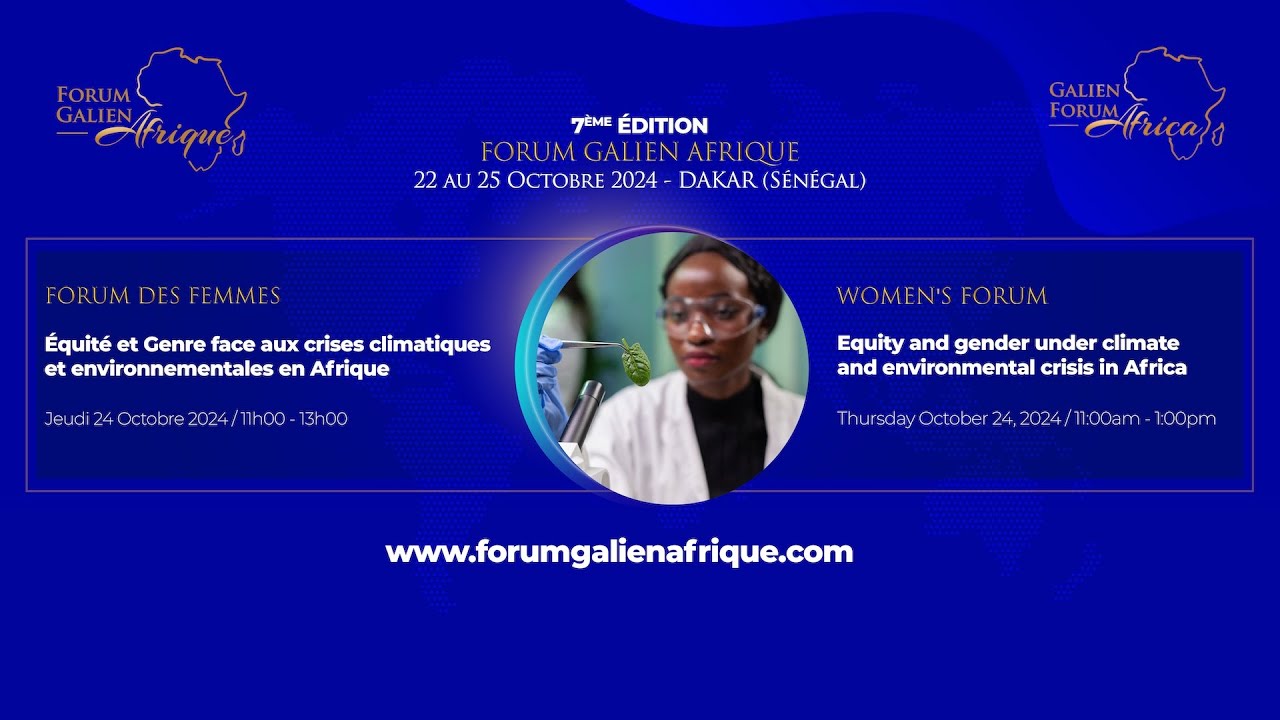
FORUM DES FEMMES - Sous-thème 3 : Équité et Genre face aux crises climatiques et environnementales.
Keywords
Summary
157 words
Critical Evaluation
Value of the Information & Strength of the Argument
The value of the information lies in the diverse perspectives of the panelists, who bring experience from government, international organizations, and civil society. They provide concrete examples of initiatives, such as Senegal’s ‘École des maris’ program and projects supporting girls’ education. The argumentation is generally solid, relying on logical reasoning and real-world observations, though it lacks rigorous data or citations. The panelists make a compelling case for addressing gender inequalities as a key part of climate action, but the discussion remains at a high level without deep technical analysis.
Scientific Rigor, Source Quality, Title Accuracy
The scientific rigor is moderate: the panelists are credible experts, but they do not cite specific studies or data. The quality of sources is based on their professional experience rather than formal references. The title accurately reflects the content, which is a focused discussion on gender and climate in Africa. No comments were provided, so no analysis of public trends is possible.
166 words
Title / Content Match
The title accurately reflects the content, which is a panel discussion on gender equity and climate crises in Africa.
Quality & Reliability
7/10
Panel of experts with relevant backgrounds, but no formal citations or data presented; relies on anecdotal evidence and general statements.
Key Moments
Markers derived by PSI from the transcript: the creator did not define chapters.
- Introduction by moderator Dr. Raymond Goudou Koffi, setting the theme.
- Panelists introduce themselves, including Dr. K. Ohiri and others.
- First question on overcoming socio-economic and cultural barriers for women.
- Discussion on education and training for girls as a key strategy.
- Mention of legal reforms and the need to change social norms.
- Examples of community-based programs and women's economic empowerment.
- Discussion on health impacts of climate change on women and children.
- Call for more women in leadership roles in climate initiatives.
- Panelists emphasize the importance of involving women in decision-making.
- Concluding remarks and summary of key points.
Cited Sources
- Forum Galien Afrique 2024 — This video is the source itself, a panel discussion.
Concurring Sources
- UN Women on Gender and Climate — Supports the panel's claims about women's vulnerability and leadership.
Contribution & Novelties
The video provides a platform for African experts to discuss gender and climate change, offering practical insights from the region. It highlights the importance of addressing social norms and legal barriers, and emphasizes the role of women as agents of change. The discussion is valuable for policymakers and practitioners working on gender and climate in Africa.
Pour aller plus loin :
- Gender and Climate Change — Overview of UNFCCC’s work on gender and climate.
- The Maputo Protocol — Legal framework for women’s rights in Africa.
- Women’s Empowerment — UN Women’s initiatives on economic empowerment.
94 words
Radar Profile
The radar profile shows moderate scores across all dimensions, indicating a balanced but not highly technical discussion. The strength lies in the credibility of the speakers and the relevance of the topic, while the lack of detailed data and citations limits the scientific depth.