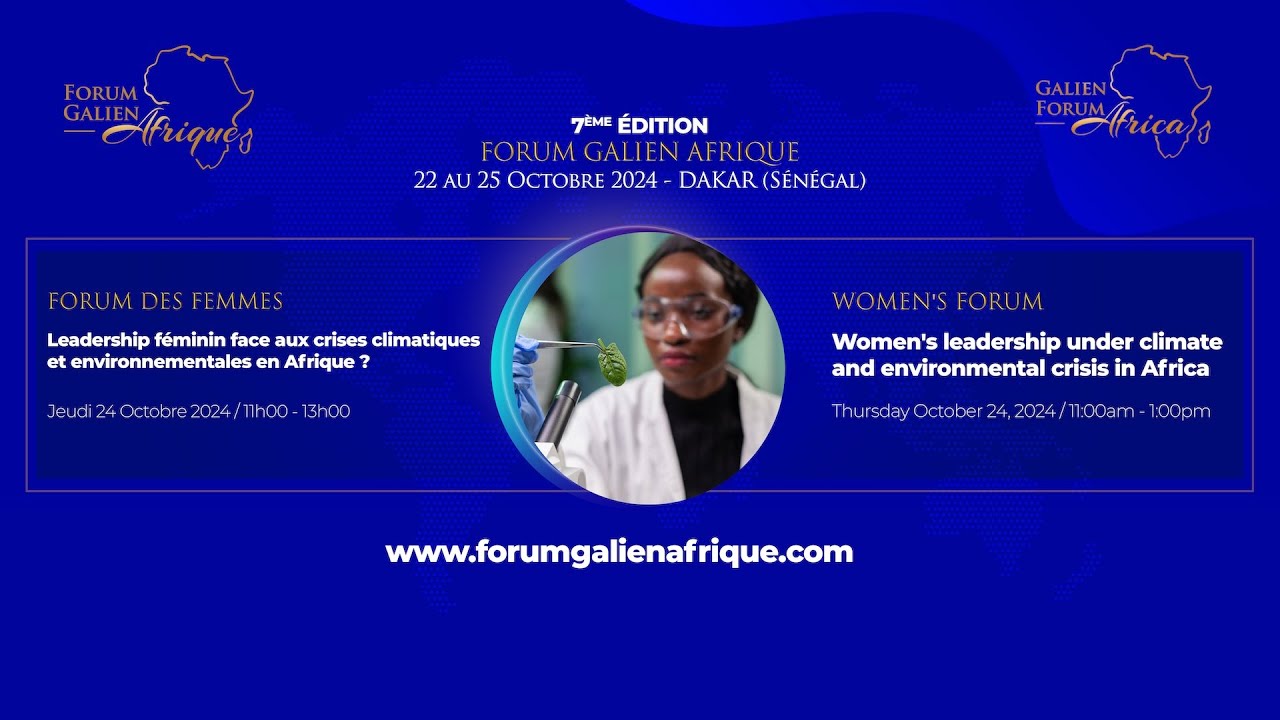
FORUM DES FEMMES - Sous-thème 1 : Leadership féminin face aux crises climatiques et envi...
Keywords
Summary
161 words
Critical Evaluation
Value of the Information & Strength of the Argument
The video provides valuable insights into the intersection of gender and climate change in Africa, drawing on the diverse experiences of the panelists. The arguments are coherent and well-structured, with each speaker contributing unique perspectives: from the lack of data and representation (Dr. Ok) to the practical challenges of land ownership and access to finance (Ms. Moyo, Mr. Manangan). The discussion is persuasive, emphasizing the urgency of including women in climate decision-making. However, the arguments are largely anecdotal and lack empirical evidence or specific case studies, which weakens the overall scientific rigor. The panelists do not cite specific studies or reports, relying instead on general knowledge and personal observations. Despite this, the value lies in the collective expertise and the actionable recommendations proposed, such as investing in women’s education in data science and fostering multisectoral collaboration.
Scientific Rigor, Source Quality, Title Accuracy
The scientific rigor is moderate: the discussion is based on expert opinions and lived experiences rather than peer-reviewed research. The sources cited are minimal, with no specific references mentioned during the talk. The description provides no additional links or references. The title accurately reflects the content, and the video is well-structured with clear segments. The lack of formal citations and the informal nature of the discussion reduce the overall reliability, but the credibility of the speakers and the alignment with established knowledge on gender and climate change partially compensate. The adequacy between title and content is high, as the video directly addresses the stated topic.
256 words
Title / Content Match
The title accurately reflects the content: a forum on women's leadership in the context of climate and environmental crises, specifically in Africa.
Quality & Reliability
7/10
The video is a panel discussion featuring experts in public health, veterinary medicine, and youth advocacy. The content is largely anecdotal and experience-based, with limited citation of specific studies or data. However, the speakers are credible professionals, and the discussion aligns with established knowledge on gender and climate change. The lack of formal references and the informal setting slightly reduce the reliability score.
Key Moments
Markers derived by PSI from the transcript: the creator did not define chapters.
- Introduction by co-chairs, setting the stage for the panel discussion.
- Dr. Eber Ok discusses challenges: lack of recognition, data gaps, and underrepresentation.
- Dr. Claudia Alfonso shares perspectives from Latin America and global experience.
- Ms. Chedu Moyo highlights youth and young women's challenges, including resource inequity and lack of representation.
- Dr. Cariel Billy emphasizes women's role in health systems and the need for leadership grooming.
- Mr. Salif Manangan joins online, sharing personal story about flooding in Mauritania and women's exclusion from decision-making.
- Second round: Dr. Billy advises on women as climate change warriors and institutional changes.
- Ms. Moyo discusses empowerment and the need to address denial and cultural barriers.
- Panelists give final recommendations, including investment in education and data science for women.
- Closing remarks and thanks to participants.
Concurring Sources
- UN Women: Climate Change and Gender — UN Women's page on climate change and gender, supporting the panel's claims about disproportionate impacts on women.
Contribution & Novelties
The video offers a unique platform for African women leaders to voice their perspectives on climate change, highlighting specific regional challenges such as land ownership and cultural barriers. It emphasizes the need for gender-disaggregated data and the inclusion of women in decision-making processes, which are often overlooked. The discussion also bridges health and climate, advocating for a One Health approach. The novelty lies in the collective call for actionable steps, such as training women in data science and fostering multisectoral collaboration.
Pour aller plus loin :
- Gender and Climate Change — Official UNFCCC page on gender and climate change, providing policy context.
- Women’s Land Rights in Africa — Landesa’s work on securing land rights for women, relevant to the discussion on land ownership.
- One Health Approach — WHO’s definition and resources on One Health, directly linked to Dr. Billy’s recommendations.
140 words
Radar Profile
The radar profile shows high scores in quantity and quality of information, reflecting the rich discussion and expert input. The technical level is moderate, as the content is accessible but not deeply technical. Overall reliability is good, given the credibility of the speakers, though the lack of formal citations slightly lowers the score.