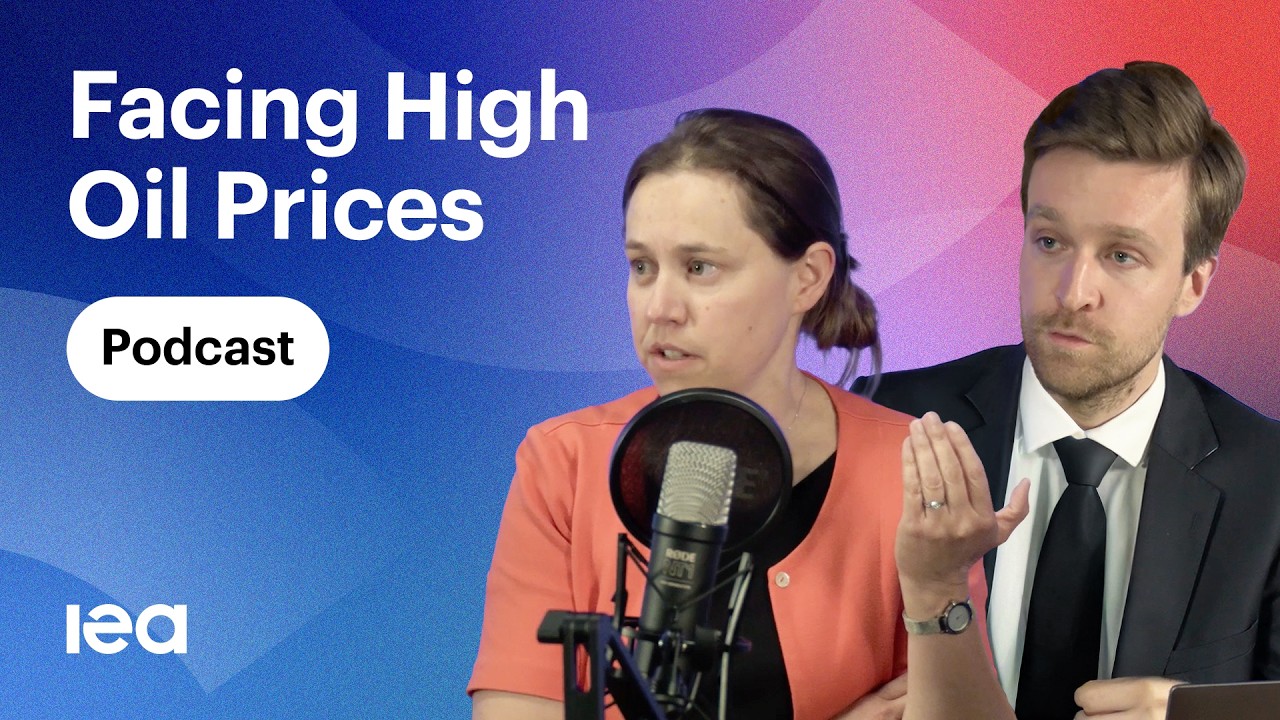
10 ways to ease oil price pressures on consumers
Keywords
Summary
168 words
Critical Evaluation
Value of the Information & Strength of the Argument
The video provides valuable information by presenting a structured set of 10 demand-side measures, each with estimated savings and historical examples. The argumentation is solid, as it draws on past crises (1973, 2022) and current government actions (e.g., Pakistan’s speed limit reduction, Asian countries promoting remote work). The experts clearly explain the rationale behind each measure, such as the physics of air resistance for speed limits and the potential for industrial ’eco modes’. They also acknowledge limitations, such as the cost of free public transport and the need for targeted support. The discussion is well-organized and persuasive, making a strong case for demand-side actions as a complement to supply-side measures.
Scientific Rigor, Source Quality, Title Accuracy
The video is produced by the IEA, a highly credible source in energy analysis. The experts cite historical examples and reference their own analysis (e.g., estimates of savings from working from home, potential for LPG switching). However, specific sources are not explicitly cited within the video, and the description provides no links. The title accurately reflects the content, and the video stays on topic. The scientific rigor is high, given the IEA’s reputation and the use of data-driven estimates, though it is not a peer-reviewed presentation.
211 words
Title / Content Match
The title accurately reflects the content, which presents 10 demand-side measures to alleviate oil price pressures on consumers.
Quality & Reliability
8/10
The video is produced by the International Energy Agency (IEA), a reputable international organization, and features experts in energy demand and efficiency. The information is based on the IEA's analysis and historical examples, providing a credible and reliable perspective. However, it is primarily an opinion/expert discussion rather than a peer-reviewed study, and some claims lack specific citations within the video.
Key Moments
Markers derived by PSI from the transcript: the creator did not define chapters.
- Introduction to the podcast and the topic of oil price pressures.
- Discussion on the importance of demand-side actions in energy security.
- Explanation of the 10-point plan and how countries can choose measures.
- Recommendation on working from home, with estimated savings of 20% on fuel bills.
- Discussion on reducing highway speed limits, with historical examples from 1973.
- Encouraging public transport use, citing Germany's 9-euro ticket in 2022.
- Reducing business air travel, with potential to cut jet fuel consumption by 7-15%.
- Industrial efficiency measures, such as fixing leaks and turning off machines.
- Switching to modern cooking solutions, focusing on LPG and alternatives.
- Long-term measures: building retrofits, electrification, plastic recycling, and sustainable fuels.
Concurring Sources
- IEA: Global Energy Crisis — The IEA's official page on the global energy crisis, which aligns with the video's context.
Contribution & Novelties
The video provides a concise, actionable list of demand-side measures to mitigate oil price shocks, drawing on historical precedents and current IEA analysis. It offers practical advice for governments, businesses, and households, with estimates of potential savings. The discussion also highlights the importance of targeted support for vulnerable populations, a nuanced perspective often missing in policy debates.
Pour aller plus loin :
- IEA report on energy efficiency — Official IEA page on energy efficiency, providing context and data.
- Strait of Hormuz — Background on the strategic waterway mentioned in the video.
- Germany’s 9-euro ticket — Information on the public transport policy cited as an example.
105 words
Radar Profile
The radar profile shows high scores in quantity and quality of information, reflecting the video's comprehensive coverage and credible sources. The technical level is moderate, making it accessible to a general audience while still providing expert insights. The overall reliability is strong, consistent with the IEA's authoritative position.
💬 No comments were provided for analysis.