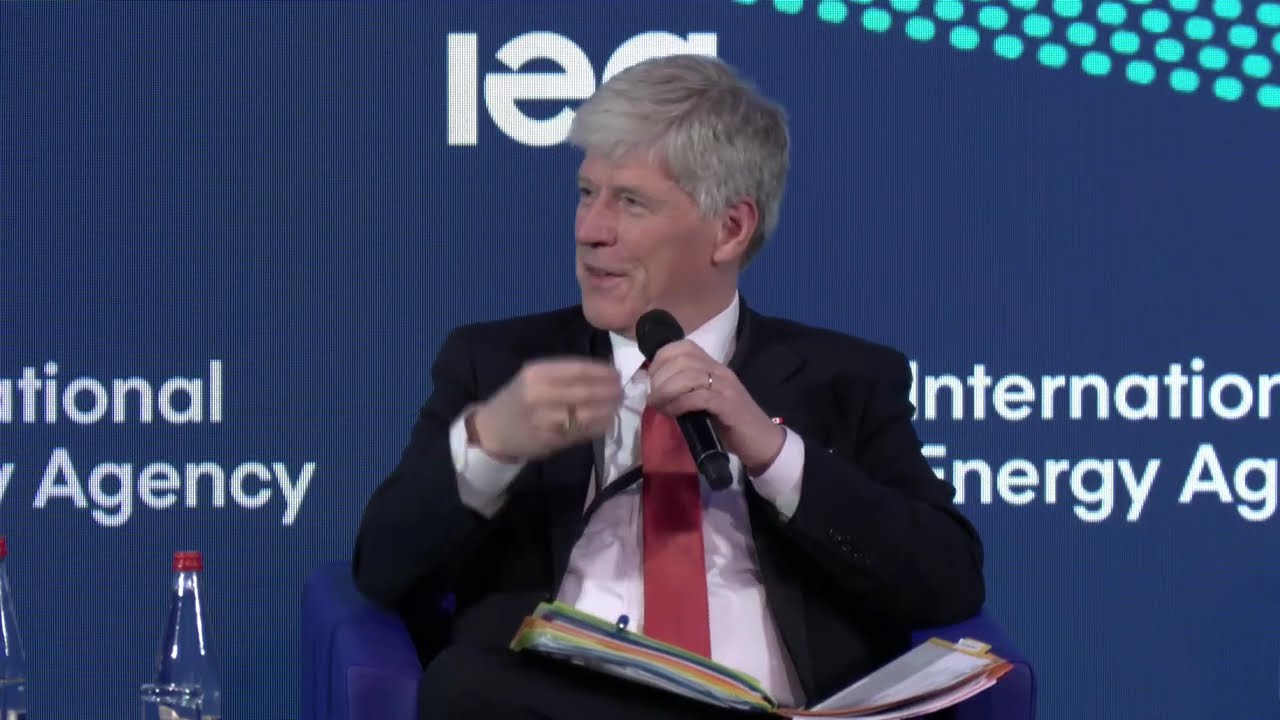
The State of Energy Innovation 2026 Report
Keywords
Summary
191 words
Critical Evaluation
Value of the Information & Strength of the Argument
The video provides valuable insights into the current state of energy innovation, backed by data from the IEA’s report and expert perspectives from key stakeholders. The argumentation is solid, as it combines quantitative indicators (patents, R&D spending) with qualitative policy experiences from different countries. The panelists effectively argue that innovation is crucial for energy transition and competitiveness, and they present concrete examples of policy tools and strategies. However, the discussion is high-level and lacks deep technical detail, which may limit its value for specialized audiences.
Scientific Rigor, Source Quality, Title Accuracy
The video is produced by the IEA, a reputable international organization, and features high-level officials, lending credibility to the information. The sources cited are primarily the IEA report and the European Patent Office’s data, which are reliable. The title accurately reflects the content. The discussion is well-structured and stays on topic, with no significant digressions. The presence of a brief promotional segment for the IEA’s report is noted but does not detract from the overall quality.
176 words
Title / Content Match
The title accurately reflects the content, which focuses on the IEA's State of Energy Innovation 2026 report and its key findings.
Quality & Reliability
8/10
The video is a high-level panel discussion hosted by the IEA, featuring government ministers and a patent office VP. It presents data from the IEA's report and expert opinions, but lacks detailed methodological explanations. The information is reliable given the institutional sources, but the format is more conversational than rigorous.
Key Moments
Markers derived by PSI from the transcript: the creator did not define chapters.
- Introduction to the IEA's State of Energy Innovation 2026 report and key findings on funding trends.
- Discussion on the decline in public energy R&D spending and venture capital investment.
- Highlight of battery technology as a dominant area of innovation, with patents accounting for nearly half of energy patents.
- Panel discussion begins with Canadian Minister of Energy on competitiveness strategy and policy tools.
- Norwegian Minister discusses long-term R&D support and carbon capture and storage projects.
- Kenyan Minister highlights geothermal investments and enabling policies for energy innovation.
- European Patent Office VP discusses patent trends and China's rise in energy patents.
- Discussion on how patent data informs policy-making and the role of the EPO.
- Kenyan Minister discusses applicability of mini-grid innovations to developed countries.
Cited Sources
- The State of Energy Innovation 2026 - IEA Event Page — Official event page for the report launch and panel discussion.
Concurring Sources
- IEA - The State of Energy Innovation 2026 — The report itself, which the video summarizes and discusses.
Contribution & Novelties
The video provides a concise overview of the IEA’s latest report on energy innovation, highlighting key trends such as the slowdown in funding and the dominance of battery technology. It offers insights from policymakers on how different countries are addressing innovation challenges. The discussion adds value by connecting data with real-world policy examples.
Pour aller plus loin :
- IEA Energy Innovation Reports — Explore more IEA reports on energy innovation.
- European Patent Office - Energy Patents — Information on energy patents and EPO’s work.
- Lithium-ion battery — Background on the technology’s development and impact.
94 words
Radar Profile
The radar profile shows high scores in information quality and reliability, reflecting the authoritative sources and expert panel. The lower score in technical level indicates that the content is accessible to a general audience, while the quantity of information is moderate, as the discussion is high-level and not exhaustive.