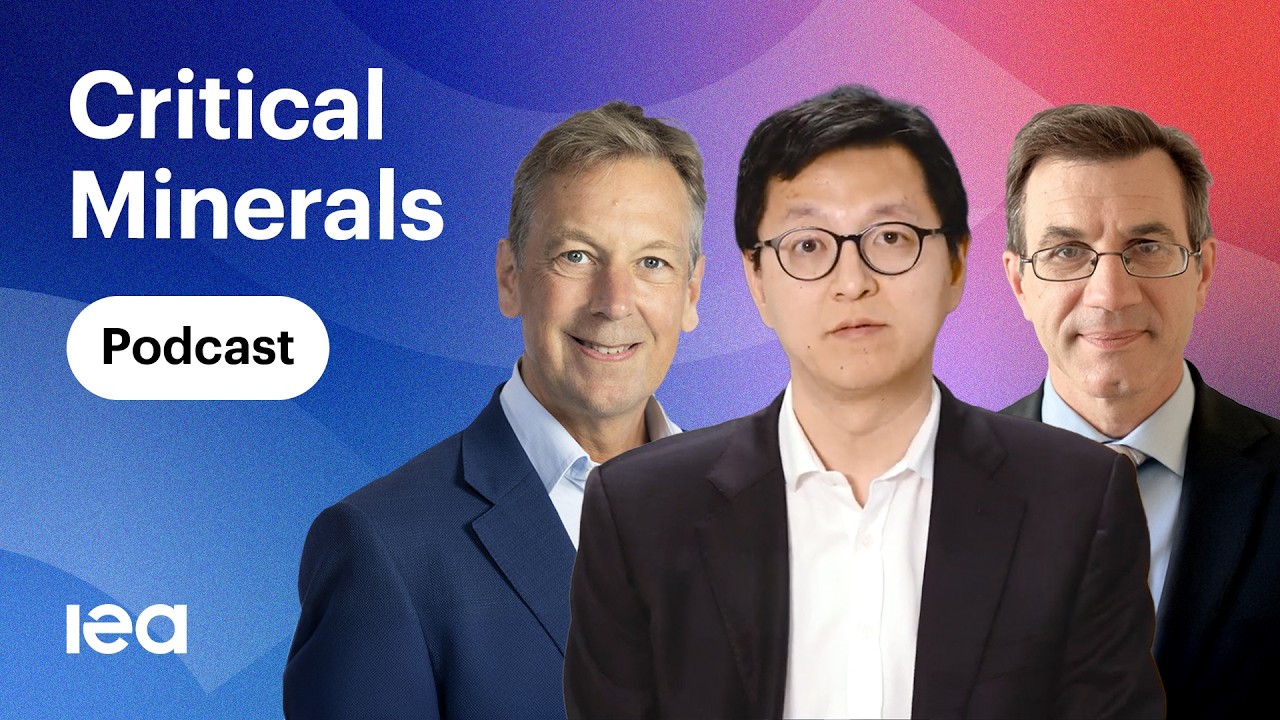
Podcast episode: Critical minerals and energy security
Keywords
Summary
227 words
Critical Evaluation
Value of the Information & Strength of the Argument
The podcast provides valuable insights from high-level experts, offering a comprehensive overview of the critical minerals landscape. The arguments are well-structured, with each expert contributing unique perspectives: Gallezot on policy and cooperation, Stausholm on industry and innovation, and Kim on data and analysis. The discussion is grounded in the IEA’s research, lending credibility. However, the arguments are largely qualitative, with limited quantitative data presented, and the episode does not delve deeply into potential counterarguments or alternative viewpoints, which could strengthen the analysis.
Scientific Rigor, Source Quality, Title Accuracy
The scientific rigor is high, given the involvement of the IEA and the expertise of the speakers. The sources cited are primarily the IEA’s own reports and events, which are authoritative. The title accurately reflects the content, focusing on critical minerals and energy security. The episode does not include a public advertising segment. The description provides a link to the IEA Ministerial Meeting, which is relevant. Overall, the content is reliable, though it would benefit from more explicit references to specific studies or data sources.
182 words
Title / Content Match
The title accurately reflects the content, which focuses on the role of critical minerals in energy security, including supply chain concentration, diversification, and policy responses.
Quality & Reliability
8/10
The podcast features expert opinions from high-level officials (France's critical minerals envoy, former CEO of Rio Tinto) and IEA analysts, providing authoritative insights. The IEA is a reputable international organization, and the data cited (e.g., concentration levels, export controls) aligns with known reports. However, the discussion is largely qualitative and lacks detailed citations or data sources within the episode, limiting verifiability.
Key Moments
Markers derived by PSI from the transcript: the creator did not define chapters.
- Introduction to the podcast and the importance of critical minerals for energy security.
- Benjamin Gallezot explains the role of critical minerals in energy production and the risks of supply concentration.
- Discussion on stockpiling and the difference between fuel and critical minerals.
- Gallezot discusses France's efforts and the importance of international cooperation.
- Jakob Stausholm reflects on the change in awareness of critical minerals since COVID-19.
- Stausholm talks about innovations in processing and the need for faster, cheaper facilities.
- Stausholm discusses the bottleneck in electricity generation and grid capacity due to AI.
- Tae-Yoon Kim explains what critical minerals are and their uses.
- Kim discusses the concentration of refining in China and the implications.
- Kim talks about stockpiling systems and the need for diversification.
- Kim highlights the most in-demand minerals: lithium, copper, and rare earths.
- Conclusion on the potential impacts of supply disruptions on energy and economy.
Cited Sources
- 2026 IEA Ministerial Meeting — Mentioned as the event where the interviews took place.
Concurring Sources
- IEA Critical Minerals Market Review 2024 — The IEA's report provides data on supply concentration and demand growth, aligning with the podcast's claims.
Contribution & Novelties
The podcast provides a timely and authoritative overview of the critical minerals supply chain challenges, featuring perspectives from government, industry, and international organization. It highlights the increasing concentration of refining in China and the need for diversification and stockpiling. The discussion on extracting minerals from waste streams of existing mines offers a novel angle. The episode underscores the intersection of energy security, geopolitics, and technology, making it relevant for policymakers and industry stakeholders.
Pour aller plus loin :
- Critical Minerals Review 2024 — IEA’s latest data on critical minerals markets.
- Rare earth element — Overview of rare earth elements and their applications.
- Supply chain resilience — Concept of resilience in supply chains.
112 words
Radar Profile
The radar profile shows high scores in quality and reliability, reflecting the authoritative sources and expert opinions. The quantity of information is moderate, as the episode is a discussion rather than a data-heavy presentation. The technical level is moderate, accessible to a general audience but with some specialized terms. Overall, the profile indicates a reliable and informative podcast.