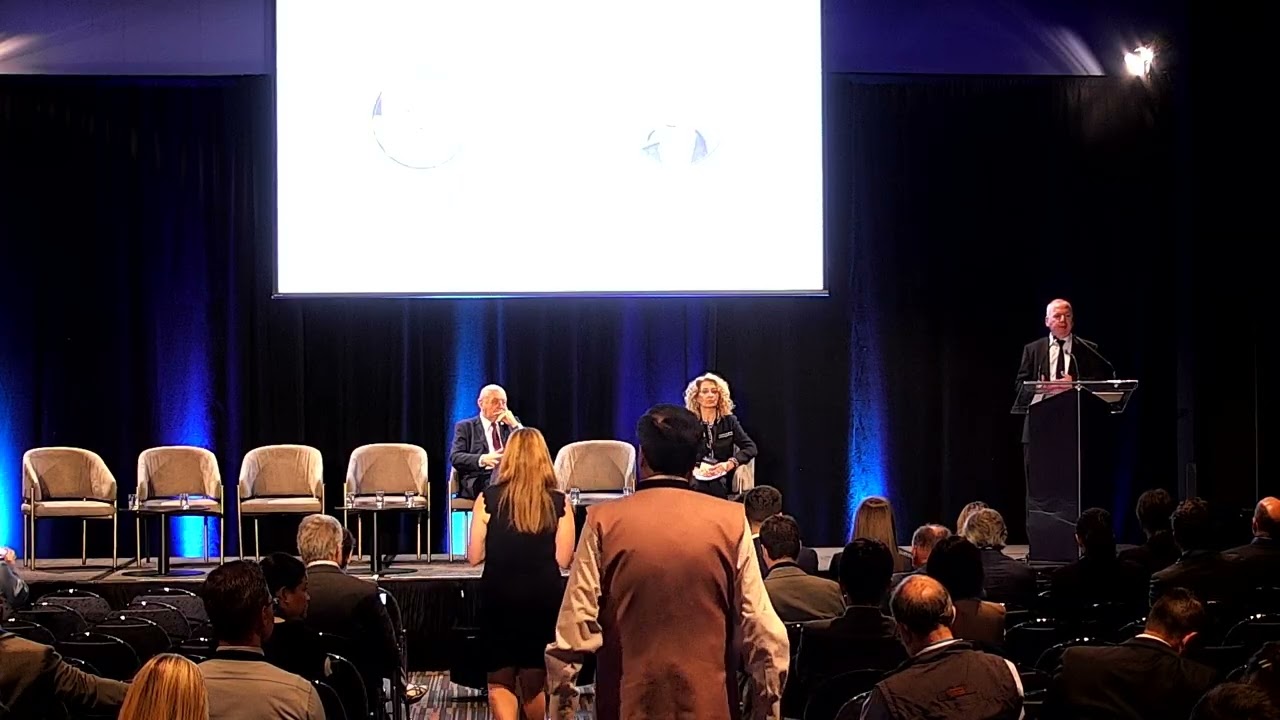
Flexible grids for electrification
Keywords
Summary
148 words
Critical Evaluation
Value of the Information & Strength of the Argument
The session provides valuable insights into the practical challenges and opportunities of implementing demand-side flexibility. The argumentation is solid, grounded in the IEA’s policy work and real-world examples from diverse geographic contexts. The speakers effectively argue that flexibility is crucial for managing peak demand, integrating renewables, and reducing system costs, supported by specific data points such as potential peak demand reduction of 30% in Great Britain and China’s targets for virtual power plants. However, the discussion remains at a policy level, with limited technical depth, and some claims lack detailed evidence.
Scientific Rigor, Source Quality, Title Accuracy
The session is scientifically rigorous in its reliance on the IEA’s 3DEN policy brief and the newly released report, which are authoritative sources. The speakers reference specific national policies and pilot projects, adding credibility. The title accurately reflects the content, focusing on flexible grids for electrification. The discussion is well-structured, but the lack of detailed citations for some claims and the absence of peer-reviewed references slightly reduce the overall rigor.
176 words
Title / Content Match
The title accurately reflects the session's focus on flexible grids for electrification, as the discussion centers on demand-side flexibility, grid modernization, and policy pathways.
Quality & Reliability
7/10
The session features high-level experts from international organizations and national governments, providing authoritative perspectives on grid flexibility. The content is based on the IEA's 3DEN policy brief and a new report, but it is largely a discussion of policy and implementation rather than presenting original peer-reviewed research. The information is reliable but not deeply technical.
Key Moments
Markers derived by PSI from the transcript: the creator did not define chapters.
- Opening remarks by the Italian Minister and Brian Motherway, introducing the 3DEN initiative and the new report on scaling up demand flexibility.
- Brian Motherway presents the report's case studies: South Africa (current), Thailand (5 years), and Ireland (10 years), highlighting different stages of demand flexibility.
- Panel discussion begins: Amber Woodward from Center for Net Zero discusses the value of flexible consumer resources and potential peak demand reduction in Great Britain.
- Agnes D Costa from ANEEL (Brazil) talks about regulatory challenges, including net metering and the need for smarter tariffs.
- Maxine Fu from Shanghai Yoi Information Technology explains China's market reforms (Policy 136), virtual power plants, and direct green energy connections.
- Bilal Dutun from Turkey's Ministry of Energy discusses rapid electrification trends (EVs, air conditioners) and the need for anticipatory grid planning.
- Yaguba Traore from the African Union highlights Africa's focus on grid interconnection and the role of AI in planning and operation.
Cited Sources
- IEA Thematic Session: Flexible grids for electrification — Official event page providing context and related resources.
Concurring Sources
- IEA 3DEN Policy Brief — Referenced as the basis for the session's discussion on digitalization and grid flexibility.
Contribution & Novelties
The session contributes to the discourse on grid flexibility by presenting the IEA’s new report on scaling up demand flexibility, which includes case studies from South Africa, Thailand, and Ireland. It emphasizes the importance of policy and regulatory frameworks in enabling flexibility, moving beyond technological discussions. The diverse international perspectives highlight different stages of implementation and challenges.
Pour aller plus loin :
- Demand response — Provides an overview of demand response mechanisms and their role in grid flexibility.
- Virtual power plant — Explains the concept of aggregating distributed energy resources for grid services.
- Smart grid — Discusses the integration of digital technology into electricity grids for enhanced flexibility and efficiency.
110 words
Radar Profile
The radar profile shows balanced scores across information quantity, quality, and reliability, with a slightly lower technical level, reflecting the session's policy-oriented nature. The high reliability score indicates the authoritative sources and expert speakers.