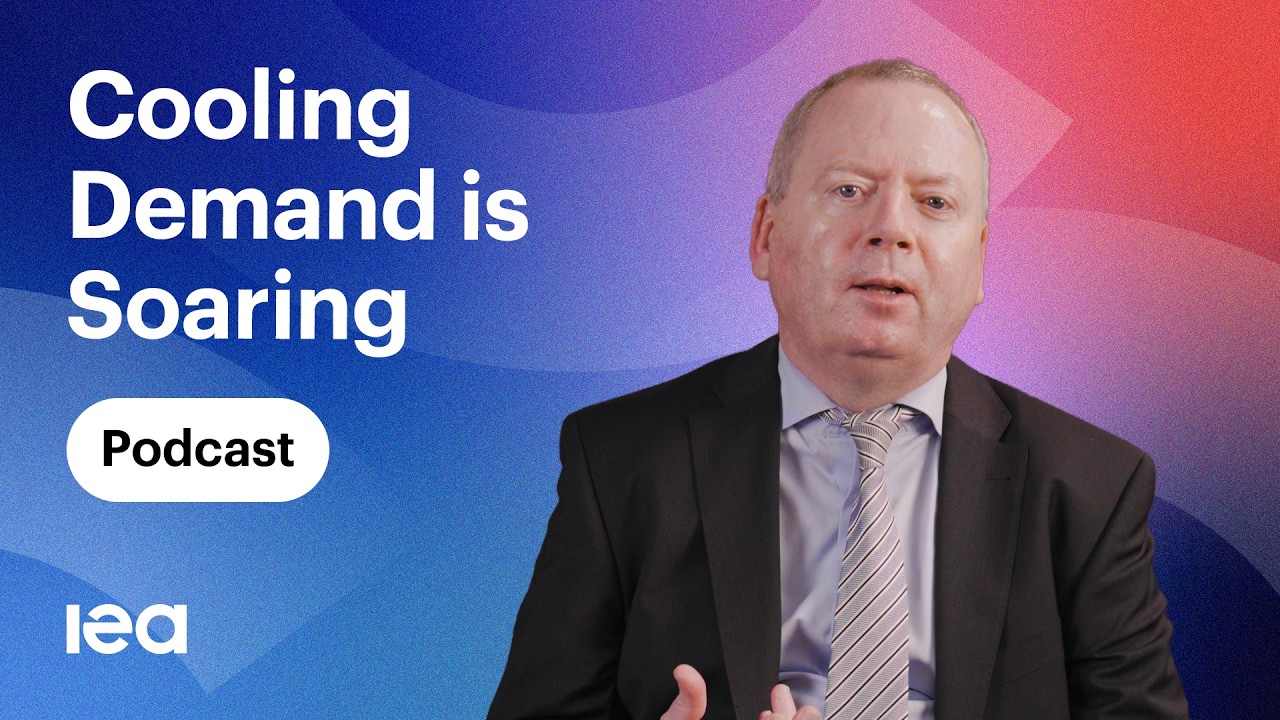
Staying cool without overheating the energy system
Keywords
Summary
180 words
Critical Evaluation
Value of the Information & Strength of the Argument
The video provides valuable insights into the often-overlooked issue of cooling demand and its impact on energy systems. The argumentation is solid, grounded in IEA data and analysis. Motherway effectively uses concrete examples, such as the 14 million air conditioners sold in India last year and the 20% potential reduction in peak demand from efficiency improvements, to illustrate the scale of the challenge and the potential for mitigation. The discussion is balanced, acknowledging the benefits of cooling for health and comfort while highlighting the risks of locking in inefficiencies. The expert’s perspective adds authority, though the lack of counterarguments or alternative viewpoints limits the depth of the analysis.
Scientific Rigor, Source Quality, Title Accuracy
The video demonstrates scientific rigor through the use of IEA data and the expertise of Brian Motherway. The sources are not explicitly cited, but the IEA’s reputation lends credibility. The title accurately reflects the content, focusing on the tension between cooling needs and energy system sustainability. The discussion is well-structured, covering demand growth, regional disparities, grid strain, and policy solutions. However, the lack of specific citations or references to external studies reduces the verifiability of the claims. The video does not include any advertising or sponsored content.
210 words
Title / Content Match
The title accurately reflects the content, which discusses the growing demand for cooling and its implications for energy systems, along with potential solutions.
Quality & Reliability
8/10
The content is an expert interview with Brian Motherway, head of the IEA's Office of Energy Efficiency and Inclusive Transitions. The IEA is a reputable international organization, and the information is based on their data and analysis. The discussion is balanced, acknowledging both the benefits and challenges of cooling demand. However, as an opinion piece, it lacks peer review and detailed methodological transparency.
Key Moments
Markers derived by PSI from the transcript: the creator did not define chapters.
- Introduction to the podcast and topic of cooling demand.
- Brian Motherway explains why cooling is an energy issue.
- Discussion on the three levels of cooling: city design, building design, and active cooling.
- Comparison of electricity demand from data centers vs. cooling.
- Historical context of air conditioning ownership in different regions.
- Equity issues and the affordability of cooling in developing countries.
- Impact of heat waves on electricity grids, with examples from India.
- Potential for efficiency improvements to reduce peak demand.
- Policy recommendations for governments, including building codes and appliance standards.
- Future projections for cooling energy demand and concluding remarks.
Cited Sources
- IEA - Air Conditioning — The IEA's page on air conditioning provides data and analysis on cooling demand, which is the basis for the discussion.
- IEA - Energy Efficiency — The IEA's energy efficiency topic page, relevant to the policy recommendations discussed.
Concurring Sources
- IEA - Air Conditioning — The IEA's data on air conditioning demand aligns with the claims made in the video.
Contribution & Novelties
The video provides a clear and accessible overview of the growing cooling demand and its implications for energy systems, drawing on IEA expertise. It highlights the often-underappreciated scale of cooling’s electricity consumption and the urgent need for policy action. The discussion of efficiency potential and the ’lock-in’ effect of inefficient appliances is particularly valuable.
Pour aller plus loin :
- IEA - Air Conditioning — Official IEA data and analysis on air conditioning demand and efficiency.
- International Energy Agency — The IEA’s main website, providing comprehensive energy statistics and policy recommendations.
- Heat wave - Wikipedia — Background on heat waves and their impacts, relevant to the discussion of grid strain.
- Energy efficiency - Wikipedia — Overview of energy efficiency concepts and measures.
121 words
Radar Profile
The radar profile shows high scores in information quantity, quality, and reliability, with a slightly lower technical level, reflecting the accessible nature of the discussion. The video is strong on factual content and expert opinion, making it a reliable source for understanding the cooling demand challenge.
💬 No comments were provided for analysis.