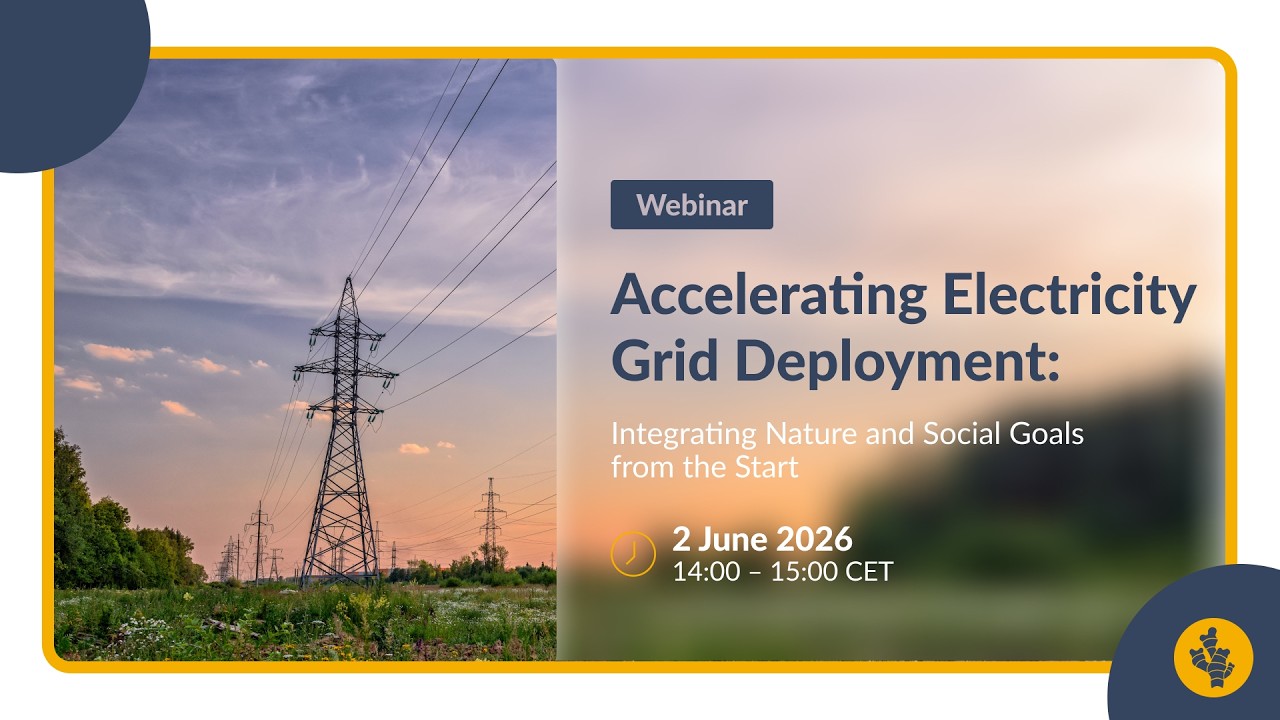
GINGR Webinar: Accelerating Electricity Grid Deployment
Keywords
Summary
178 words
Critical Evaluation
Value of the Information & Strength of the Argument
The webinar provides valuable insights into the practical integration of environmental and social goals in grid planning. The argumentation is solid, drawing on historical examples, current challenges, and real-world applications. The speakers effectively argue that early and systematic consideration of biodiversity and community concerns can lead to faster permitting, reduced conflicts, and enhanced project legitimacy. They support their claims with references to specific initiatives and case studies, such as the ‘Best Grid’ project and the ‘Safe Line for Birds’ initiative. The presentation is coherent and persuasive, though it could benefit from more quantitative evidence and independent validation.
Scientific Rigor, Source Quality, Title Accuracy
The webinar demonstrates scientific rigor by referencing a white paper and historical principles, but it lacks formal citations to peer-reviewed literature. The sources cited are primarily organizational reports and project websites, which are credible but not independently verified. The title accurately reflects the content, focusing on accelerating grid deployment while integrating nature and social goals. The presentation is well-structured and aligns with the stated objectives. The speakers are experts in their fields, and their practical experience adds credibility. However, the lack of external references and the promotional nature of the webinar slightly reduce its scientific rigor.
208 words
Title / Content Match
The title accurately reflects the webinar's focus on accelerating grid deployment while integrating nature and social goals.
Quality & Reliability
8/10
The webinar features expert speakers from RGI and National Grid, presenting a white paper with guiding principles. The content is well-structured and grounded in practical experience, but lacks peer-reviewed citations and independent verification.
Key Moments
Markers derived by PSI from the transcript: the creator did not define chapters.
- Introduction by Annika Lilliestam, setting the agenda and introducing speakers.
- Antonella Battaglini discusses the importance of grids for the energy transition and the need to integrate nature and social goals.
- Adrián Maté introduces the three guiding principles from the white paper.
- Adrián Maté elaborates on principle 1: integrating ecology and ecosystem services into grid planning.
- Adrián Maté discusses principle 2: early engagement, transparency, and legitimacy.
- Adrián Maté explains principle 3: adaptive governance based on local knowledge.
- Cíara Taberner presents National Grid's practitioner perspective and strategic approach.
- Q&A session addressing audience questions on implementation and challenges.
Cited Sources
- GINGR White Paper: Guiding Principles for Grids — Referenced as the basis for the webinar's content and guiding principles.
- GINGR Webinar Page — Provides additional information and presentations from the webinar.
Concurring Sources
- Renewables Grid Initiative — The host organization's website provides additional resources and context on grid development and sustainability.
Contribution & Novelties
The webinar contributes to the discourse on sustainable grid development by synthesizing historical principles and modern practices into three actionable guiding principles. It emphasizes the importance of integrating nature and social goals from the outset, rather than as an afterthought, and provides practical examples from National Grid. The presentation of a practitioner’s perspective adds real-world relevance.
Pour aller plus loin :
- Ecosystem services — Provides foundational understanding of ecosystem services and their role in planning.
- Social license to operate — Explores the concept of community acceptance and its importance for infrastructure projects.
- Adaptive management — Discusses iterative decision-making in environmental management, relevant to principle 3.
- Biodiversity net gain — A policy approach mentioned in the context of National Grid’s practices.
120 words
Radar Profile
The radar profile shows high scores in information quantity and quality, reflecting the webinar's comprehensive coverage. The technical level is moderate, suitable for a professional audience. Reliability is strong due to expert speakers, though independent verification is limited.
💬 No comments were provided for analysis.