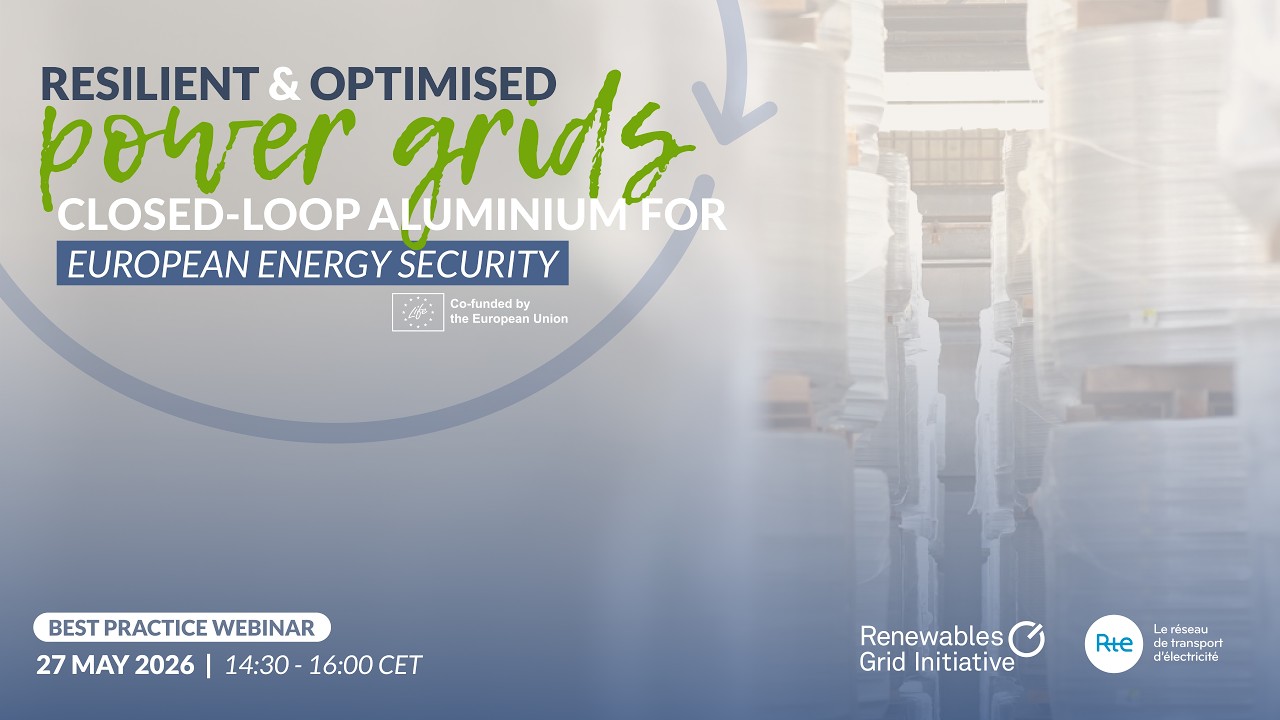
RGI-RTE Best Practice Webinar: Closed-Loop Aluminium for European Energy Security
Keywords
Summary
200 words
Critical Evaluation
Value of the Information & Strength of the Argument
The webinar provides valuable insights into a real-world application of circular economy principles in the energy sector. The argumentation is solid, based on concrete data from RTE’s project and Trimet’s industrial experience. The speakers effectively make the case for closed-loop aluminium as a means to reduce CO2 emissions, enhance supply chain resilience, and align with EU strategic priorities. The technical details, such as the challenges of impurities and the importance of specifications, add depth and credibility. However, the presentation is largely descriptive and lacks critical analysis of potential limitations or trade-offs, such as the economic viability at scale or the availability of sufficient scrap. The argumentation would be stronger with more quantitative data on costs and lifecycle assessments.
Scientific Rigor, Source Quality, Title Accuracy
The webinar demonstrates a reasonable level of scientific rigor. The speakers reference several studies and reports, including those from the Joint Research Centre, IEA, and EU policy documents, which are credible sources. The project itself is presented with technical specificity, and the collaboration between RTE, Trimet, and other partners is well-documented. However, the webinar does not provide direct links to these sources in the description, except for the RGI resource page. The title accurately reflects the content, and the presentation is well-structured. The lack of independent verification and the reliance on expert testimony slightly reduce the overall reliability. The webinar would benefit from citing specific publications or data sources to enhance transparency.
245 words
Title / Content Match
The title accurately reflects the content, focusing on a closed-loop aluminium project and its relevance to European energy security.
Quality & Reliability
7/10
The webinar presents a concrete case study from RTE and Trimet, with technical details and references to EU policies and studies. However, it is largely based on expert testimony and lacks independent verification or peer-reviewed sources.
Key Moments
Markers derived by PSI from the transcript: the creator did not define chapters.
- Introduction to RGI and the webinar agenda.
- Discussion on the material transition and supply chain challenges.
- RTE's presentation on the closed-loop aluminium project.
- Technical aspects of recycled aluminium conductors.
- Trimet's perspective on the aluminium industry and challenges.
- Discussion on traceability and quality control.
- Q&A session begins.
Cited Sources
- Closed-Loop Aluminium Resources — RGI resource page with more information and presentations from the webinar.
Concurring Sources
- IEA Report on Critical Minerals — Referenced in the webinar to highlight supply chain challenges and price increases.
Contribution & Novelties
The webinar provides a detailed case study of a closed-loop aluminium project in the energy sector, demonstrating the technical feasibility and benefits of using recycled aluminium in high-voltage conductors. It highlights the importance of collaboration across the value chain and the potential for reducing CO2 emissions and import dependency. The presentation offers practical insights into the challenges and solutions for incorporating recycled content, which is a relatively novel application in grid infrastructure.
Pour aller plus loin :
- Circular Economy Action Plan — EU policy framework relevant to the circularity goals discussed.
- Critical Raw Materials Act — EU legislation addressing raw material supply security.
- Aluminium recycling — Overview of aluminium recycling processes and benefits.
113 words
Radar Profile
The radar profile shows a balanced performance across all dimensions, with slightly higher scores in information quantity and quality, reflecting the webinar's comprehensive coverage. The technical level is moderate, suitable for a professional audience. The overall reliability is good, but the lack of independent sources and the reliance on expert testimony prevent a higher score.
💬 No comments were provided for analysis.