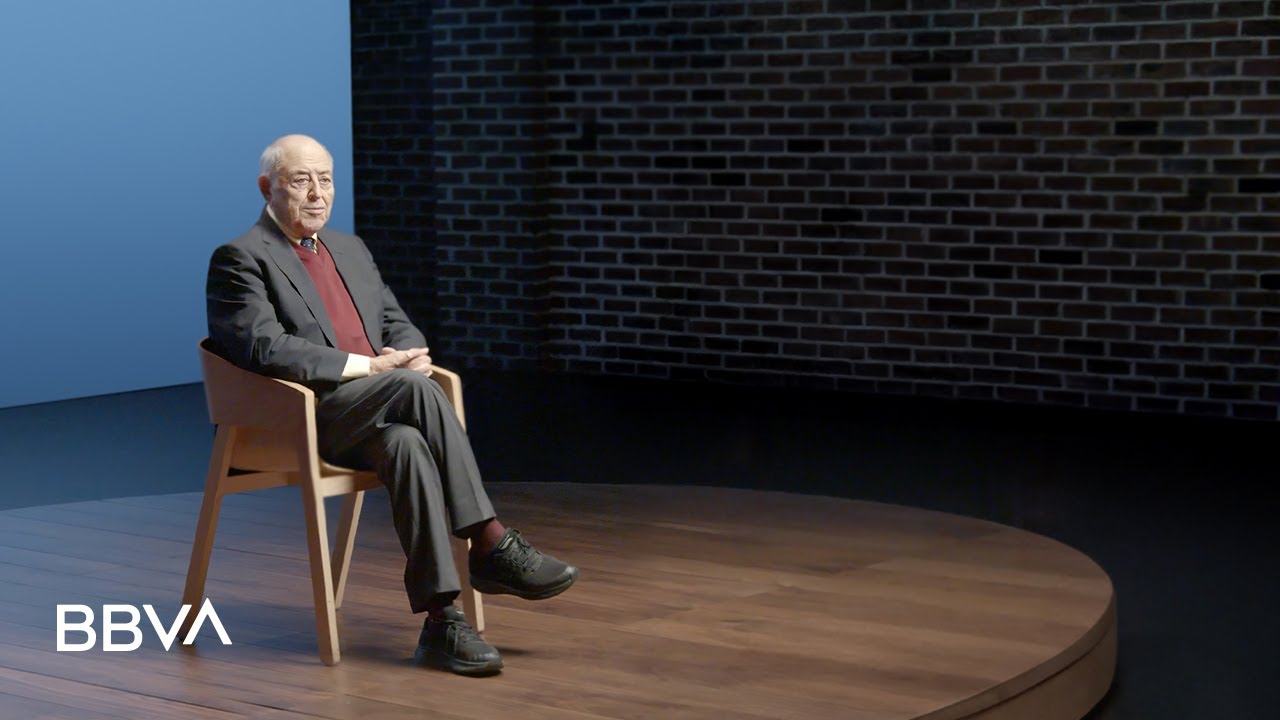
Una vacuna contra la insensatez. José Antonio Marina, filósofo y pedagogo
Keywords
Summary
206 words
Critical Evaluation
The lecture offers a compelling and accessible defense of philosophy as a vital tool for navigating modern life. Marina’s argumentation is coherent and grounded in a broad intellectual tradition, drawing on philosophy, psychology, and neuroscience. He effectively uses metaphors and anecdotes to illustrate complex ideas, such as the comparison between scientific verification and recognizing love, which makes the content engaging and relatable. The speaker’s credibility is enhanced by his extensive career in education and philosophy, and his ability to synthesize diverse fields is impressive. However, the lecture is primarily an opinion piece, lacking formal citations or empirical evidence to support some claims. For instance, his assertion that ’every time someone is not intelligent, someone pays the broken dishes’ is a rhetorical flourish rather than a testable hypothesis. Additionally, while he touches on the role of artificial intelligence in education, his advice remains general and could benefit from more concrete examples or references to current research. The title’s metaphor of a ‘vaccine against foolishness’ is apt, but the lecture does not provide a systematic ‘vaccination’ plan, instead offering philosophical reflections. The adéquation between title and content is good, as the lecture indeed aims to inoculate against intellectual complacency. Overall, the lecture is valuable for its emphasis on critical thinking and the practical relevance of philosophy, but it would be strengthened by more rigorous sourcing and empirical grounding.
226 words
Title / Content Match
The title metaphorically suggests a 'vaccine against foolishness', which aligns with the content's focus on developing critical thinking and intelligence to resist manipulation and misinformation.
Quality & Reliability
8/10
The speaker is a recognized philosopher and educator with extensive work on intelligence and education. The content is well-structured, drawing on philosophical concepts and psychological insights, but it is primarily an opinion-based lecture without formal citations or empirical data.
Chapters
- Por qué la filosofía sigue siendo imprescindible hoy
- Para qué sirve la filosofía en la sociedad actual (función social real)
- Qué es realmente la inteligencia y por qué solemos confundirla
- Por qué somos tan manipulables: psicología, medios y poder
- Todas las opiniones no valen lo mismo: el mito de la respetabilidad
- El problema del formato conflicto: por qué el debate no nos hace pensar
- Cómo usar la inteligencia artificial en educación sin volvernos dependientes
- Qué es lo más inteligente que podemos hacer con las redes sociales
- ¿Es mejor vivir en la ignorancia? Filosofía, ciencia y bienestar
Cited Sources
- AprendemosJuntos en Facebook — Official Facebook page of the channel, where additional content and discussions are shared.
- AprendemosJuntos Podcast en Spotify — Podcast version of the interview and other episodes, available for streaming.
Concurring Sources
- AprendemosJuntos en Facebook — The channel's Facebook page, which shares similar educational content and discussions.
- AprendemosJuntos Podcast en Spotify — Podcast version of the interview, consistent with the video's content.
Contribution & Novelties
The lecture provides a fresh perspective on the value of philosophy in the digital age, emphasizing its role as a ‘public service’ for developing critical thinking. Marina’s distinction between ‘clever’ and ‘intelligent’ offers a nuanced understanding of intelligence that goes beyond cognitive abilities. His practical approach to philosophical questions, such as using the example of love to illustrate scientific verification, makes abstract concepts accessible. The discussion on the dangers of the ‘conflict format’ in media and the need for a ‘vaccine against foolishness’ is particularly relevant in an era of misinformation.
Pour aller plus loin :
- Critical thinking - Wikipedia — Provides an overview of critical thinking, its components, and its importance in education and society.
- Epigenetics - Wikipedia — Marina briefly mentions epigenetics; this resource explains how environmental factors influence gene expression, relevant to his discussion of intelligence and learning.
- George Pólya - Wikipedia — The mathematician who influenced Marina’s approach to problem-solving; his work on heuristics is foundational for educational methods.
163 words
Radar Profile
The radar profile shows high scores in quantity and quality of information, reflecting the depth and relevance of the content. The technical level is moderate, indicating that the lecture is accessible to a general audience while still providing intellectual substance. The reliability score is slightly lower, as the content is opinion-based rather than empirically grounded.
💬 Très positif. Sur les 30 commentaires analysés, les spectateurs expriment une admiration unanime pour la sagesse et la clarté de José Antonio Marina, soulignant l'impact positif de la conférence sur leur réflexion.