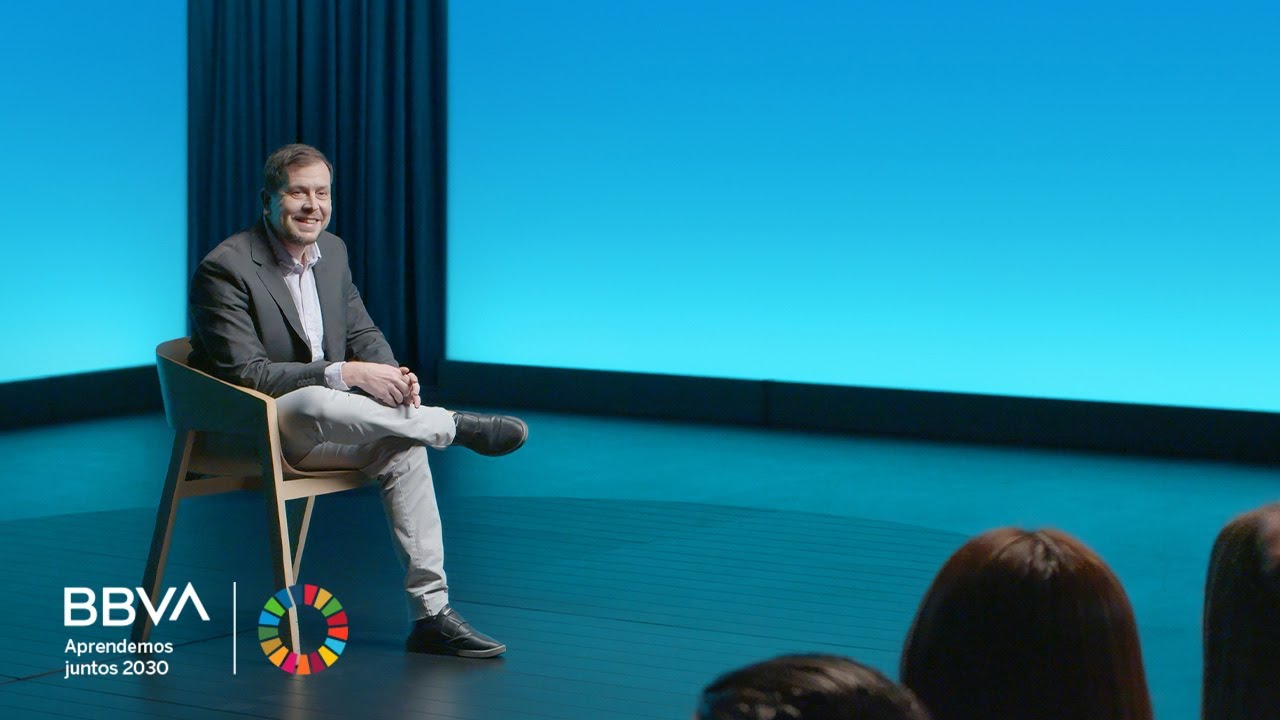
V. Completa. Aarón Fernández del Olmo, neuropsicólogo: ¿Qué sucede en el cerebro cuando falla?
Keywords
Summary
157 words
Critical Evaluation
The video offers a valuable and engaging introduction to neuropsychology, focusing on the human side of brain damage. Aarón Fernández del Olmo, a clinical neuropsychologist, effectively uses storytelling to illustrate complex concepts, making them accessible to a broad audience. His clinical anecdotes, such as the Capgras syndrome case, vividly demonstrate how brain lesions can profoundly alter perception and identity. The discussion on strokes is informative, covering both ischemic and hemorrhagic types, and correctly emphasizes the critical role of timely intervention. He also explains neuroplasticity in an understandable way, reassuring viewers about the brain’s capacity for adaptation. However, the talk is primarily anecdotal and lacks rigorous scientific citations. While the information is accurate and aligns with established neuroscience, the absence of specific studies or references weakens its scientific depth. The speaker’s expertise is evident, but the format is more of a public lecture than a systematic review. The title accurately reflects the content, and the structure follows a Q&A format that addresses common questions. The inclusion of literary references (Oliver Sacks, Alexander Luria) adds a humanistic dimension, but also underscores the narrative approach. Overall, the video is a compelling and trustworthy introduction to neuropsychology, though viewers seeking detailed scientific evidence may need to consult additional sources. The speaker’s emphasis on empathy and the personal impact of brain damage is a notable strength, setting it apart from purely technical presentations.
228 words
Title / Content Match
The title accurately reflects the content: a comprehensive interview with a neuropsychologist about what happens in the brain when it fails, covering various neurological and psychological conditions.
Quality & Reliability
8/10
The speaker is a clinical neuropsychologist with expertise in brain damage and neurodegenerative diseases. He presents well-established concepts (Capgras syndrome, stroke, neuroplasticity) with personal clinical anecdotes, but the talk is largely anecdotal and lacks systematic citations or references to specific studies. The information is accurate and up-to-date, but the reliance on personal experience and storytelling limits its scientific rigor.
Chapters
- Intro
- ¿Qué le pasa a tu cerebro cuando tiene un ictus?
- ¿Cuáles son los síntomas de un ictus?
- ¿Qué es la neuroplasticidad?
- ¿Debo preocuparme si una palabra no me sale?
- ¿El daño cerebral afecta a quién eres y cómo ves el mundo?
- ¿Qué es la atención?
- ¿Qué es la niebla mental y cómo nos afecta?
- ¿Cómo funciona la memoria?
- ¿El Alzheimer es hereditario?
- ¿Dónde se puede encontrar un buen neuropsicólogo clínico?
- Cierre
Cited Sources
- AprendemosJuntos en Facebook — Official Facebook page of the channel, mentioned in the description.
- Podcast de AprendemosJuntos en Spotify — Spotify podcast link provided in the description.
Concurring Sources
- Capgras syndrome - Wikipedia — Provides background on the syndrome mentioned in the video.
- Stroke - Wikipedia — Offers detailed information on stroke types and effects.
Contribution & Novelties
The video provides a unique blend of personal clinical experience and accessible storytelling to explain complex neuropsychological phenomena. It demystifies conditions like Capgras syndrome and stroke, emphasizing the human impact of brain damage. The speaker’s approach, rooted in the tradition of Alexander Luria and Oliver Sacks, highlights the importance of understanding the person behind the neurological condition. This humanistic perspective is often missing in technical discussions.
Pour aller plus loin :
- Capgras syndrome — A detailed overview of the condition, its symptoms, and neurological basis.
- Neuroplasticity — Comprehensive explanation of the brain’s ability to reorganize itself.
- Stroke — Medical information on types, causes, and treatment of stroke.
- Oliver Sacks — Renowned neurologist and author, whose work inspired the speaker.
- Alexander Luria — Soviet neuropsychologist, considered a pioneer in the field.
130 words
Radar Profile
The radar profile shows high scores in quantity and quality of information, reflecting the speaker's expertise and the rich content. The technical level is moderate, making it accessible to a general audience. Reliability is high due to the speaker's credentials, though the lack of explicit citations slightly lowers it.