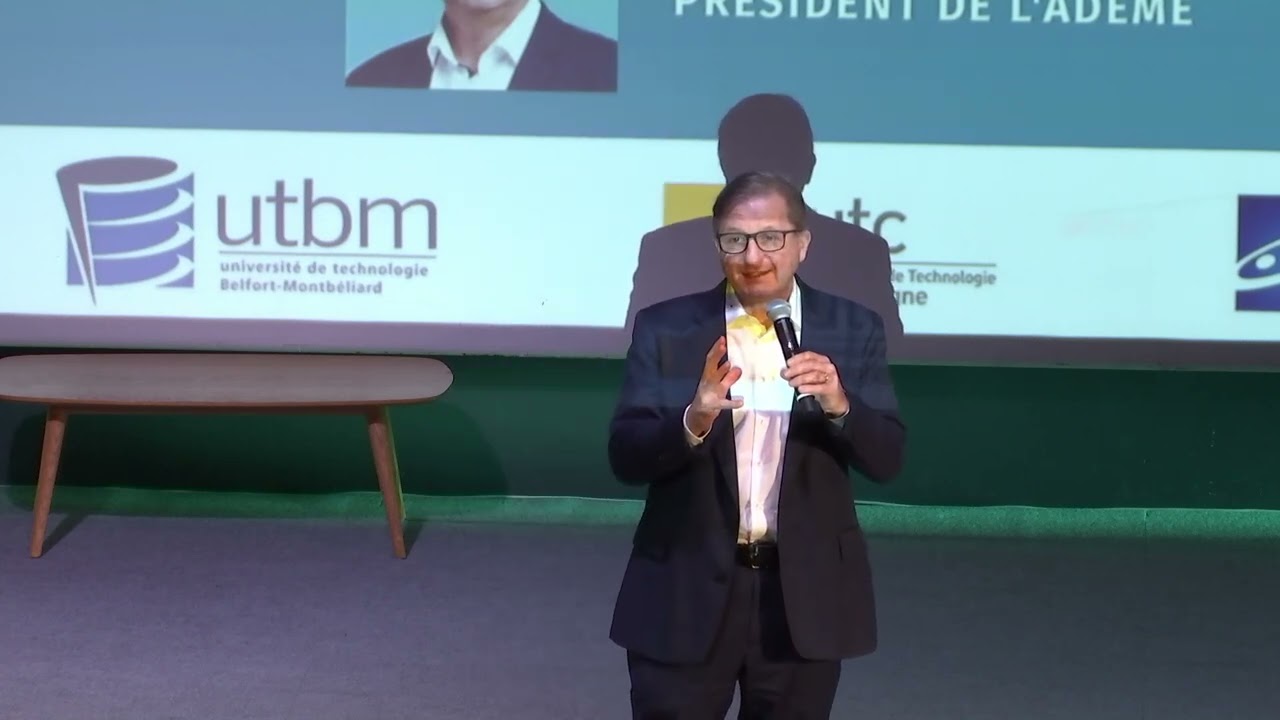
Sylvain Waserman : "Transition écologique, économie et territoires, les enjeux et solutions "
Keywords
Summary
198 words
Critical Evaluation
Value of the Information & Strength of the Argument
The talk provides valuable insights into the economic and social dimensions of ecological transition, based on the speaker’s extensive field experience. The argumentation is coherent and persuasive, using concrete examples and analogies to illustrate complex points. However, some claims lack rigorous data or citations, and the talk is more of an opinion piece than a scientific analysis.
Scientific Rigor, Source Quality, Title Accuracy
The speaker is a credible authority, but the talk does not provide detailed sources or references. The title accurately reflects the content. The description includes a link to the university’s event page, which may contain additional information. Overall, the scientific rigor is moderate, with a strong reliance on anecdotal evidence and personal experience.
125 words
Title / Content Match
The title accurately reflects the content, which covers ecological transition, economy, and territories, addressing both challenges and solutions.
Quality & Reliability
7/10
The speaker is a recognized expert in ecological transition, with concrete experience in local government and as head of ADEME. The talk is based on field observations and specific examples, but lacks detailed citations or data sources, and some claims are presented without rigorous evidence.
Key Moments
Markers derived by PSI from the transcript: the creator did not define chapters.
- Introduction of Sylvain Waserman by the host, highlighting his background.
- Waserman outlines his four key messages: economy, citizen's role, technology, and ADEME's backlash.
- Discussion on the five reasons why businesses are engaged in transition: client pressure, business model uncertainty, finance, public procurement, and talent attraction.
- Mention of the 64 billion euros spent on fossil fuel imports and the need to re-internalize value.
- Explanation of the four types of changes impacting the social pact: investment, habits, renunciation, and regulation.
- Example of gel douche vs. soap to illustrate habit changes and the impact of individual choices.
- Discussion on ZFE as a conflict of liberties and the need to reinvent democratic forms.
- Emphasis on the role of territories and ADEME's dissemination of successful local solutions.
- Brief discussion on AI and technology, and conclusion on the backlash against ecological transition.
Cited Sources
- Conference page at UTT — Official event page providing details about the conference.
Concurring Sources
- ADEME official website — Official agency for ecological transition, providing resources and data.
Dissenting Sources
- No discordant sources found — No sources contradicting the talk were identified.
Contribution & Novelties
The talk offers a pragmatic perspective on ecological transition, emphasizing the economic drivers and the importance of local territories. It provides a framework for understanding the social pact and the types of changes needed. The speaker’s role as head of ADEME gives weight to his observations.
Pour aller plus loin :
- ADEME official website — Official agency for ecological transition, providing resources and data.
- Citizens’ Convention for Climate — Wikipedia article on the French citizens’ assembly on climate.
- Low Emission Zones (ZFE) — Wikipedia article on low emission zones in France.
91 words
Radar Profile
The radar profile shows high scores in quantity of information and global reliability, reflecting the speaker's expertise and the breadth of topics covered. The technical level is moderate, as the talk is accessible to a general audience. The quality of information is good but not exceptional, with some claims lacking rigorous evidence.