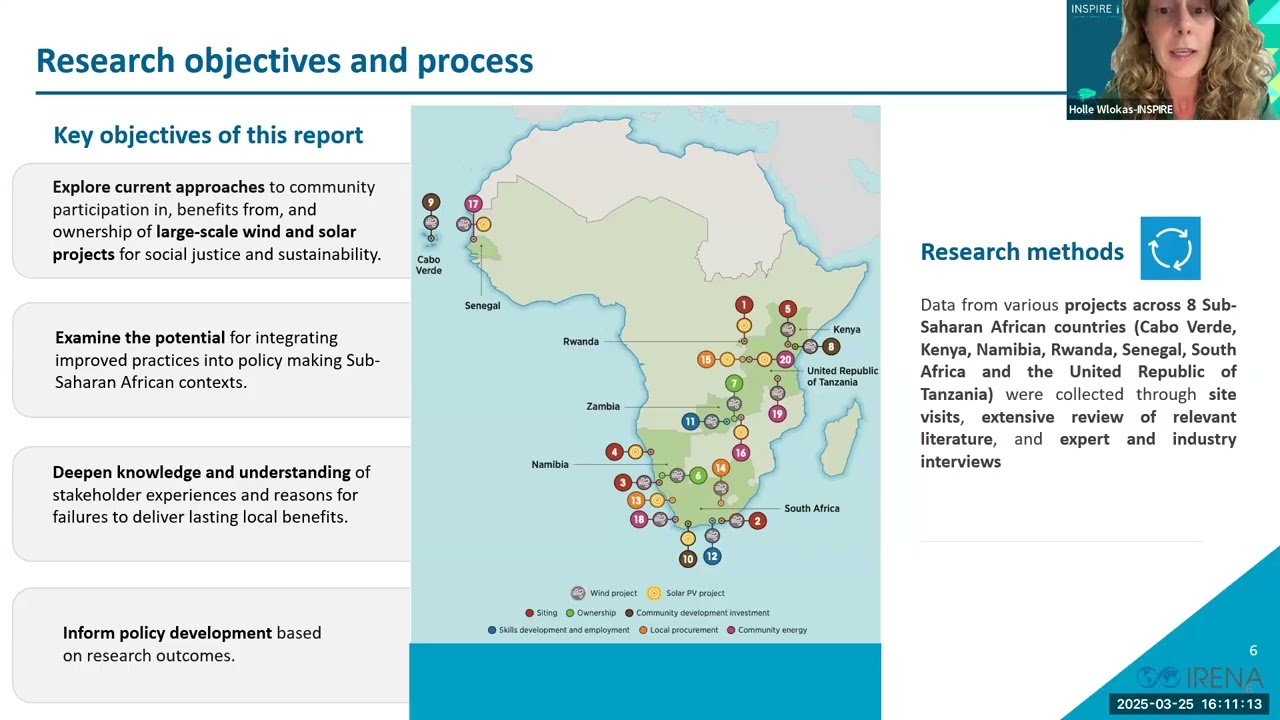
A just energy transition for communities: Large-scale wind and solar projects in Sub-Saharan Africa
Keywords
Summary
160 words
Critical Evaluation
Value of the Information & Strength of the Argument
The webinar provides valuable insights into the social dimensions of renewable energy projects, a topic often overlooked. The argumentation is solid, grounded in the report’s methodology and specific case studies. The speakers effectively argue that community engagement is not just ethical but essential for long-term project success and social license. They present a balanced view, acknowledging challenges and the need for deliberate, well-resourced efforts. The recommendations are practical and targeted at different stakeholders, enhancing the value of the information.
Scientific Rigor, Source Quality, Title Accuracy
The webinar is based on a formal IRENA report, which lends credibility. The methodology is described, including site visits and interviews, indicating a rigorous approach. The sources cited are primarily the report itself and references to specific projects and policies. The title accurately reflects the content. The presentation is well-structured and the speakers are knowledgeable. However, as a webinar, it is a summary of the report, and the depth of evidence is limited. The Q&A section adds value by addressing specific questions, but the overall rigor is high for a webinar format.
186 words
Title / Content Match
The title accurately reflects the content, which focuses on community aspects of large-scale wind and solar projects in Sub-Saharan Africa.
Quality & Reliability
8/10
The webinar is based on a formal IRENA report, with methodology including site visits, interviews, and literature reviews across eight countries. The speakers are experts from IRENA and an NGO. The content is well-structured and evidence-based, though it is a presentation of findings rather than a peer-reviewed study.
Key Moments
Markers derived by PSI from the transcript: the creator did not define chapters.
- Introduction by Karan Kochhar, overview of IRENA and webinar series.
- Gondia introduces IRENA's socioeconomic work streams.
- Holly presents the rationale and methodology of the report.
- Discussion on siting examples, including Kipeto wind farm in Kenya and solar IPP in Rwanda.
- Ownership structures and community shareholding in South Africa and Namibia.
- Community development investments and the role of trusts and foundations.
- Skills development and employment opportunities, including women-focused training in Kenya.
- Local business opportunities and local procurement examples.
- Gender and community energy aspects, and the need for rights-based approaches.
- Recommendations for policymakers, industry, communities, and financiers.
Cited Sources
- A just energy transition for communities: Large-scale wind and solar projects in Sub-Saharan Africa — The report discussed in the webinar, providing the basis for the findings and recommendations.
Concurring Sources
- IRENA – Renewable Energy and Jobs Annual Review — IRENA's annual review on employment in renewables, supporting the discussion on job creation.
Contribution & Novelties
The webinar provides a concise overview of a comprehensive report that fills a gap in literature on community engagement in renewable energy projects in Sub-Saharan Africa. It highlights emerging practices and offers actionable recommendations for various stakeholders. The emphasis on trauma-informed social performance and the integration of social outcomes into procurement is particularly innovative.
Pour aller plus loin :
- Just Transition — Concept central to the webinar, providing background on the broader movement.
- Free, Prior and Informed Consent — A key principle mentioned in the webinar, with international recognition.
- Renewable Energy Independent Power Producer Procurement Programme (REIPPPP) — South Africa’s program referenced in the webinar, illustrating policy mechanisms for community ownership.
111 words
Radar Profile
The radar profile shows high scores in quality of information and reliability, reflecting the authoritative source and structured presentation. The quantity of information is moderate, as the webinar is a summary, and the technical level is moderate, suitable for a broad audience. The overall profile indicates a reliable and informative session.