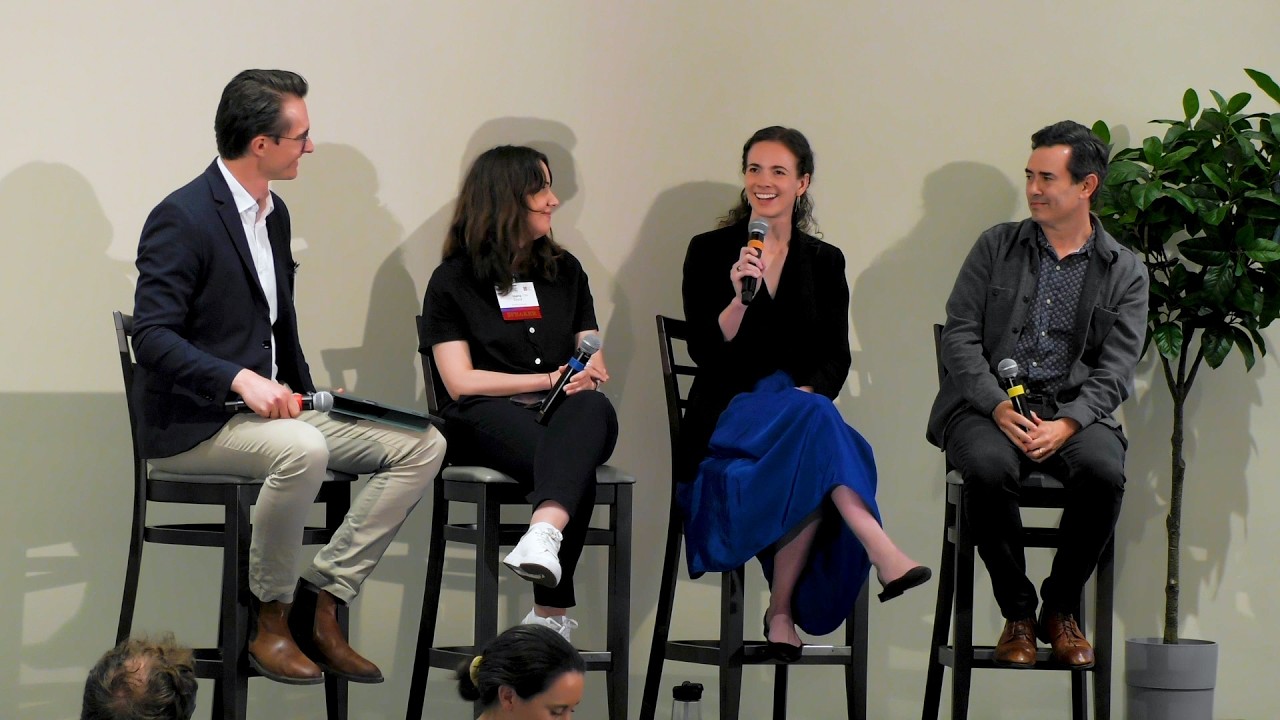
2026 Conference on Physics and AI: Panel 2
Keywords
Summary
148 words
Critical Evaluation
The panel provides a thoughtful and nuanced examination of the intersection of AI and physics, focusing on foundation models and agents. The speakers, all established researchers, offer valuable insights grounded in their practical experience. Bloom’s critique of foundation models is particularly incisive, highlighting often-overlooked issues such as modal degeneracy in multimodal contrastive learning, where different physical phenomena can produce similar data representations, leading to ambiguous embeddings. He also stresses the importance of evaluating models on truly unseen data, a point that resonates with the broader machine learning community. His concern about citation capture is a novel and important ethical consideration, as AI models may subsume original research without proper attribution. Pettee builds on this by questioning whether foundation models can truly revolutionize physics, noting that their potential for surprising discoveries remains unproven. She raises pertinent methodological questions about self-supervised learning and data curation, and her call to rethink social structures in science is forward-thinking. Her discussion of AI agents is balanced, acknowledging their benefits while warning against cognitive offloading and skill atrophy. She advocates for opt-in mechanisms like agentic reproducibility to maintain trust and rigor, a practical suggestion. The panel’s arguments are coherent and well-reasoned, though they are largely opinion-based without formal citations or data. The discussion is accessible to a technical audience but assumes familiarity with AI and physics concepts. The title accurately reflects the content, and the panel’s expertise lends credibility to their viewpoints. However, the lack of concrete examples or case studies limits the depth of the analysis. Overall, this is a high-quality discussion that raises important questions for the field, though it could benefit from more specific evidence.
272 words
Title / Content Match
The title accurately reflects the content: a panel discussion on foundation models and agents for physics, part of the 2026 Conference on Physics and AI.
Quality & Reliability
8/10
Panel of established researchers in physics and AI, discussing current challenges and future directions. Arguments are reasoned and grounded in their experience, but no formal citations or data are provided. The discussion is forward-looking and opinion-based, with a high level of expertise.
Key Moments
Markers derived by PSI from the transcript: the creator did not define chapters.
- Introduction of panel and first speaker Josh Bloom
- Bloom discusses modal degeneracy in multimodal foundation models
- Bloom raises concerns about citation capture and data corruption
- Mariel Pettee begins her talk on foundation models in physics
- Pettee discusses open questions in self-supervised learning and data curation
- Pettee transitions to AI agents and their role in scientific workflows
- Pettee discusses cognitive offloading and skill atrophy
- Ioana Ciucă begins her presentation (if applicable, based on transcript)
Cited Sources
- 2026 Conference on Physics and AI (PAI26) — Official conference page providing context and agenda for the event.
Concurring Sources
- AstroCLIP — A multimodal foundation model for astronomy, illustrating some of the approaches discussed.
Contribution & Novelties
The panel offers a critical and forward-looking perspective on the integration of foundation models and AI agents in physics. It highlights underexplored challenges such as modal degeneracy, citation capture, and the social implications of AI in science. The discussion encourages a rethinking of scientific workflows and the role of human expertise.
Pour aller plus loin :
- AstroCLIP — A multimodal foundation model for astronomy, illustrating some of the approaches discussed.
- Self-supervised learning — Overview of the learning paradigm central to foundation models.
- Cognitive offloading — Concept relevant to the discussion on skill atrophy.
93 words
Radar Profile
The radar profile shows high scores in quality of information and reliability, reflecting the expertise of the panelists. The quantity of information is moderate, as the discussion is more conceptual than data-heavy. The technical level is high, suitable for an expert audience.