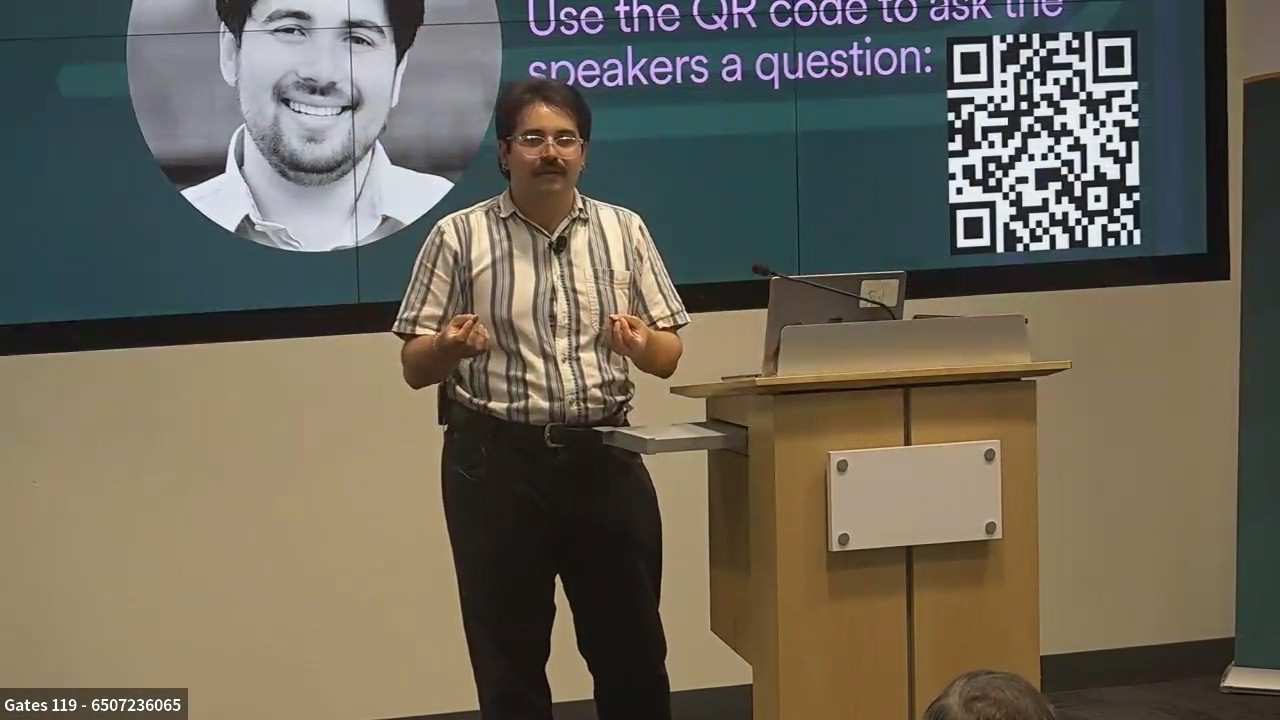
HAI Seminar: Predicting Child Labor in Ghana's Cocoa Industry
Keywords
Summary
147 words
Critical Evaluation
The seminar presents a rigorous and innovative approach to a pressing social issue. The methodology is sound: the use of non-parametric machine learning models (XGBoost, Random Forest) with cross-validation and hyperparameter grid search is appropriate for the prediction task. The integration of satellite-derived environmental indicators with household survey data is a creative way to address data scarcity and enhance model performance. The reported AUC of 0.95 and F1 of 0.84 are impressive, though the presentation acknowledges these are preliminary findings from a working paper. The use of SHAP values and partial dependence plots for interpretability is commendable, as it provides insights into the drivers of child labor risk. The finding that cocoa-driven deforestation is a strong predictor highlights the interconnection between environmental practices and social outcomes. The study’s approach to grappling with data scarcity and bias is thoughtful, though the presentation could have delved deeper into potential limitations, such as the generalizability of the model to other regions or the potential for confounding variables. The speakers are credible: Antonio Skillicorn is a PhD candidate in civil engineering, and Dan Yanu is an associate professor at Stanford GSB, both with relevant expertise. The seminar is well-structured, with a clear introduction, detailed methodology, and a Q&A session. The title accurately reflects the content. Overall, this is a valuable contribution to the field of responsible AI and supply chain ethics, with practical implications for monitoring and intervention.
234 words
Title / Content Match
The title accurately reflects the content, which focuses on predicting child labor in Ghana's cocoa industry using machine learning.
Quality & Reliability
8/10
The seminar presents original research with a clear methodology, including non-parametric ML models, cross-validation, and interpretability tools. The study is grounded in real-world data and collaboration with an NGO. However, it is a working paper with preliminary findings, and the presentation is a seminar, not a peer-reviewed publication.
Chapters
Cited Sources
- Stanford HAI Seminar — The seminar video itself, which includes the presentation and Q&A.
Concurring Sources
- International Cocoa Initiative — The NGO mentioned in the presentation that works to combat child labor in cocoa.
Contribution & Novelties
The study’s original contribution lies in its integration of satellite-derived environmental indicators with household survey data to predict child labor risk, achieving high predictive performance while maintaining interpretability. This approach addresses data scarcity and bias in child labor measurement, providing actionable risk profiles for monitoring. The finding that cocoa-driven deforestation is a key predictor underscores the link between environmental and social issues.
Pour aller plus loin :
- Child Labour in Cocoa — Provides background on the issue.
- SHAP values — Explains the interpretability method used.
- XGBoost — Details the machine learning algorithm employed.
93 words
Radar Profile
The radar profile shows high scores in information quantity, quality, and reliability, with a slightly lower technical level, indicating a well-balanced presentation that is both informative and credible.