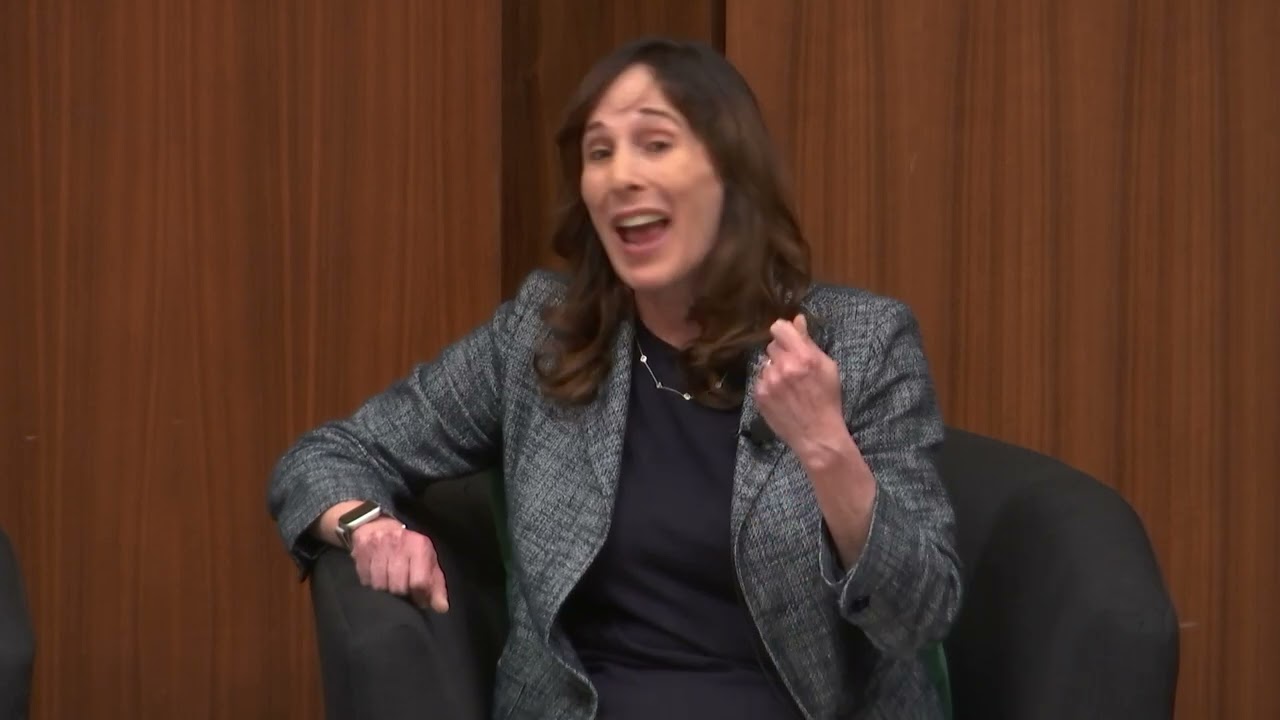
AI's Global Impact on Democracy and Governance
Keywords
Summary
142 words
Critical Evaluation
The panel provides a thoughtful and balanced examination of AI’s implications for democracy and governance. The speakers bring diverse expertise—computer science, international security, and law—which enriches the discussion. Fei-Fei Li’s defense of open models is grounded in the practical benefits for research and innovation, while acknowledging potential harms. Amy Zegart’s framework of ‘foreseeability’ is particularly insightful, breaking down the challenges into technical, business, and analytic dimensions. She rightly points out that red teaming and alternative perspectives are underutilized, a critical gap in risk assessment. Tino Cuellar adds a legal and geopolitical perspective, emphasizing the continuum between open and closed models and the potential for future models to become genuinely dangerous. The discussion avoids oversimplification, recognizing that both open and closed models carry risks and benefits. However, the conversation remains at a high level, with few concrete policy recommendations or specific examples. The lack of empirical data or case studies weakens the depth of the analysis. The title accurately reflects the content, though the focus is more on governance than on democracy per se. Overall, the panel offers valuable insights but could benefit from more actionable proposals and evidence-based arguments.
189 words
Title / Content Match
The title accurately reflects the discussion on AI's impact on democracy and governance, covering disinformation, surveillance, and policy responses.
Quality & Reliability
8/10
Panel of highly credible experts (Stanford professors, former Supreme Court justice, think tank president) discussing nuanced issues with balanced perspectives. No specific data or studies cited, but arguments are well-reasoned and grounded in expertise.
Key Moments
Markers derived by PSI from the transcript: the creator did not define chapters.
- Introduction of panelists and topic.
- Discussion on Meta's Llama 3.1 release and open source debate.
- Fei-Fei Li argues for the importance of open models for innovation.
- Amy Zegart discusses foreseeability of risks and analytic blind spots.
- Tino Cuellar on licensing and the continuum of open vs. closed models.
- Discussion on future dangerous capabilities and the need for preparedness.
- Challenges of identifying the 'moment' when models become dangerous.
- Call for building capacity in universities and small companies to assess models.
- Q&A session begins.
Cited Sources
- NTIA report on open foundation models — Mentioned as recent report on open models, recommending monitoring but not restricting.
Concurring Sources
- Stanford HAI — The panel is hosted by Stanford HAI, a leading research institute on AI.
Contribution & Novelties
The panel offers a nuanced perspective on the open vs. closed AI debate, emphasizing the need to move beyond labels and focus on foreseeability of risks. It highlights the importance of diverse perspectives in risk assessment and the need for infrastructure to evaluate models independently.
Pour aller plus loin :
- AI and Democracy — Overview of AI’s impact on democratic processes.
- Open-source artificial intelligence — Discussion on definitions and implications.
- Red team (AI) — Concept of adversarial testing in AI.
80 words
Radar Profile
The radar profile shows high scores in quality and reliability, reflecting the expertise of the panelists. The lower score in quantity of information suggests the discussion is more qualitative than data-driven. The moderate technical level indicates accessibility to a general audience.