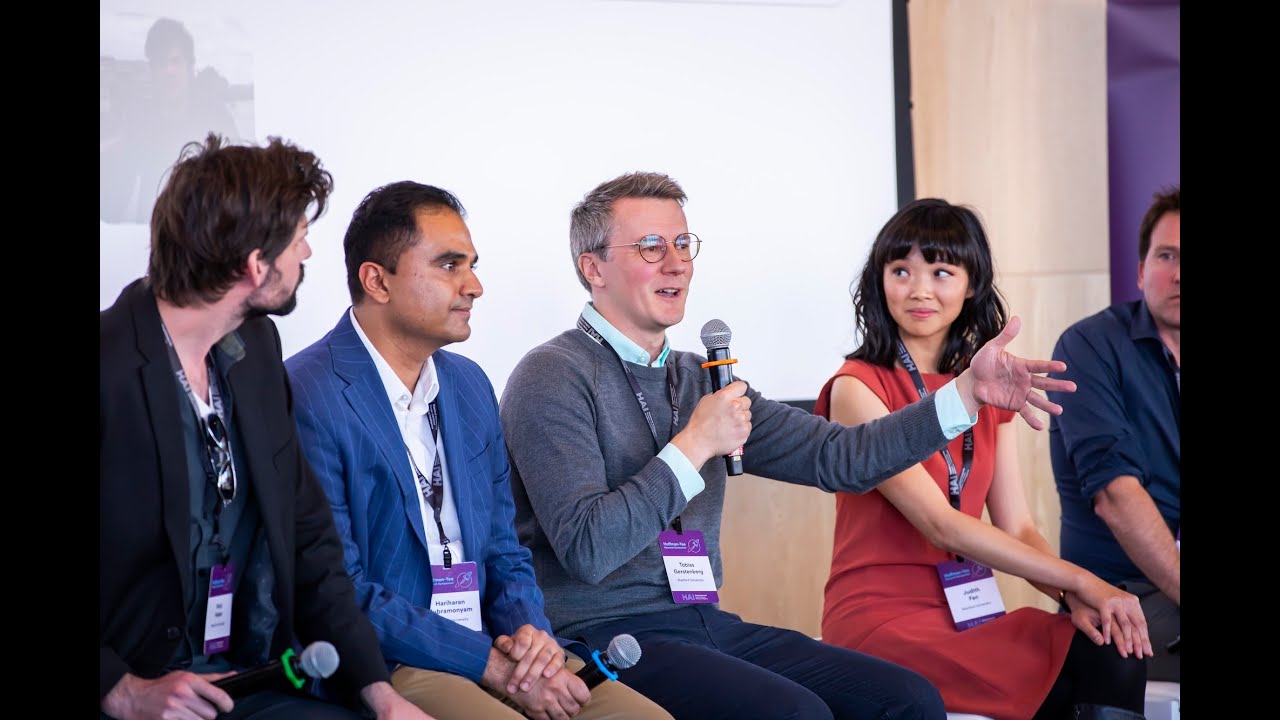
Session 4: Building Shared Conceptual Grounding for Interacting with GenAI
Keywords
Summary
156 words
Critical Evaluation
The talk provides a compelling and well-structured argument for the importance of shared conceptual grounding in human-AI collaboration. The use of the Ansel Adams analogy is effective in illustrating the concept and grounding it in a familiar context. The speaker’s personal experience with prompting AI for a specific image vividly demonstrates the frustrations of current tools, making the problem tangible. The research approach, which involves studying human-human collaboration to inform AI design, is methodologically sound and aligns with established practices in HCI and cognitive science. However, the talk presents preliminary findings without detailed data or peer-reviewed publications, so the evidence is largely anecdotal and based on expert opinion. The experimental setup described is promising but lacks specifics on sample sizes, controls, and analysis methods. The talk also does not address potential limitations or alternative approaches. The sources cited are primarily the project’s own website and general references to articles, which are not detailed. Overall, the talk is insightful and thought-provoking, but its scientific rigor is limited by the lack of published evidence. The title accurately reflects the content, and the talk is well-suited for an academic audience interested in human-AI interaction.
191 words
Title / Content Match
The title accurately reflects the content, which focuses on establishing shared conceptual grounding between humans and generative AI.
Quality & Reliability
8/10
The talk is presented by researchers from Stanford HAI, a reputable institution, and discusses ongoing research with a clear methodology. The content is based on expert knowledge and preliminary findings, but lacks peer-reviewed publications or detailed data, so a high but not perfect score is given.
Chapters
Cited Sources
- Hoffman-Yee Research Grant Program — The talk is part of research supported by this grant program, and the link provides information about the grant and recipients.
Concurring Sources
- Hoffman-Yee Research Grant Program — The project is funded by this program, indicating institutional support and alignment with Stanford HAI's research goals.
Contribution & Novelties
The talk introduces a novel framework for understanding and improving human-AI collaboration by emphasizing the need for shared conceptual grounding. It proposes a research agenda that combines cognitive psychology and HCI to study human communication and then apply those insights to AI systems. The use of the Ansel Adams analogy provides a clear and memorable illustration of the concept.
Pour aller plus loin :
- Theory of Mind — Relevant to the mutual understanding between humans and AI.
- Conversational repair — Key mechanism for establishing common ground in dialogue.
- Zone System — Ansel Adams’ technique for controlling tonal range, used as an example of shared concepts.
105 words
Radar Profile
The radar profile shows high scores in information quantity, quality, and reliability, with a slightly lower technical level, indicating a well-balanced and credible presentation that is accessible to a broad academic audience.