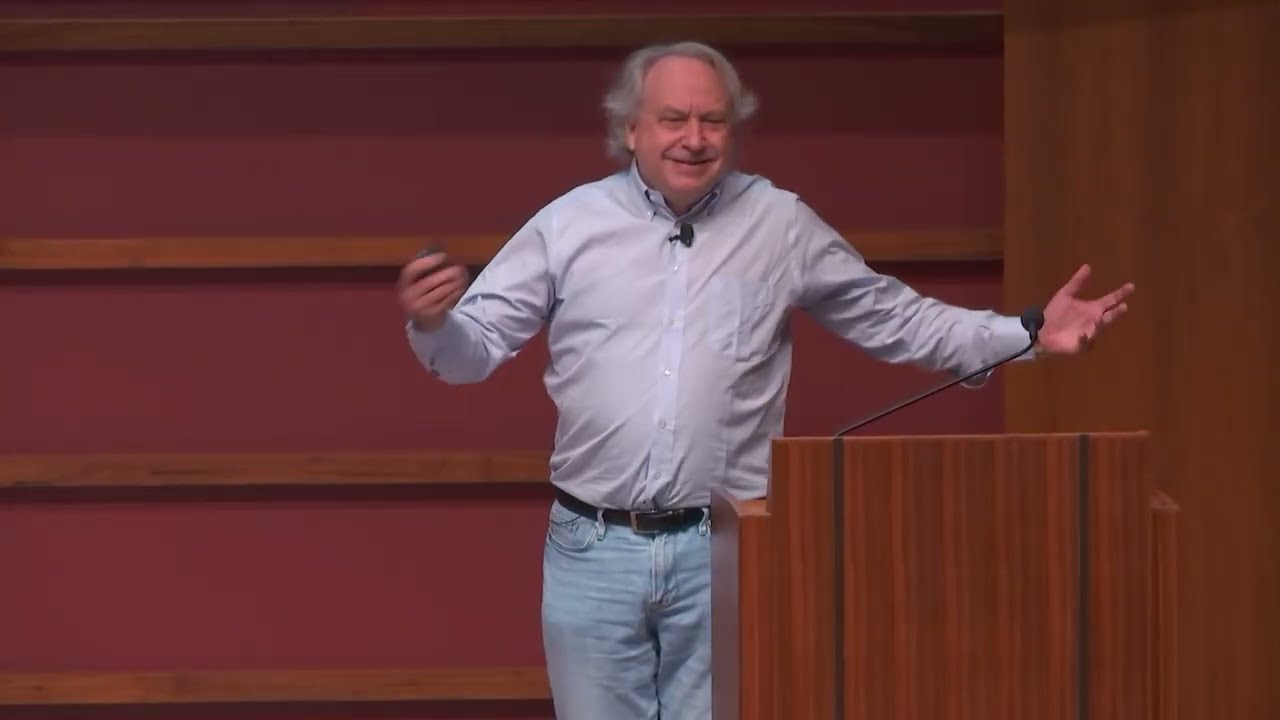
Robotics in a Human-Centered World: Robotics: The Push and Pull of Ideas and Applications
Keywords
Summary
141 words
Critical Evaluation
Rodney Brooks delivers a compelling and grounded perspective on robotics, drawing on his extensive experience as a researcher and entrepreneur. His three laws of robotics provide a useful framework for evaluating robot design and deployment, emphasizing the importance of user acceptance, human agency, and realistic timelines for technology maturation. The talk is rich with historical anecdotes, such as the early self-driving car demonstrations and his own projects, which lend credibility to his arguments. However, the presentation is largely anecdotal and opinion-based, lacking rigorous data or systematic analysis. Brooks’s critique of AI hype is well-founded, but he does not provide a balanced view of the potential benefits of recent AI advances. The discussion of his company’s warehouse robots serves as a concrete example of human-centered design, but it also functions as a promotional segment, which may bias his perspective. The talk’s strength lies in its pragmatic realism, but it could benefit from more nuanced engagement with counterarguments. The title accurately reflects the content, and the talk is well-structured and engaging. Overall, it is a valuable contribution to the discourse on robotics, offering a seasoned expert’s perspective on the challenges and opportunities in the field.
193 words
Title / Content Match
The title accurately reflects the content, which discusses the interplay between ideas and applications in robotics from a human-centered perspective.
Quality & Reliability
8/10
The speaker is a renowned robotics expert with decades of academic and industry experience. His arguments are grounded in personal experience and historical examples, but the talk is largely anecdotal and opinion-based rather than data-driven.
Key Moments
Markers derived by PSI from the transcript: the creator did not define chapters.
- Introduction of Rodney Brooks and his background.
- First law of robotics: appearance must match capabilities.
- Second law: robots must not undermine human agency.
- Third law: technologies need 10+ years of improvement.
- Historical examples of self-driving cars and the long timeline.
- Discussion of humanoid robots and their limitations.
- Introduction of Robust AI and warehouse robots.
- Critique of AI hype and the importance of physics and people.
- Conclusion: realistic expectations for AI and robotics.
Cited Sources
- Robust AI — Mentioned as the speaker's current company developing warehouse robots.
Concurring Sources
- Stanford HAI — The host institution for the talk, known for research on human-centered AI.
Contribution & Novelties
The talk provides a seasoned expert’s perspective on the gap between AI hype and practical robotics deployment, emphasizing human-centered design principles. It offers a framework (three laws) for evaluating robot acceptance and readiness.
Pour aller plus loin :
- Gartner Hype Cycle — A model for understanding technology hype cycles.
- Moravec’s Paradox — The observation that high-level reasoning requires little computation, but low-level sensorimotor skills require enormous computational resources.
- Robotics: Science and Systems — A leading conference for robotics research, relevant to the field’s progress.
84 words
Radar Profile
The radar profile shows high scores in quality and reliability, reflecting the speaker's expertise and grounded arguments. The lower score in quantity of information suggests the talk is more focused on qualitative insights than exhaustive coverage. The technical level is moderate, making it accessible to a broad audience.
💬 No comments were provided for analysis.