Robotics in a Human-Centered World: Highlight Sessions
Keywords
Summary
117 words
Critical Evaluation
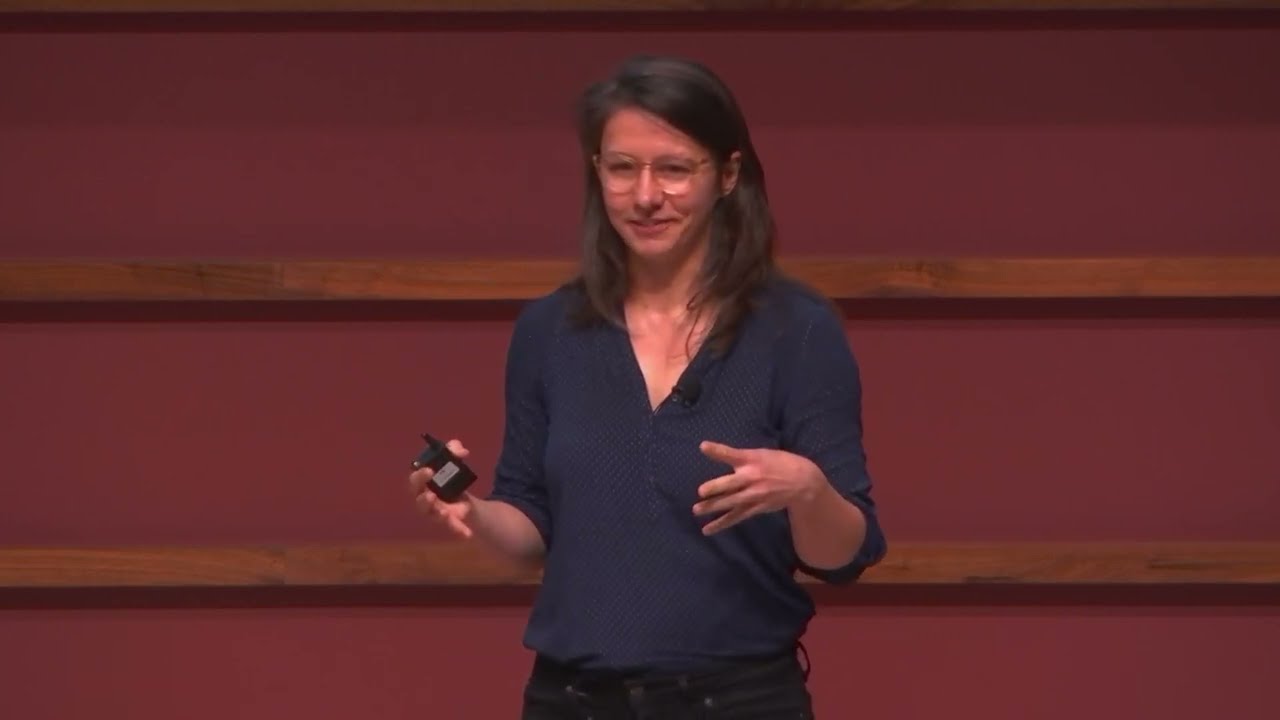
The video presents a series of expert talks from leading researchers in robotics, offering valuable insights into current challenges and innovations. Jeannette Bohg’s talk on learning from human videos is particularly compelling, as she addresses the data bottleneck in robotics by proposing a novel data collection method that leverages readily available human videos. Her approach, which involves tracking hands, inpainting, and rendering robots, is innovative and practical, potentially enabling zero-shot deployment on various robots. The method’s ability to handle deformable objects and closed-loop policies is a significant advancement over existing techniques. However, the talk is a high-level overview, and the technical details are not fully elaborated, which may leave some questions unanswered for a specialized audience. Karol Hausman’s presentation on Physical Intelligence’s work with robot foundation models is also noteworthy. He discusses the success of training robots to fold shirts five times faster using a two-stage training process, which demonstrates the potential of foundation models in real-world applications. The emphasis on scaling data and the use of vision-language models aligns with broader trends in AI. Fei-Fei Li’s talk on BEHAVIOR and spatial intelligence provides a forward-looking perspective, highlighting the importance of benchmarks and the intersection of AI with physical environments. The talks collectively underscore the importance of data, generalization, and interdisciplinary collaboration. The speakers are credible, and their references to published work and datasets enhance the reliability of the content. However, the format is concise, and the lack of Q&A limits deeper exploration. The adéquation between title and content is strong, as the talks indeed focus on robotics in a human-centered context. Overall, the video is informative and thought-provoking, offering a snapshot of state-of-the-art research. It is suitable for an audience with some background in AI and robotics, though it may be too technical for complete novices. The absence of detailed methodology and references to specific papers in the video itself (though likely in the description) slightly reduces its standalone value. Nevertheless, it serves as an excellent overview of current trends and challenges in robotics.
335 words
Title / Content Match
The title accurately reflects the content, which focuses on robotics research aimed at human-centered applications.
Quality & Reliability
8/10
High credibility due to speakers from Stanford and Physical Intelligence, with references to published research and datasets. However, the talks are overviews and lack detailed methodology, limiting full verification.
Key Moments
Markers derived by PSI from the transcript: the creator did not define chapters.
- Introduction to the highlight session and speakers by the moderator.
- Jeannette Bohg begins her talk on scaling robot data and learning from human videos.
- Bohg discusses the data bottleneck and compares robot data to NLP data.
- Bohg presents her method for training robots from human videos, including hand tracking and inpainting.
- Bohg shows results of zero-shot deployment and discusses future directions.
- Karol Hausman talks about Physical Intelligence and training robots to fold shirts.
- Hausman discusses the two-stage training process and the role of foundation models.
- Fei-Fei Li introduces BEHAVIOR benchmark and spatial intelligence.
- Li discusses the importance of benchmarks and future of embodied AI.
- Concluding remarks and wrap-up of the session.
Cited Sources
- Ego4D — Mentioned as a dataset of egocentric human videos for learning.
- EPIC-Kitchens — Mentioned as a dataset of egocentric cooking videos.
- RT-2 — Referenced as an example of a vision-language-action model for robotics.
- BEHAVIOR — Fei-Fei Li's benchmark for household activities in virtual environments.
Concurring Sources
- RT-2: Vision-Language-Action Models — Supports the idea of using large-scale models for robotics.
- Ego4D — Provides egocentric human videos that can be used for robot learning.
Dissenting Sources
- Sim-to-Real Gap — Simulation-based data collection may not fully capture real-world complexity, as noted in the video.
Contribution & Novelties
The video provides a concise overview of cutting-edge robotics research, highlighting innovative approaches to data collection and model training. Jeannette Bohg’s method of learning from human videos is a novel contribution that could significantly reduce the data bottleneck. Karol Hausman’s work on robot foundation models demonstrates practical advancements in speed and efficiency. Fei-Fei Li’s emphasis on benchmarks and spatial intelligence offers a strategic vision for the field.
Pour aller plus loin :
- Foundation Models — The paper that introduced the term ‘foundation models’.
- Imitation Learning — Overview of imitation learning techniques.
- Sim-to-Real Transfer — Challenges and methods in transferring policies from simulation to reality.
104 words
Radar Profile
The radar profile shows high scores in information quantity, quality, and reliability, with a slightly lower technical level, indicating accessible yet substantive content. The overall balance suggests a well-rounded presentation suitable for an informed audience.
💬 Sur les 0 commentaires analysés, aucune tendance n'est disponible.