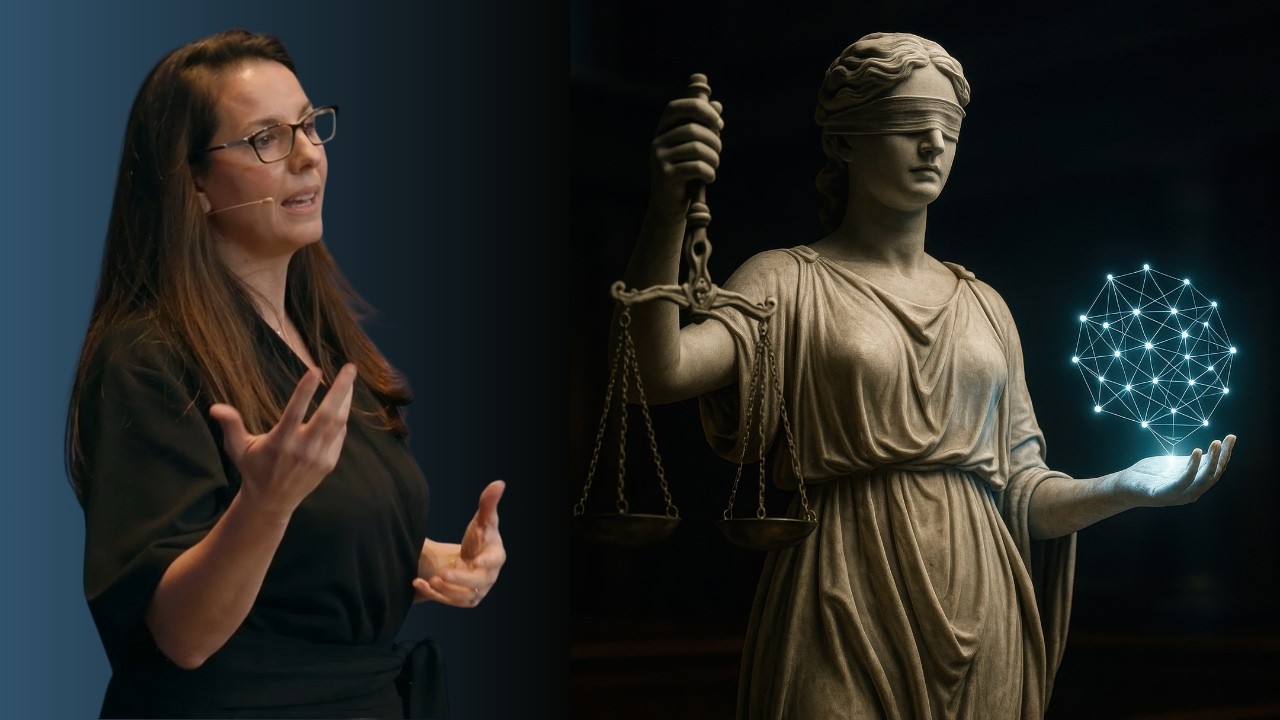
Lecture | AI, Human Rights and Warfare | Jessica Dorsey
Keywords
Summary
125 words
Critical Evaluation
Value of the Information & Strength of the Argument
The lecture provides valuable insights into the often-overlooked human rights dimensions of AI in warfare. Dorsey’s argumentation is coherent and well-structured, systematically addressing boundary erosion, challenges to human rights frameworks, and specific risks. She supports her points with concrete examples, such as the Dutch childcare benefits scandal and the use of Palantir by NATO countries. She also balances the discussion by acknowledging AI’s potential benefits in human rights documentation. However, some claims are anecdotal or based on personal opinion rather than empirical evidence, and the lecture is more provocative than prescriptive.
Scientific Rigor, Source Quality, Title Accuracy
The lecture demonstrates a strong scientific rigor in its conceptual framework and use of legal terminology. Dorsey references specific legal instruments and real-world cases, but does not provide formal citations or a bibliography. The title accurately reflects the content, and the lecture is well-organized. The speaker’s expertise lends credibility, but the lack of verifiable sources limits the overall rigor. No comments were provided for analysis.
171 words
Title / Content Match
The title accurately reflects the content, which focuses on the intersection of AI, human rights, and warfare.
Quality & Reliability
8/10
The speaker is an Assistant Professor of International Law and Director of the Realities of Algorithmic Warfare Research Platform at Utrecht University, with expertise in international humanitarian law and human rights. The lecture is well-structured, references specific cases (e.g., Palestine, Netherlands) and concepts (e.g., Lavender, Gospel), and includes personal experience. However, it is an opinion-based lecture without formal citations or peer-reviewed sources, and some claims are not fully substantiated.
Key Moments
Markers derived by PSI from the transcript: the creator did not define chapters.
- Introduction: Dorsey sets the stage, noting the 77th anniversary of the Universal Declaration of Human Rights and her personal background.
- Dorsey outlines the main themes: boundary erosion between war and peace, challenges to human rights frameworks, and the blurring of military and policing.
- Discussion on how AI contributes to the erosion of the wartime-peacetime boundary, with examples from surveillance and data collection.
- Dorsey introduces the three risks: bias as a feature, deskilling of human decision-makers, and cognitive erosion.
- Case study on Palestine: surveillance systems like Wolfpack and targeting databases like Lavender and Gospel.
- Discussion on the role of private companies like Palantir in blurring lines between policing and military, and challenges for accountability.
- Positive applications of AI in human rights documentation, citing Airwars and open-source investigations.
- Anecdote about judges in Kosovo swearing on human rights documents, illustrating the enduring value of human rights.
- Conclusion: Call for collective action and reflection on the future of human rights in the age of AI.
Cited Sources
- Universal Declaration of Human Rights — Referenced as the foundational document for human rights, marking its 77th anniversary.
- International Covenant on Civil and Political Rights — Mentioned in the anecdote about judges swearing on human rights texts.
- European Convention on Human Rights — Mentioned in the same anecdote.
- Airwars — Cited as an organization using AI for civilian harm monitoring, where Dorsey sits on the governing board.
- Palantir — Mentioned as a private company contracted by NATO and various governments for data analytics.
Concurring Sources
- UN Human Rights Council report on AI and human rights — Supports the argument that AI poses challenges to human rights frameworks.
- ICRC report on AI and armed conflict — Aligns with the lecture's concerns about AI in warfare.
Dissenting Sources
- Optimistic views on AI in warfare — Some argue that AI can improve precision and reduce civilian casualties, contrasting with the lecture's emphasis on risks.
Contribution & Novelties
The lecture offers a nuanced perspective on the human rights implications of AI in warfare, emphasizing the blurring of boundaries between war and peace and the weaponization of civilian data. It provides a compelling case study of Palestine and highlights the role of private companies like Palantir. The discussion of automation bias and cognitive erosion adds depth to the debate.
Pour aller plus loin :
- Lavender and Gospel: AI targeting systems in Gaza — Provides background on the AI targeting systems mentioned.
- Automation bias — Explains the cognitive bias discussed in the lecture.
- International humanitarian law — Relevant to the legal framework discussed.
103 words
Radar Profile
The radar profile shows high scores in quantity and quality of information, reflecting the lecture's depth and relevance. The technical level is moderate, indicating accessibility to a general audience. Overall reliability is high due to the speaker's expertise, though the lack of formal citations slightly reduces the score.