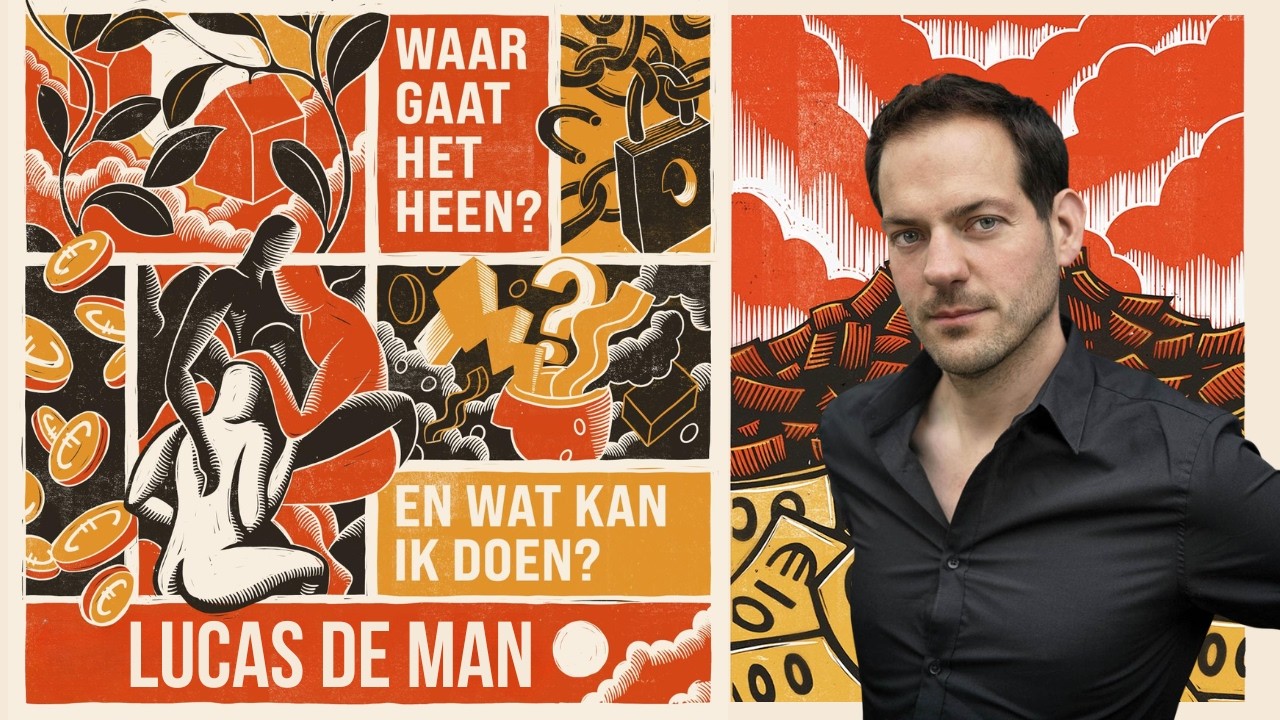
Lezing | Waar gaat het heen? En wat kan ik doen? | Lucas de man
Keywords
Summary
163 words
Critical Evaluation
Value of the Information & Strength of the Argument
The lecture offers valuable insights into the psychological and cultural dimensions of contemporary crises, connecting them to a historical shift in values. De Man’s argument is compelling and well-structured, using a narrative that moves from diagnosis to prescription. He supports his claims with references to research (e.g., on loneliness, water quality) and historical documents, though he does not provide detailed citations. His argumentation is persuasive, appealing to both emotion and reason, and he effectively challenges common narratives about generational weakness. However, the lack of rigorous scientific evidence and the reliance on personal observation and artistic perspective limit the strength of the argument.
Scientific Rigor, Source Quality, Title Accuracy
The lecture demonstrates moderate scientific rigor. De Man cites some research and historical facts, but often without specific sources. He references the American Declaration of Independence and mentions studies on loneliness and water quality, but does not provide precise references. The title accurately reflects the content, as the lecture indeed explores where society is heading and what individuals can do. The content is consistent with the title, though the title is somewhat vague. Overall, the sources are used to support a narrative rather than to provide a systematic review, which is acceptable for an opinion-based lecture.
213 words
Title / Content Match
The title accurately reflects the content: a lecture on societal direction and individual agency, delivered by Lucas De Man.
Quality & Reliability
6/10
The lecture presents a personal and artistic perspective on societal crises, supported by some references to research and historical documents, but lacks systematic citation and rigorous scientific methodology.
Key Moments
Markers derived by PSI from the transcript: the creator did not define chapters.
- Introduction: Lucas De Man introduces himself and his work with Possible Futures and Biobased Creations.
- Discussion of multiple crises: climate, loneliness, water quality, and inequality.
- Introduction of the concept of a values crisis as the root of other crises.
- Historical analysis: the 1776 Declaration of Independence and the pursuit of happiness.
- Argument that the current generation is the first to not experience more freedom and prosperity.
- Call for new values and the importance of creativity and imagination.
- Conclusion: hope and practical steps for individuals.
Cited Sources
- Waar gaat het heen? En wat kan ik doen? (book) — De Man's book that forms the basis of the lecture.
- American Declaration of Independence — Referenced as the origin of the pursuit of happiness.
Concurring Sources
- Loneliness research among young adults — De Man mentions research showing 18-35 year olds are the loneliest group.
- Water quality in the Netherlands — De Man cites that Dutch water quality is the worst in Europe.
Dissenting Sources
- Claims about hunter-gatherer gender roles — De Man states that it is proven that there were no gender roles in hunter-gatherer societies, but this is a contested claim in anthropology.
Contribution & Novelties
The lecture provides a unique perspective by linking contemporary crises to a historical shift in values, offering a framework for understanding generational anxiety. It emphasizes the role of creativity and imagination in societal transformation, which is often overlooked in policy discussions.
Pour aller plus loin :
- Pursuit of Happiness — Historical context of the phrase.
- Values Crisis — Philosophical background on values.
- Generational Theory — Framework for understanding generational differences.
70 words
Radar Profile
The radar profile shows moderate scores across all dimensions, with a slightly higher score in quantity of information and lower in technical level. This reflects a lecture that is informative and accessible but not deeply technical or rigorously sourced.
💬 No comments were provided for analysis.