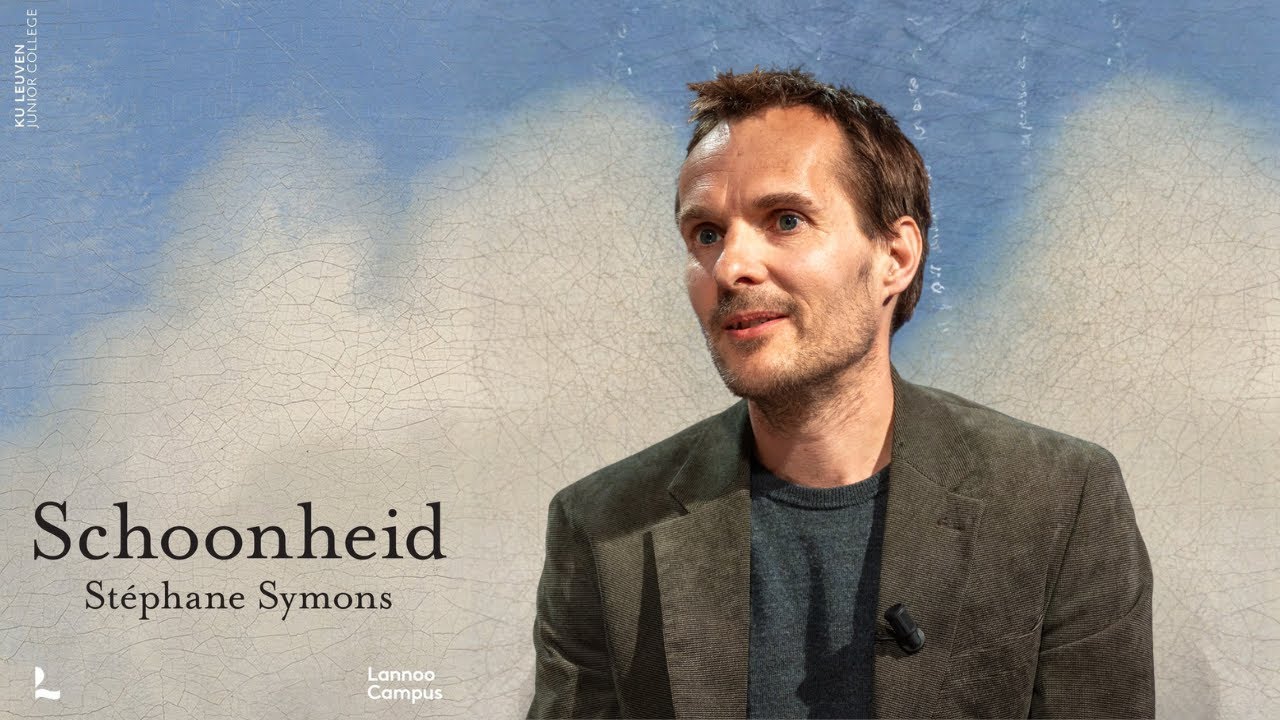
Lezing | De Schoonheid, terug van weggeweest? | Stéphane Symons
Keywords
Summary
173 words
Critical Evaluation
Value of the Information & Strength of the Argument
The lecture provides a rich and nuanced analysis of the philosophical debates surrounding beauty. Symons effectively traces the historical roots of beauty’s critique, from biblical references to modern art movements. He presents a compelling argument that the rejection of beauty often stems from a conflation of beauty with superficiality or moral failing. His use of concrete examples, such as Duchamp’s readymades and Eisenstein’s films, grounds the abstract concepts in tangible artistic practices. The argumentation is coherent and well-structured, though it is primarily an interpretive essay rather than a systematic review. Symons’ defense of beauty is persuasive, but he could have engaged more deeply with counterarguments, such as the potential for beauty to be used as a tool of oppression. Overall, the lecture offers valuable insights into the enduring relevance of beauty in philosophical and artistic discourse.
Scientific Rigor, Source Quality, Title Accuracy
The lecture demonstrates a high level of scholarly rigor. Symons, a professor of philosophy, draws on a wide range of sources, including Plato, Kant, Burke, Marx, and contemporary thinkers. He accurately references specific artworks and historical events, such as the Museum of Central Africa and Eisenstein’s ‘Battleship Potemkin’. The title accurately reflects the content, as the lecture indeed questions the return of beauty. The sources cited are credible and relevant, though the lecture is not heavily footnoted. The speaker’s expertise and the coherent structure enhance the overall reliability. The title is appropriate and does not overpromise.
247 words
Title / Content Match
The title accurately reflects the content: a lecture on the concept of beauty, its historical critique, and its potential revival.
Quality & Reliability
8/10
The lecture is delivered by a professor of philosophy with a published book on the topic, providing a well-structured historical and conceptual analysis. The argument is supported by references to canonical thinkers and artists, though it is primarily an interpretive essay rather than a systematic review.
Key Moments
Markers derived by PSI from the transcript: the creator did not define chapters.
- Introduction: Surprise at the negative reputation of beauty.
- Discussion of the Disney effect and lookism.
- Introduction of the Museum of Non-Beautiful Art.
- Analysis of Marcel Duchamp and the concept of the real.
- Marxist critique of beauty as escapism.
- Discussion of Eisenstein and social realism.
- Exploration of the sublime as an alternative to beauty.
- Conclusion: Defense of beauty and its potential revival.
Cited Sources
- Schoonheid (book) — Mentioned as the speaker's own book on beauty.
- Marcel Duchamp — Discussed as a key figure in the turn towards the real.
- Sergei Eisenstein — Mentioned as a social realist filmmaker.
- Battleship Potemkin — Referenced as an example of social realist art.
- Immanuel Kant — Mentioned in relation to the sublime.
- Edmund Burke — Mentioned in relation to the sublime.
- Karl Marx — Discussed in the context of Marxist critique of beauty.
Concurring Sources
- The Abuse of Beauty — Arthur Danto's work argues for the return of beauty in art, aligning with Symons' defense.
- On Beauty and Being Just — Elaine Scarry's book defends beauty and its connection to justice, supporting Symons' thesis.
Dissenting Sources
- The Sublime in Modern Philosophy — Some philosophers argue that the sublime offers a more profound aesthetic experience than beauty, challenging Symons' preference for beauty.
Contribution & Novelties
The lecture offers a fresh perspective on the rehabilitation of beauty in contemporary philosophy, synthesizing historical critiques and proposing a nuanced defense. It contributes to the ongoing debate by distinguishing between beauty as a superficial ideal and as a meaningful concept that can coexist with truth and goodness.
Pour aller plus loin :
- Aesthetics — Overview of the philosophical study of beauty and taste.
- Sublime — Philosophical concept of the sublime, central to the lecture’s discussion.
- Readymade — Duchamp’s readymades as a challenge to traditional aesthetics.
86 words
Radar Profile
The radar profile shows high scores in information quantity, quality, and reliability, with a slightly lower technical level, indicating a lecture that is both informative and accessible. The balance between these dimensions suggests a well-rounded presentation suitable for a general academic audience.
💬 Sur les 0 commentaires analysés, aucune tendance n'a pu être identifiée.