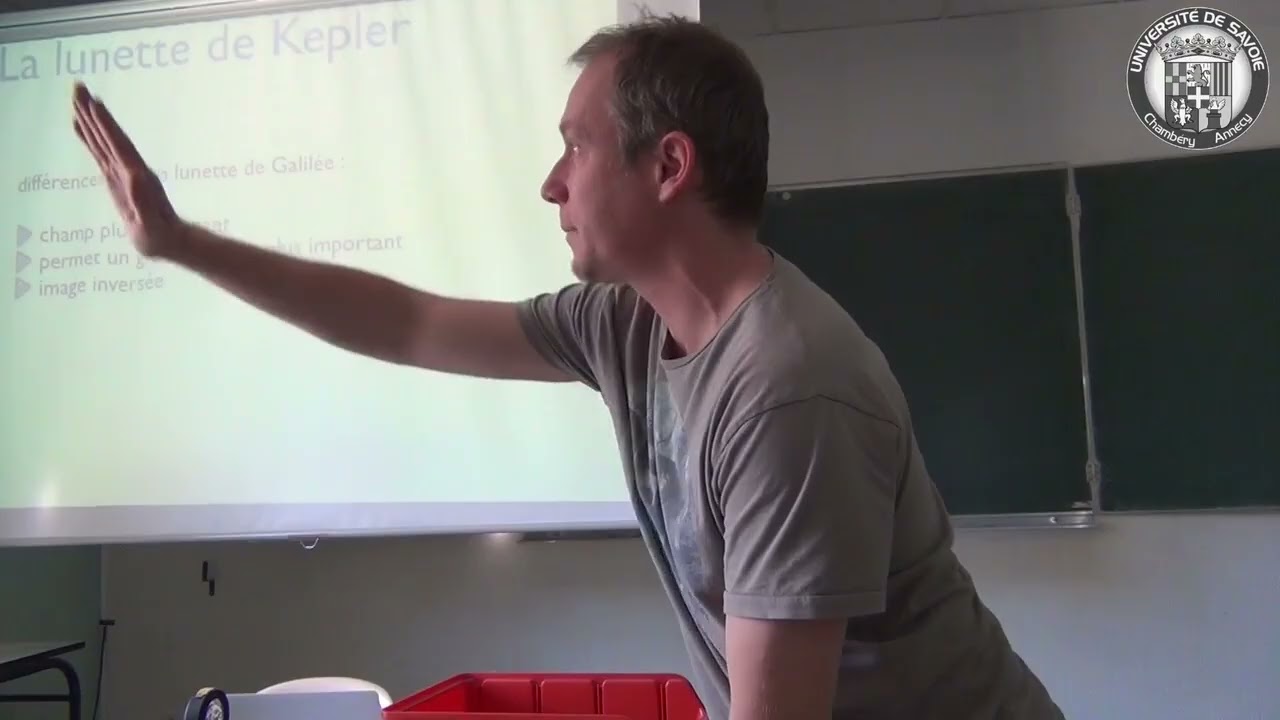
Histoire des sciences 6
Keywords
Summary
190 words
Critical Evaluation
The video provides a solid historical overview of refracting telescopes, with accurate descriptions of the Galilean and Keplerian designs. The presenter demonstrates a good grasp of the optical principles, explaining the function of lenses and the differences in field of view and image orientation. The historical narrative is generally reliable, correctly attributing the invention of the telescope to others and highlighting Galileo’s contributions to astronomy rather than to the invention itself. The mention of Thomas Harriot as an earlier observer of the Moon is a valuable addition, showing a nuanced understanding of the history. However, the video lacks explicit citations to primary sources, which would enhance its scholarly value. The presenter’s informal style and occasional digressions may detract from the clarity for some viewers, but the use of diagrams and animations effectively illustrates the concepts. The adéquation between the title and content is adequate, as the title is generic but the content is clearly about the history of refracting instruments. Overall, the video is informative and accessible, making it a useful resource for those interested in the history of science and optics.
182 words
Title / Content Match
The title 'Histoire des sciences 6' is generic but accurately reflects the content, which is the sixth installment in a series on the history of science, focusing on refracting instruments.
Quality & Reliability
7/10
The video provides a historical account of refracting instruments, with accurate descriptions of the Galilean and Keplerian telescopes, and mentions key figures like Galileo and Kepler. The presenter demonstrates a good understanding of the optical principles involved, and the historical narrative is generally reliable, though it lacks citations to primary sources.
Key Moments
Markers derived by PSI from the transcript: the creator did not define chapters.
- Introduction to refracting instruments and overview of the episode.
- Discussion of Galileo's use of the telescope and his observations.
- Explanation of the Galilean telescope's optical design.
- Introduction of Kepler's theoretical telescope design with two converging lenses.
- Comparison of field of view between Galilean and Keplerian telescopes.
- Animation illustrating the field of view differences.
- Discussion of image inversion in the Keplerian telescope.
- Brief mention of microscopes as refracting instruments.
Contribution & Novelties
The video offers a clear and engaging explanation of the historical development of refracting telescopes, emphasizing the practical advantages of the Keplerian design over the Galilean. It corrects common misconceptions about Galileo’s role and highlights the contributions of other figures like Thomas Harriot. The use of animations to illustrate the field of view is particularly effective.
Pour aller plus loin :
- Galileo Galilei — Background on Galileo’s life and contributions.
- Johannes Kepler — Information on Kepler’s work in optics and astronomy.
- Refracting telescope — Overview of refracting telescope designs and history.
91 words
Radar Profile
The radar profile shows a balanced performance across all dimensions, with slightly higher scores in quality of information and reliability, reflecting the accurate historical content and clear explanations. The lower score in technical level indicates that the video is accessible to a general audience without requiring advanced knowledge of optics.