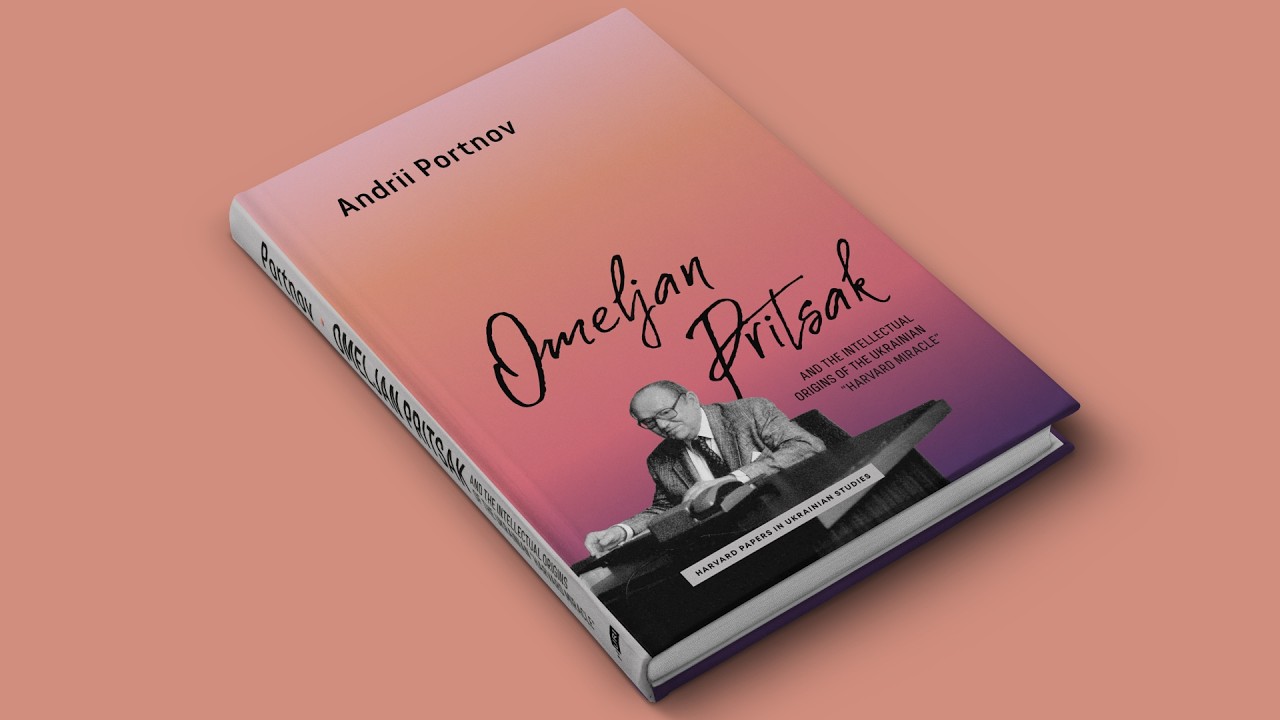
Andrii Portnov — Omeljan Pritsak and the Intellectual Origins of the Ukrainian "Harvard Miracle"
Keywords
Summary
162 words
Critical Evaluation
Value of the Information & Strength of the Argument
The discussion provides valuable insights into the intellectual history of Ukrainian studies, offering a nuanced portrait of Pritsak’s life and work. The author’s argumentation is solid, grounded in archival research and personal correspondence. The inclusion of declassified KGB documents adds a new dimension, though the author wisely avoids over-reliance on them. The discussants’ personal experiences enrich the narrative, providing a balanced perspective on Pritsak’s achievements and controversies.
Scientific Rigor, Source Quality, Title Accuracy
The sources cited include the book itself, the event page, and references to Pritsak’s lectures and publications. The discussion demonstrates scholarly rigor, with careful attention to historical context and source analysis. The title accurately reflects the content, focusing on Pritsak’s intellectual origins and the establishment of Ukrainian studies at Harvard. The event is well-structured, with clear contributions from all participants.
142 words
Title / Content Match
The title accurately reflects the content, focusing on Pritsak's intellectual origins and the establishment of Ukrainian studies at Harvard.
Quality & Reliability
8/10
The discussion features a well-researched intellectual biography, with the author and discussants providing nuanced perspectives. The use of newly declassified KGB documents adds depth, though some claims rely on personal recollections. Overall, the content is credible and well-contextualized.
Key Moments
Markers derived by PSI from the transcript: the creator did not define chapters.
- Introduction by Oleh Kotsyuba, setting the context for the book launch and the significance of the Harvard miracle.
- Andrii Portnov begins his remarks, expressing gratitude and outlining his motivation for writing the book.
- Portnov discusses Pritsak's early life, his Polish-Ukrainian identity, and his academic formation in interwar Poland.
- Portnov highlights Pritsak's career in Germany and his move to Harvard, emphasizing his international scholarly reputation.
- Portnov mentions the declassified KGB documents and their significance for understanding Pritsak's biography.
- George Grabowicz offers his response, reflecting on Pritsak's role in his own intellectual development and the early years of HURI.
- Grabowicz discusses Pritsak's vision for an internationally oriented Ukrainian studies program and the challenges of émigré politics.
- Frank Sysyn provides his response, highlighting Pritsak's lectures and the importance of making historical sources accessible.
- Sysyn and Portnov engage in a discussion about Pritsak's intellectual formation and the role of personal connections.
- The conversation opens to audience questions, with participants discussing the future of Ukrainian studies.
Cited Sources
- Event Page: Andrii Portnov — Omeljan Pritsak and the Intellectual Origins of the Ukrainian "Harvard Miracle" — Official event page for the book launch, providing details about the book and participants.
Concurring Sources
- Omeljan Pritsak - Wikipedia — Provides biographical information consistent with the discussion.
Contribution & Novelties
The book offers the first English-language intellectual biography of Omeljan Pritsak, synthesizing previously scattered sources and incorporating newly declassified KGB documents. It provides a nuanced analysis of Pritsak’s intellectual formation, his role in establishing Ukrainian studies at Harvard, and his complex legacy. The discussion adds personal recollections and scholarly context, enriching the understanding of Pritsak’s contributions.
Pour aller plus loin :
- Harvard Ukrainian Research Institute — Official website of HURI, offering resources on Ukrainian studies.
- Omeljan Pritsak — Wikipedia article providing an overview of Pritsak’s life and work.
- Ukrainian Studies at Harvard — Information about the Ukrainian studies program at Harvard, its history, and current initiatives.
106 words
Radar Profile
The radar profile shows high scores in information quantity, quality, technical level, and reliability, indicating a well-rounded and credible presentation. The discussion is rich in detail and scholarly depth, with minor limitations in technical complexity for a general audience.
💬 No comments were provided for analysis.