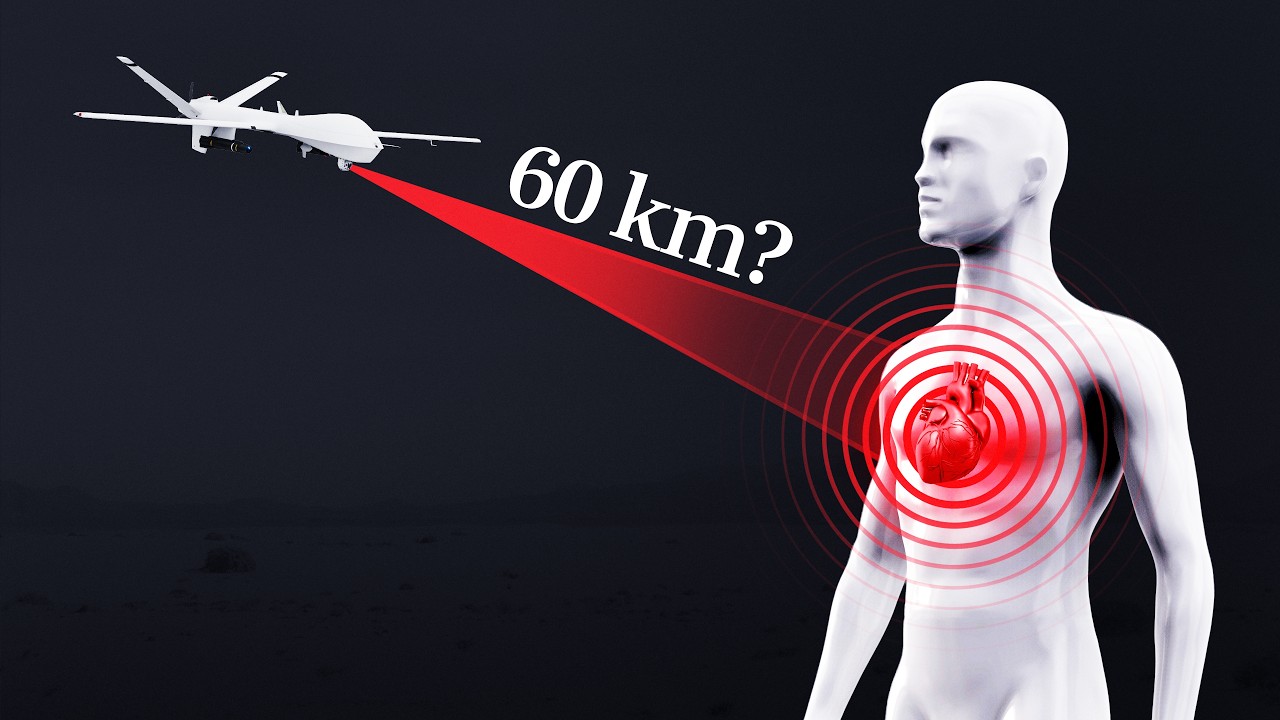
The CIA's new tech doesn't make sense
Keywords
Summary
192 words
Critical Evaluation
The video is a rigorous examination of a sensational claim, blending physics education with investigative journalism. It effectively breaks down complex concepts like NV centers and magnetometry for a general audience without oversimplifying. The inclusion of expert interviews adds credibility, though the reliance on anonymous sources and the lack of direct access to classified information limits the conclusiveness. The argumentation is logical, systematically addressing each component of the claim: the heart’s magnetic field, the sensitivity of NV magnetometers, and the physical constraints of distance and noise. The video also contextualizes the story within media bias and disinformation, using the Ground News sponsorship to illustrate how coverage varies. However, the sponsorship segment is a minor distraction. The title is somewhat clickbait, but the content delivers a thorough debunking. Overall, the video is a valuable contribution to science communication, encouraging viewers to question extraordinary claims.
143 words
Title / Content Match
The title is somewhat clickbait but accurately reflects the video's critical examination of the CIA's alleged technology.
Quality & Reliability
8/10
The video is well-researched, featuring interviews with experts in magnetometry and quantum sensing, and references peer-reviewed literature. It critically examines a sensational news claim, providing a balanced analysis. However, some information is based on anonymous sources and unverified claims, and the video includes a sponsored segment.
Key Moments
Markers derived by PSI from the transcript: the creator did not define chapters.
- Introduction to the Ghost Murmur claim and the rescue scenario.
- Explanation of the heart's magnetic field and its detection.
- History of magnetometers, including SQUIDs and their limitations.
- Introduction to NV centers in diamonds and their potential as magnetometers.
- Detailed explanation of how NV centers detect magnetic fields using energy levels and spin.
- Discussion of the challenges of detecting a heartbeat from kilometers away, including signal attenuation and noise.
- Expert interviews expressing skepticism about the feasibility.
- Alternative explanations, such as radio beacons, and historical parallels.
- Conclusion: the technology is real but not capable of the claimed feat.
Cited Sources
- Exclusive | 'Ghost Murmur' via the New York Post — Original article reporting the claim.
- Exclusive | Trump confirms CIA 'Ghost Murmur' tool via the New York Post — Follow-up article confirming the claim.
- Béchard, D. E. (2026). Scientists question CIA’s claim of long-range heartbeat detection. Scientific American. — Scientific American article questioning the claim.
- Roth, B. J. (2023). Biomagnetism: The First Sixty Years. Sensors — Review of biomagnetism history.
- Doherty, M. W. et al. (2013). The nitrogen-vacancy colour centre in diamond. Physics Reports. — Review of NV centers.
- Arai, K. et al. (2022). Millimetre-scale magnetocardiography of living rats with thoracotomy. Communications Physics. — Study on magnetocardiography in rats.
- The Recruiter (book by Douglas London) — Book by retired CIA officer interviewed.
- Ground News — Sponsor and media bias analysis tool.
Concurring Sources
- Béchard, D. E. (2026). Scientists question CIA’s claim of long-range heartbeat detection. Scientific American. — Scientists express skepticism, aligning with the video's conclusion.
- Roth, B. J. (2023). Biomagnetism: The First Sixty Years. Sensors — Historical context on biomagnetism limitations.
Dissenting Sources
- Exclusive | 'Ghost Murmur' via the New York Post — The original article claims the technology is real and effective, contradicting the video's skepticism.
External References
Contribution & Novelties
The video provides a clear, accessible explanation of NV center magnetometry and its potential applications, while critically evaluating a sensational claim. It highlights the gap between theoretical sensitivity and practical limitations.
Pour aller plus loin :
- Nitrogen-vacancy center — Overview of NV centers and their properties.
- Magnetocardiography — Technique for measuring heart’s magnetic field.
- SQUID — Superconducting quantum interference device, a sensitive magnetometer.
- Betteridge’s law of headlines — Adage that headlines ending in a question mark can be answered ’no'.
80 words
Radar Profile
The radar profile shows high scores in information quantity, quality, and reliability, with a slightly lower technical level due to the need for simplification. This indicates a well-balanced, informative video that is accessible to a broad audience.
💬 The comments are largely positive, with many viewers appreciating the critical analysis and humor. Some express skepticism about the technology, while others note the clickbait title. Overall, the sentiment is favorable, with a few critical voices.