How Was Video Invented?
Keywords
Summary
139 words
Critical Evaluation
Value of the Information & Strength of the Argument
The video provides valuable insights into the lesser-known history of video, emphasizing its origins in transmission rather than recording. The argumentation is solid, supported by demonstrations, expert interviews, and historical artifacts. The narrative is engaging and logically structured, making complex technical concepts accessible.
Scientific Rigor, Source Quality, Title Accuracy
The video demonstrates high scientific rigor, with references to historical documents, expert consultations, and technical resources. The sources cited in the description are relevant and credible. The title accurately reflects the content, which is a comprehensive historical overview.
96 words
Title / Content Match
The title accurately reflects the content, which explores the invention and evolution of video technology.
Quality & Reliability
9/10
The video is well-researched, featuring expert interviews (Richard Diehl, Mark Schubin) and references to historical documents and technical resources. The explanations are accurate and align with established historical accounts.
Key Moments
Markers derived by PSI from the transcript: the creator did not define chapters.
- Introduction to the fundamental problem of video: converting 2D image to 1D signal.
- Alexander Bain's fax machine and the invention of scanning.
- Paul Nipkow's mechanical television disk and its limitations.
- Development of cathode-ray tube and electronic scanning.
- Color television attempts, including the color wheel and triniscope.
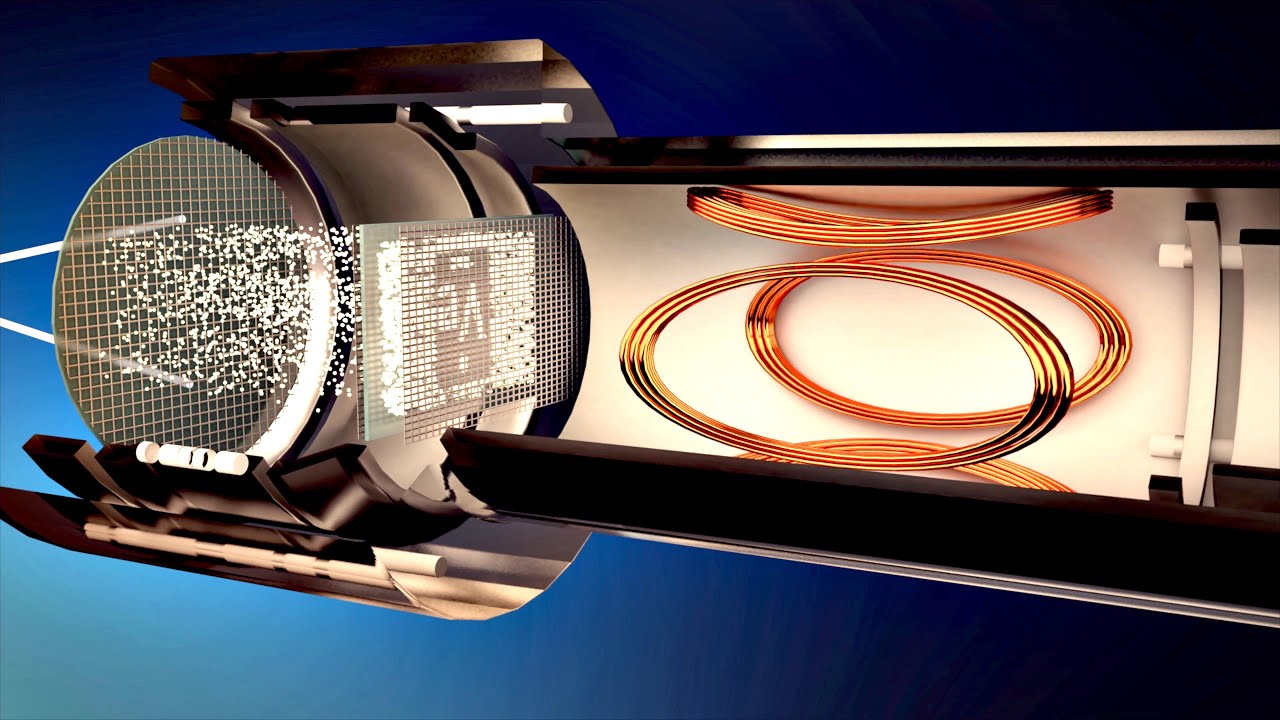
- Image orthicon tube and how it worked.
- The problem of recording video and the invention of the video tape recorder.
- Transition to digital and the societal impact of video.
Cited Sources
- Eyes of a Generation — Historical resource on television technology.
- Image Orthicon Tube — Technical details on the image orthicon tube.
- Video Preservation Website — Resource on video preservation.
- Classic TV Info — Information on classic television.
- Television in the US — Historical overview of television in the US.
- Film vs Digital — Analysis of film versus digital in filmmaking.
- Branch Education — Animation partner for the video.
- The Dawn of Tape: Transmission Device as Preservation Medium — Academic reference on the history of video recording.
- What Sparked Video Research in 1877? The Overlooked Role of the Siemens Artificial Eye — Academic reference on early video research.
- B&H Photo — Sponsor and camera equipment retailer.
- Epidemic Sound — Music source for the video.
- LabGuy's World — Richard Diehl's website with vintage video equipment.
- SMPTE — Society of Motion Picture and Television Engineers.
- Minutephysics — Provided mechanical TV animations.
- Video Labguy — Richard Diehl's YouTube channel.
Concurring Sources
- History of television — General historical overview that aligns with the video's narrative.
- Video tape recorder — Confirms the development timeline of VTRs.
Contribution & Novelties
The video provides a comprehensive and engaging historical narrative of video technology, highlighting the shift from transmission to recording. It offers unique insights into the engineering challenges and the societal impact of video.
Pour aller plus loin :
- History of television — Overview of television’s development.
- Cathode-ray tube — Technical details on the CRT.
- Video tape recorder — History of VTRs.
- Image orthicon — Details on the camera tube.
- Nipkow disk — Mechanical scanning device.
75 words
Radar Profile
The radar profile shows high scores across all dimensions, indicating a well-rounded and reliable video. The strength lies in the quantity and quality of information, with a slightly lower technical depth, making it accessible to a broad audience.
💬 Très positif. Sur les 30 commentaires analysés, le public exprime une admiration pour la qualité du contenu, la précision historique et la pédagogie de Derek, avec des anecdotes personnelles et des remerciements.