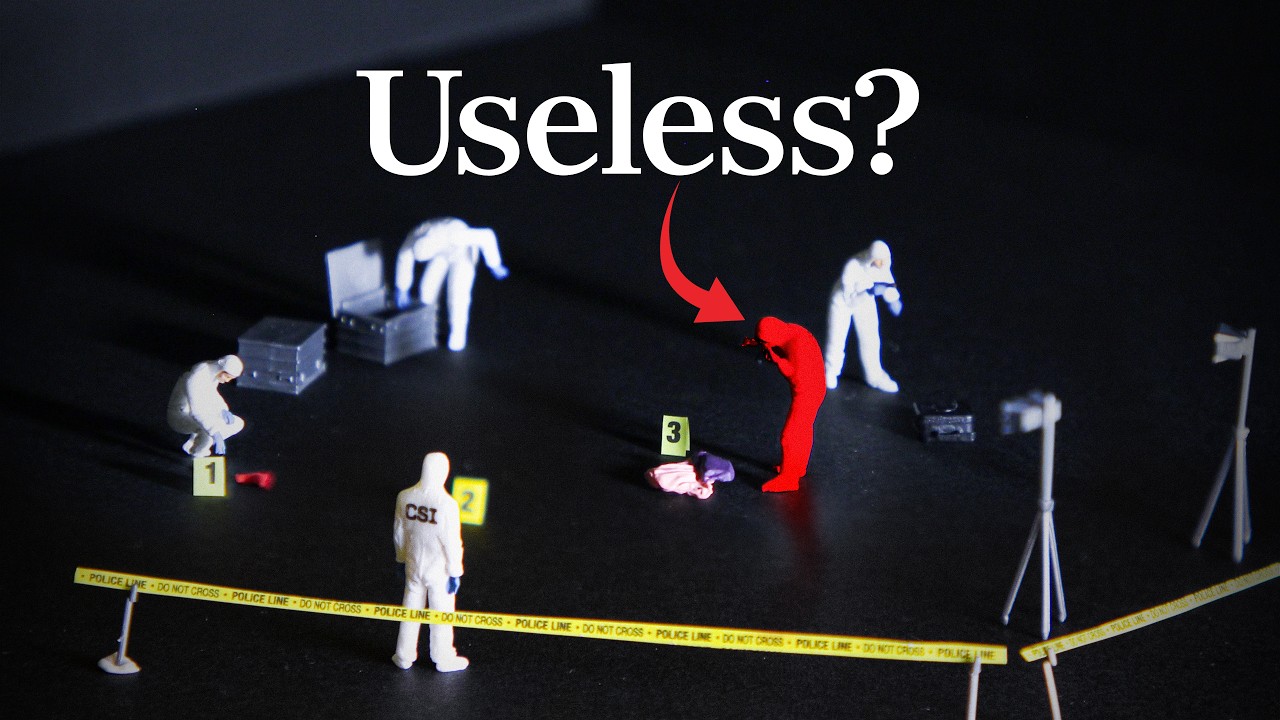
We've Been Using The Wrong Science In Court For 50 years
Keywords
Summary
160 words
Critical Evaluation
The video provides a compelling and well-structured critique of forensic science, effectively communicating complex issues to a broad audience. It excels in presenting historical context, such as the development of fingerprint classification in Kolkata and the first forensic investigation in 1247, which helps viewers understand the evolution of these techniques. The inclusion of expert interviews adds credibility, and the video carefully cites specific studies, such as the FBI’s hair analysis review and the University at Buffalo’s bite mark research, to support its claims.
The argumentation is generally solid, but there are some simplifications that could mislead viewers. For instance, the video states that microscopic hair analysis was wrong in 96% of cases, but the correction in the description clarifies that this figure refers to erroneous or exaggerated testimony, not necessarily that the hair was misidentified. This nuance is important for accuracy. Similarly, the video’s ranking of techniques is presented as definitive, but the science is more nuanced; for example, DNA evidence is not infallible, and the video does acknowledge this.
The video’s strength lies in its ability to provoke critical thinking about the criminal justice system. It highlights the ‘CSI effect’ and the danger of juries overestimating the reliability of forensic evidence. The call for more rigorous scientific validation and the adoption of probabilistic reporting is well-founded and aligns with recommendations from the National Academy of Sciences.
However, the video could be criticized for not delving deeper into the social and systemic factors that perpetuate the use of flawed forensic methods, such as prosecutorial misconduct and the lack of resources in public defender offices. Additionally, while the video mentions that some techniques are improving, it does not provide a comprehensive overview of current research and reforms.
Overall, the video is a valuable educational resource that raises awareness about a critical issue. It is well-researched, engaging, and thought-provoking, though viewers should be aware of the simplifications and seek additional sources for a more detailed understanding.
324 words
Title / Content Match
The title is catchy and accurate, reflecting the video's core message that forensic science has been misapplied in court for decades.
Quality & Reliability
8/10
The video is well-researched, citing specific studies (e.g., FBI hair analysis review, University at Buffalo bite mark study, 2021 bloodstain pattern analysis study) and expert interviews (Dr. Mary Bush, John Foster, Dr. Itiel Dror, Prof. Turi King). It presents a balanced view, acknowledging limitations and improvements. However, it is a popular science video, not a peer-reviewed source, and some simplifications are made for a general audience.
Chapters
Cited Sources
- Saily - Sponsor — Sponsor segment in the video.
- Elements of Truth game pre-order — Mentioned in the description as a related product.
- References for the video — Link provided in the description for references.
- Veritasium newsletter — Mentioned in the description for additional content.
- Snatoms molecular modelling kit — Mentioned in the description as a product.
- Veritasium Patreon — Mentioned in the description for early access.
Concurring Sources
- National Academy of Sciences 2009 report — The video cites this report as the basis for its critique of forensic methods.
- FBI microscopic hair analysis review — The video references this review to highlight the high error rate in hair analysis.
- Innocence Project — The video's themes align with the Innocence Project's work on wrongful convictions due to flawed forensics.
Dissenting Sources
- Some forensic practitioners argue that methods like bite mark analysis are still valid when used by experienced examiners — The video presents a strong case against bite mark analysis, but some practitioners may argue that it has value in certain contexts. The video does not include counterarguments from proponents of bite mark analysis.
Contribution & Novelties
The video provides a comprehensive and accessible overview of the reliability of forensic techniques, synthesizing historical context, expert interviews, and recent studies. It highlights the ‘CSI effect’ and the need for reform in how forensic evidence is presented in court. The video’s unique contribution is its clear ranking of techniques and its call for a more scientific approach to forensics.
Pour aller plus loin :
- National Academy of Sciences 2009 report — This landmark report is the basis for many of the video’s claims about the lack of scientific validation in forensics.
- Innocence Project — This organization works to exonerate wrongfully convicted individuals and provides data on wrongful convictions, many of which involve flawed forensic evidence.
- The ‘CSI Effect’ - Wikipedia — This concept is discussed in the video and refers to the influence of crime shows on jury expectations.
- FBI’s microscopic hair analysis review — This is the specific review mentioned in the video that found errors in 96% of cases.
162 words
Radar Profile
The radar profile shows high scores in quantity and quality of information, reflecting the video's comprehensive coverage and use of credible sources. The technical level is moderate, making it accessible to a general audience while still providing depth. The overall reliability is high, though the video's simplifications and lack of counterarguments slightly reduce its score.
💬 Sur les 30 commentaires analysés, l'orientation est très positive, avec une majorité de commentaires louant la qualité de la vidéo et son importance pour la justice. Plusieurs commentaires soulignent la nécessité de réformer les pratiques médico-légales et de sensibiliser les jurés. Quelques commentaires humoristiques ou critiques sur le titre et la miniature sont présents, mais sans remettre en cause le fond du contenu.