Can You Recover Sound From Images?
Keywords
Summary
185 words
Critical Evaluation
Value of the Information & Strength of the Argument
The video provides a clear and engaging explanation of a complex scientific concept. It demonstrates the process through hands-on experiments, showing both the challenges and the successes. The argumentation is solid, grounded in the research of Dr. Abe Davis, and the video does not oversimplify the technical details. The step-by-step approach, from low-frame-rate to high-frame-rate, effectively illustrates the importance of sampling rate. The inclusion of a real researcher adds credibility and depth.
Scientific Rigor, Source Quality, Title Accuracy
The video is based on peer-reviewed research by Dr. Abe Davis and colleagues, and features direct collaboration with the researcher. The methodology is explained clearly and the limitations are acknowledged. The sponsor segment is clearly separated and does not affect the scientific content. The title accurately reflects the content, and the video does not make exaggerated claims. The description provides links to Dr. Davis’s website and the music source, but no direct links to the research papers are given.
166 words
Title / Content Match
The title accurately reflects the content: the video demonstrates and explains the process of recovering sound from images, including the scientific principles and practical challenges.
Quality & Reliability
8/10
The video is based on peer-reviewed research by Dr. Abe Davis and colleagues, and features direct collaboration with the researcher. The methodology is explained clearly and the limitations are acknowledged. The sponsor segment is clearly separated and does not affect the scientific content.
Key Moments
Markers derived by PSI from the transcript: the creator did not define chapters.
- Introduction: Can you hear pictures? The challenge is set.
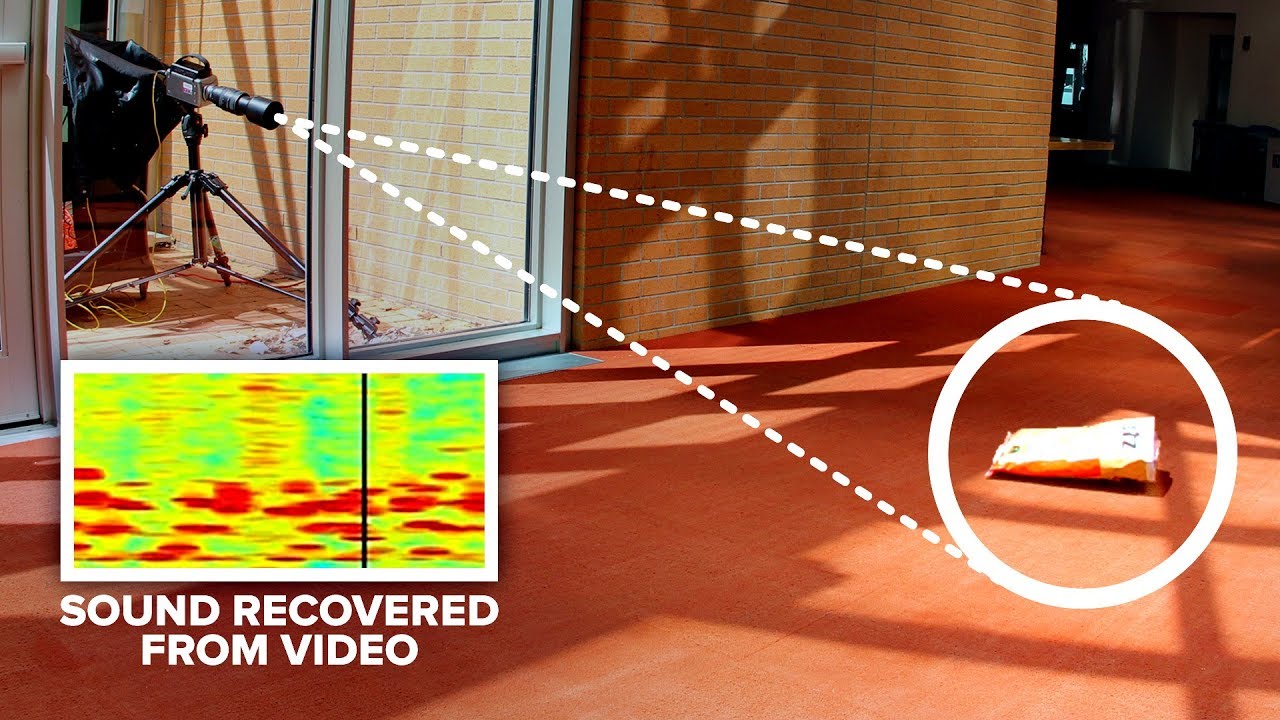
- Meeting Dr. Abe Davis and setting up the experiment with a crumpled foil.
- Explanation of why sound vibrations are too small to see directly.
- Demonstration of the algorithm: looking at edges and summing brightness changes.
- First attempt with 180 fps camera, recovering only a rhythm.
- Discussion of frame rate limitations and the need for higher sampling.
- Using a 1000 fps camera and processing the footage.
- Recovering the tune 'Shave and a haircut' from the foil vibrations.
- Demonstration of recovering speech from outside soundproof glass.
- Sponsor segment about LastPass and security implications.
Cited Sources
- Abe Davis - Personal Website — Website of Dr. Abe Davis, the researcher featured in the video, providing access to his publications and research.
- Epidemic Sound — Source of the background music used in the video.
Concurring Sources
- Visual Microphone: Recovering Sound from High-Speed Video — The original research project page, which confirms the findings presented in the video.
Contribution & Novelties
The video provides an accessible demonstration of a cutting-edge research technique, making the concept of a ‘visual microphone’ tangible for a general audience. It highlights the practical challenges and the importance of high-speed imaging. The collaboration with the original researcher adds authenticity and depth.
Pour aller plus loin :
- Visual Microphone: Recovering Sound from High-Speed Video — The original research project page with videos and publications.
- Sampling Theorem — Explains the need to sample at least twice the frequency of interest.
- Acoustic Vibration — Background on mechanical vibrations and their properties.
91 words
Radar Profile
The radar profile shows high scores in information quality and reliability, reflecting the solid scientific basis and clear presentation. The technical level is moderate, making it accessible to a broad audience while still conveying the complexity of the method. The quantity of information is good, covering both the theory and the practical demonstration.
💬 Très positif. Sur les 30 commentaires analysés, le public est enthousiaste et amusé par la démonstration, saluant la rigueur scientifique et l'humour de l'expérience.