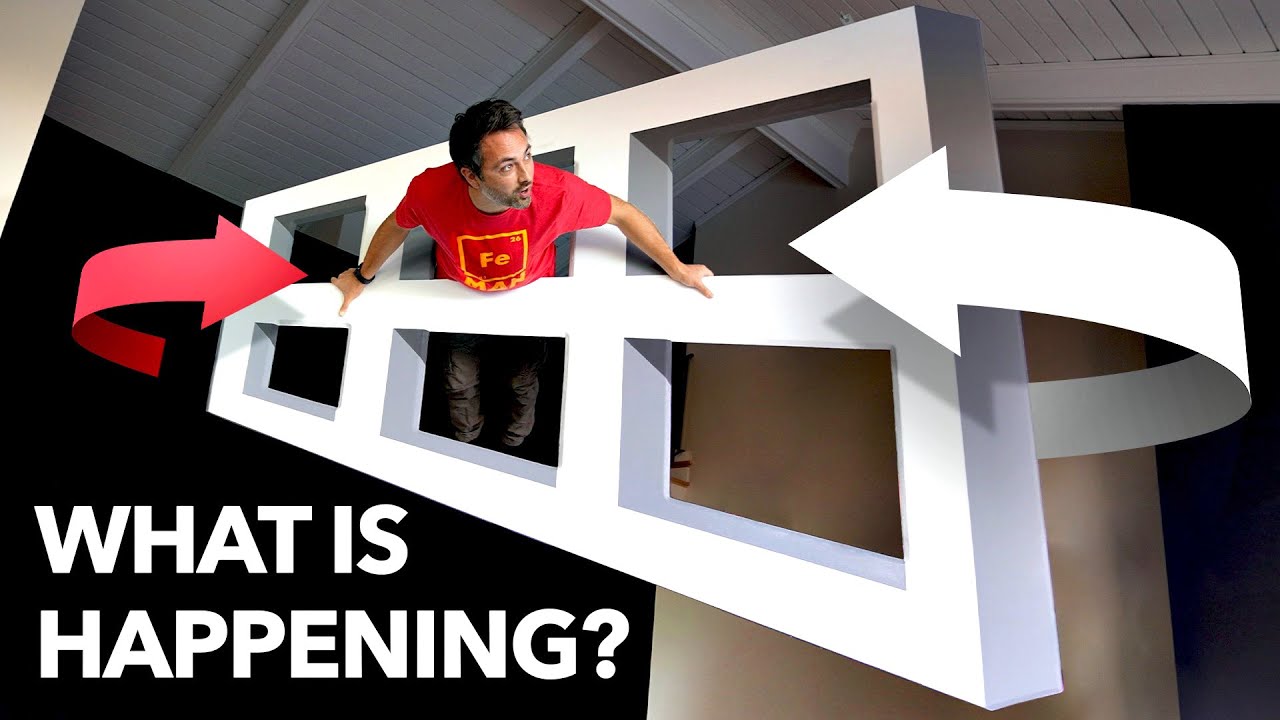
The Illusion Only Some People Can See
Keywords
Summary
187 words
Critical Evaluation
Value of the Information & Strength of the Argument
The video provides a thorough and engaging explanation of the Ames window illusion, combining historical context, scientific studies, and practical demonstrations. The argumentation is solid, as it builds from the basic phenomenon to the underlying perceptual mechanisms, supported by peer-reviewed research. The presenter effectively uses visual aids and experiments to illustrate the concepts, making the information accessible and compelling. The inclusion of cross-cultural and developmental studies strengthens the argument for the carpentered world hypothesis, while also acknowledging that other factors are at play.
Scientific Rigor, Source Quality, Title Accuracy
The video demonstrates high scientific rigor by referencing original research, including Ames’s 1951 monograph and subsequent studies on the illusion. The sources are credible and directly relevant, with links provided in the description. The title accurately reflects the content, as the video indeed focuses on an illusion that some people can see and others cannot, depending on their perceptual assumptions. The presenter also credits the work of other researchers and the Curiosity Show, adding to the transparency and reliability of the information.
180 words
Title / Content Match
The title accurately reflects the content, as the video explores the Ames window illusion and why some people are more susceptible to it than others.
Quality & Reliability
9/10
The video is based on peer-reviewed research, including the original 1951 study by Ames and cross-cultural studies, and features expert commentary from Prof. Phil Kellman. The presenter clearly distinguishes between established findings and his own demonstrations.
Key Moments
Markers derived by PSI from the transcript: the creator did not define chapters.
- Introduction of the Ames window illusion and demonstration of the apparent oscillation.
- Explanation of the trapezoidal shape and shading as key elements of the illusion.
- Demonstration with a Rubik's cube attached to the window, showing the cube's apparent independent motion.
- Demonstration with a ruler passing through the window, highlighting the brain's preference for the illusion.
- Introduction of the carpentered world hypothesis and the 1957 cross-cultural study in South Africa.
- Explanation of anamorphosis with historical examples, including Holbein's 'The Ambassadors'.
- Construction and explanation of the Ames Room, illustrating how perception is based on assumptions.
- Discussion of infant studies showing the development of the illusion perception.
- Philosophical conclusion about the nature of perception and the importance of humility in our conclusions.
Cited Sources
- Ames, A., Jr. (1951). Visual perception and the rotating trapezoidal window. — Original study by Adelbert Ames describing the rotating trapezoidal window illusion.
- Allport, G. W., & Pettigrew, T. F. (1957). Cultural influence on the perception of movement: The trapezoidal illusion among Zulus. — Cross-cultural study testing the carpentered world hypothesis with the Ames window illusion.
- Gehringer, W. L., & Engel, E. (1986). Effect of ecological viewing conditions on the Ames' distorted room illusion. — Study on the effect of viewing conditions on the Ames room illusion.
- Jahoda, G. (1966). Geometric illusions and environment: A study in Ghana. — Study on geometric illusions and environmental factors, relevant to the carpentered world hypothesis.
- Long, G.M., Toppino, T.C. (1994). Adaptation effects and reversible figures. — Study on adaptation effects in reversible figures, related to the Ames window illusion.
- Curiosity Show - Video on Ames Illusion — Original video from the Curiosity Show that inspired the presenter to explore the illusion.
- Kellman Lab, UCLA — Lab of Prof. Phil Kellman, who provided expert input for the video.
- Museum of Illusions, Los Angeles — Museum that provided the Ames Room for demonstration.
Concurring Sources
- Ames, A., Jr. (1951). Visual perception and the rotating trapezoidal window. — Original study that the video is based on.
- Allport, G. W., & Pettigrew, T. F. (1957). Cultural influence on the perception of movement: The trapezoidal illusion among Zulus. — Study supporting the carpentered world hypothesis.
- Gehringer, W. L., & Engel, E. (1986). Effect of ecological viewing conditions on the Ames' distorted room illusion. — Study on viewing conditions and the Ames room illusion.
External References
Contribution & Novelties
The video provides a comprehensive and accessible explanation of the Ames window illusion, synthesizing historical research, cross-cultural studies, and modern demonstrations. It offers a unique perspective by connecting the illusion to broader philosophical questions about the nature of perception and scientific inquiry. The presenter’s large-scale demonstration and the use of various objects to highlight the illusion’s robustness add a novel visual element to the explanation.
Pour aller plus loin :
- Ames room - Wikipedia — Provides an overview of the Ames room illusion and its construction.
- Anamorphosis - Wikipedia — Explains the artistic technique of anamorphosis, which is central to the illusion.
- The Ambassadors (Holbein) - Wikipedia — Details the painting by Hans Holbein the Younger, an example of anamorphic art.
- Carpentered world hypothesis - Wikipedia — Discusses the hypothesis that our perception is influenced by the prevalence of right angles in our environment.
- Visual perception - Wikipedia — Provides background on how the brain interprets visual information.
158 words
Radar Profile
The radar profile shows high scores across all dimensions, indicating a well-rounded and reliable video. The strength lies in the quantity and quality of information, as well as the high technical level and overall reliability.
💬 Très positif. Sur les 30 commentaires analysés, les spectateurs expriment un émerveillement et une fascination pour l'illusion, partageant leurs expériences personnelles et leur difficulté à percevoir la rotation réelle, ce qui reflète un engagement fort et une appréciation de la démonstration.