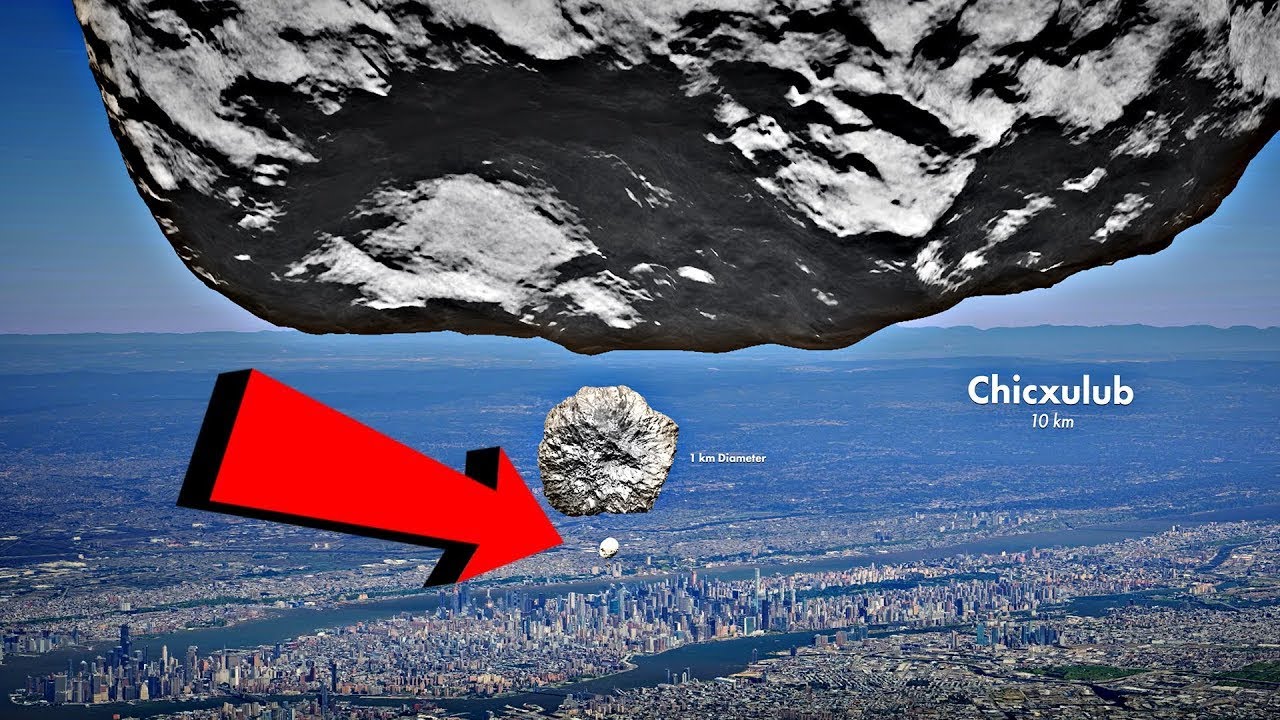
These are the asteroids to worry about
Keywords
Summary
181 words
Critical Evaluation
Value of the Information & Strength of the Argument
The video provides valuable information by combining expert interviews, real-world examples, and scientific data. It effectively communicates the current state of asteroid detection and deflection capabilities, including the limitations and uncertainties. The argumentation is solid, supported by references to peer-reviewed studies and reports. The experts’ candid assessments, such as Prof. Jewitt’s admission that we have no way to deflect a kilometer-sized asteroid, add credibility. The video also presents a balanced view, acknowledging both the low probability of a catastrophic impact and the potential severity, while advocating for proactive measures like improved surveys.
Scientific Rigor, Source Quality, Title Accuracy
The video demonstrates high scientific rigor by citing specific studies and reports, such as the National Research Council report ‘Defending Planet Earth’ and papers on asteroid deflection methods. The experts interviewed are well-known in the field, and their statements are consistent with current scientific consensus. The title accurately reflects the content, focusing on the asteroids that warrant concern. The video also includes a sponsored segment, which is clearly disclosed and does not affect the scientific content. Overall, the sources are credible and the information is presented with appropriate nuance.
196 words
Title / Content Match
The title accurately reflects the content, which focuses on identifying which asteroids pose a threat and the challenges of detecting and deflecting them.
Quality & Reliability
9/10
The video features interviews with established scientists (Prof. Dave Jewitt, Prof. Mark Boslough, Prof. Amy Mainzer), references peer-reviewed studies and reports (e.g., National Research Council report, papers on asteroid deflection), and uses data from NASA missions (NEOWISE, DART). The content is accurate and well-contextualized, with clear explanations of uncertainties.
Key Moments
Markers derived by PSI from the transcript: the creator did not define chapters.
- Introduction: Chelyabinsk meteor event and its impact.
- Explanation of why detecting asteroids is difficult.
- Interview with Prof. Jewitt on the challenges of predicting asteroid orbits.
- Barringer crater: evidence of past impacts and the explosive nature of impacts.
- Discussion of the probability of a 10-km impact and the risk of smaller asteroids.
- Prof. Jewitt explains that we have no current method to deflect a large asteroid.
- Review of proposed deflection methods: nuclear, rockets, lasers, and gravity tractors.
- Conclusion: emphasis on asteroid surveys and future missions like DART.
Cited Sources
- Opposition effect of asteroids — Referenced when discussing the opposition effect that makes asteroids brighter when opposite the sun.
- The near-Earth objects and their potential threat to our planet — Referenced in the context of potentially hazardous asteroids.
- Population vulnerability models for asteroid impact risk assessment — Referenced when discussing the vulnerability of populations to asteroid impacts.
- The size distribution of near-earth objects larger than 10 m — Referenced when discussing the size distribution of near-Earth objects.
- 2020 NEOWISE Data Release — Referenced as a source of data on near-Earth objects.
- Defending planet earth: Near-Earth-Object surveys and hazard mitigation strategies — Referenced when discussing the National Research Council report on planetary defense.
- The asteroid tugboat — Referenced when discussing the concept of using a tugboat to deflect an asteroid.
- Gravitational tractor for towing asteroids — Referenced when discussing the gravity tractor method.
- Recent advances in laser ablation modelling for asteroid deflection methods — Referenced when discussing laser ablation as a deflection method.
- Yarakovsky Effect — Referenced when discussing the Yarkovsky effect.
- DART Mission — Referenced as a future mission for testing asteroid deflection.
- Deflection and fragmentation of near-Earth asteroids — Referenced when discussing nuclear deflection methods.
- Challenges of deflecting an asteroid or comet nucleus with a nuclear burst — Referenced when discussing the challenges of nuclear deflection.
- Maps of Asteroid Impacts — Referenced as a resource for asteroid impact maps.
- Survey of Potentially Hazardous Asteroids — Referenced when discussing surveys of potentially hazardous asteroids.
Concurring Sources
- NASA Planetary Defense Coordination Office — NASA's official page on planetary defense, which aligns with the video's discussion of asteroid detection and mitigation.
- Center for Near Earth Object Studies (CNEOS) — JPL's center for tracking near-Earth objects, supporting the video's claims about detection capabilities.
External References
Contribution & Novelties
The video synthesizes current knowledge on asteroid threats and planetary defense, presenting it in an accessible format. It highlights the critical gap in our ability to detect smaller asteroids and the lack of viable deflection methods, which is often underappreciated. The interviews with experts provide candid insights that are not commonly found in popular media.
Pour aller plus loin :
- Near-Earth object — Provides background on the classification and characteristics of near-Earth objects.
- DART mission — Details the Double Asteroid Redirection Test, a key mission for testing kinetic impact deflection.
- Yarkovsky effect — Explains the thermal force that affects asteroid orbits, relevant to long-term predictions.
- Barringer Crater — Information on the impact site featured in the video.
117 words
Radar Profile
The radar profile shows high scores in information quantity, quality, and reliability, with a slightly lower technical level, indicating that the video is highly informative and credible but accessible to a general audience. The balance suggests a well-rounded presentation of scientific content.
💬 Positif. Sur les 30 commentaires analysés, le public exprime majoritairement de l'appréciation pour la qualité de la production et l'information, avec un ton humoristique face à l'anxiété suscitée par le sujet.