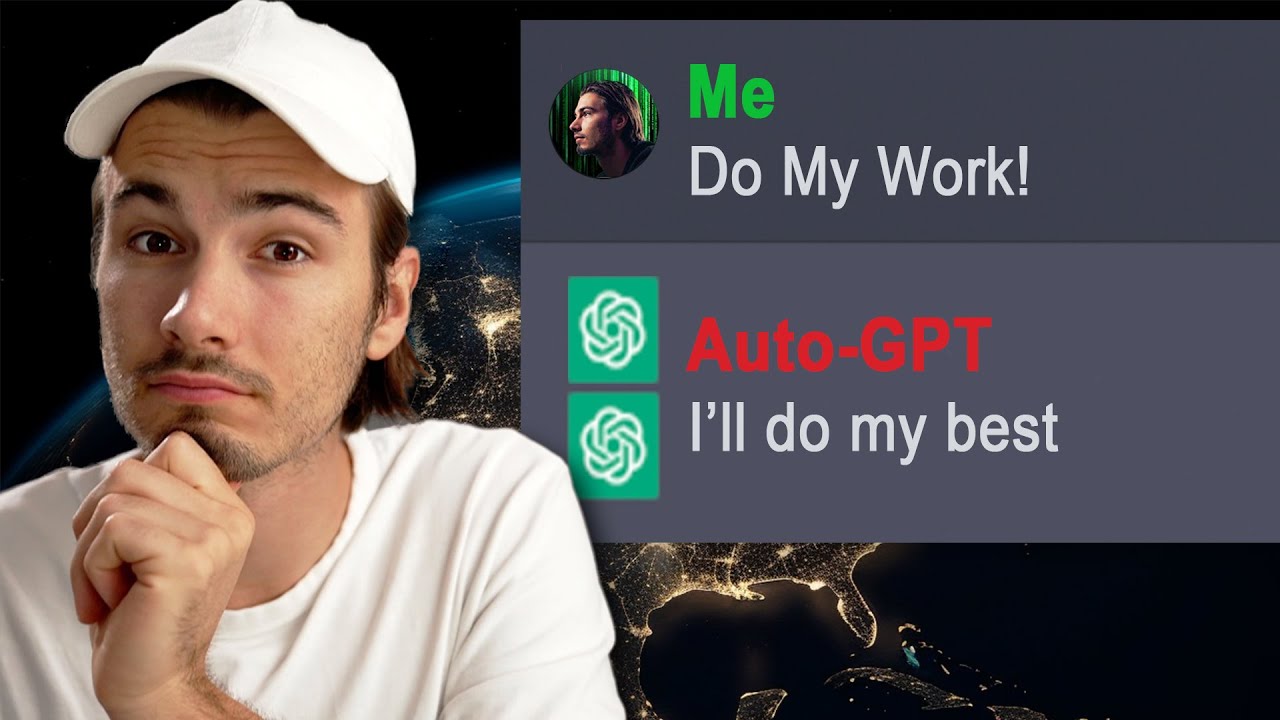
Ultimate Guide To Auto-GPTs in a Browser
Keywords
Summary
169 words
Critical Evaluation
Value of the Information & Strength of the Argument
The video provides valuable, actionable information for anyone interested in experimenting with auto-GPT tools without needing programming skills. It systematically explains setup procedures, demonstrates real-world use cases (marketing planning, budgeting, research), and offers practical advice on prompt design and model selection. The argumentation is grounded in the creator’s hands-on testing; claims about the capabilities and limitations of each tool are substantiated with live demos. The host appropriately acknowledges that the technology is in its infancy and not yet flawless, which adds credibility. While the focus is on demonstrating possible applications rather than rigorous comparison, the video effectively argues that goal-based interaction represents a significant shift in how to utilize language models, and it prepares viewers for future developments.
Scientific Rigor, Source Quality, Title Accuracy
The video maintains a reasonable level of scientific rigor by referencing specific web tools and providing setup links in the description. However, it does not cite academic papers or external authoritative sources, instead relying on firsthand experience and examples from social media. The description includes direct links to the discussed platforms (AgentGPT, BabyAGI UI, Godmode) and official API management pages, which supports the practical instructions. The title ‘Ultimate Guide To Auto-GPTs in a Browser’ accurately captures the content, as it delivers a thorough overview and step-by-step guide for browser-based auto-GPT interfaces. The video is well-structured with chapters, enhancing clarity and navigability.
234 words
Title / Content Match
The title accurately reflects the content: a comprehensive overview and practical walkthrough of auto-GPT tools accessed through a web browser, covering setup, usage, and examples.
Quality & Reliability
7/10
The video provides a practical, hands-on guide to several auto-GPT browser tools, with clear instructions and examples. The content is based on the creator's direct experience and personal testing, but lacks formal verification or peer-reviewed sources. It is reliable as a starting point for understanding and using these tools, though limitations and early-stage development are acknowledged.
Chapters
Cited Sources
- AgentGPT — Web-based auto-GPT interface used in the demo.
- BabyAGI UI — Web interface for BabyAGI, a task-driven autonomous agent.
- AI App Ranking — Curated ranking of AI tools by the channel's community.
- Godmode — Another auto-GPT interface with interactive task proposal.
- AI Advantage Community — Premium community and courses.
- Newsletter — Free E-Book and resources provided by the channel.
- OpenAI API Keys — Page to obtain API keys for accessing GPT models.
- OpenAI Billing Limits — Set usage limits to control spending.
- Google Trends — Used in the prompt example for keyword trend analysis.
- Typeform for AI Prompts — Form to receive tailored AI prompts and workflows.
Concurring Sources
- AgentGPT official site — Confirms the existence and functionality of the tool.
- BabyAGI UI — Live interface for BabyAGI, aligning with the video's description.
- Godmode official site — Confirms the availability of the interface shown.
Contribution & Novelties
The video contributes by aggregating multiple emerging auto-GPT browser interfaces and presenting a user-friendly guide for non-coders. It highlights the paradigm shift from traditional prompting to defining a final goal, letting the AI decompose and execute tasks autonomously. The original contribution lies in the practical demonstration of using these tools for everyday tasks like budgeting and marketing planning, with pro tips on adjusting parameters (e.g., temperature, loop count) and structuring prompts for optimal results.
Pour aller plus loin :
- Auto-GPT — Concept of autonomous GPT agents, foundational to the tools discussed.
- BabyAGI (GitHub) — Original open-source project that many browser interfaces are built upon.
- GPT-4 (OpenAI) — The underlying model recommended for best performance in auto-GPT applications.
117 words
Radar Profile
The performance profile is well-rounded with a slight emphasis on information quality and technical level, while quantity and reliability are moderate. This reflects a tutorial that is substantive yet not exhaustive, relying on anecdotal evidence rather than formal benchmarks.