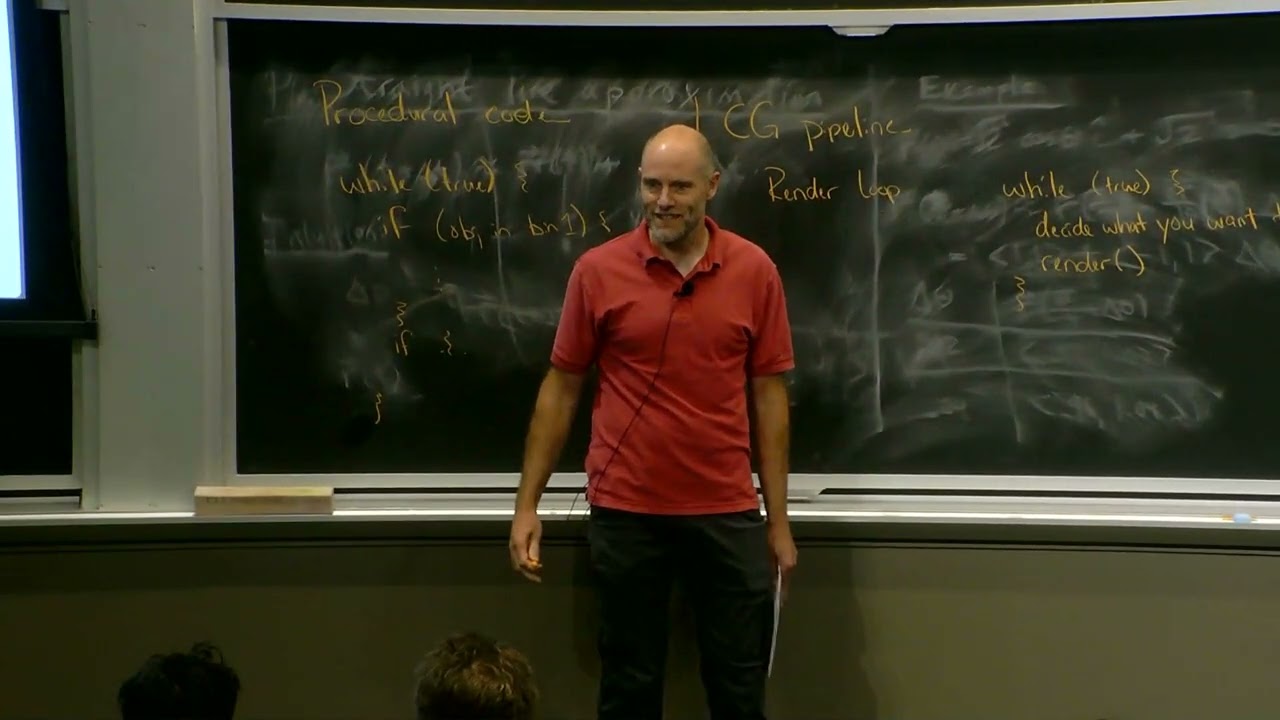
6.4210 Fall 2023 Lecture 10: Manipulation in Clutter- Programming Tasks
Keywords
Summary
157 words
Critical Evaluation
The lecture provides a solid introduction to task-level programming for robotics, a topic often overlooked in favor of low-level control. The instructor, Russ Tedrake, is a renowned expert in robotics, and his explanations are clear and grounded in practical experience. The content is well-structured, starting with a motivating example and then systematically presenting different programming paradigms. The discussion of finite state machines is particularly valuable, as it offers a concrete and implementable solution for coordinating complex behaviors. The lecture also touches on more advanced topics like behavior trees and task planning, giving students a roadmap for scaling up their approaches. However, the lecture is somewhat introductory and does not delve deeply into the mathematical formalisms or theoretical guarantees of task planning. The lack of explicit citations to external sources is a minor weakness, but the lecture’s pedagogical value is high. The adéquation between title and content is excellent, as the lecture directly addresses the programming of task-level behaviors. Overall, this is a high-quality educational resource that effectively bridges the gap between low-level control and high-level decision-making in robotics.
178 words
Title / Content Match
The title accurately describes the lecture's focus on programming task-level behaviors for manipulation in clutter.
Quality & Reliability
8/10
Lecture from MIT's Underactuated Robotics course, presented by an expert in the field. Content is technically rigorous, well-structured, and grounded in established robotics principles. However, it is a lecture, not peer-reviewed research, and lacks explicit citations to external sources.
Key Moments
Markers derived by PSI from the transcript: the creator did not define chapters.
- Introduction and administrative announcements about project proposals.
- Overview of the clutter-clearing simulation and the missing piece: task-level coordination.
- Contrast between procedural code and the render loop in computer graphics, illustrating the need for a different programming paradigm.
- Introduction of three approaches to task-level programming: separate processes, finite state machines, and task planning.
- Detailed explanation of the finite state machine used in the clutter-clearing example, including states for waiting, picking, and handling failures.
- Discussion of the 'go home' state for robustness and the limitations of finite state machines for complex systems.
- Introduction to task planning and its integration with online re-planning.
Contribution & Novelties
The lecture provides a clear and accessible introduction to task-level programming for robotics, using a concrete example to illustrate the concepts. It bridges the gap between low-level control and high-level decision-making, offering practical guidance on implementing finite state machines and discussing the trade-offs of different approaches.
Pour aller plus loin :
- Finite-state machine — Foundational concept for modeling discrete behavior.
- Behavior tree — Alternative to finite state machines for modular task-level control.
- Task planning — Overview of automated planning techniques used in robotics.
83 words
Radar Profile
The radar profile shows a balanced performance across all dimensions, with slightly higher scores in information quantity and technical level, reflecting the lecture's depth and structure. The overall quality is high, indicating a reliable educational resource.