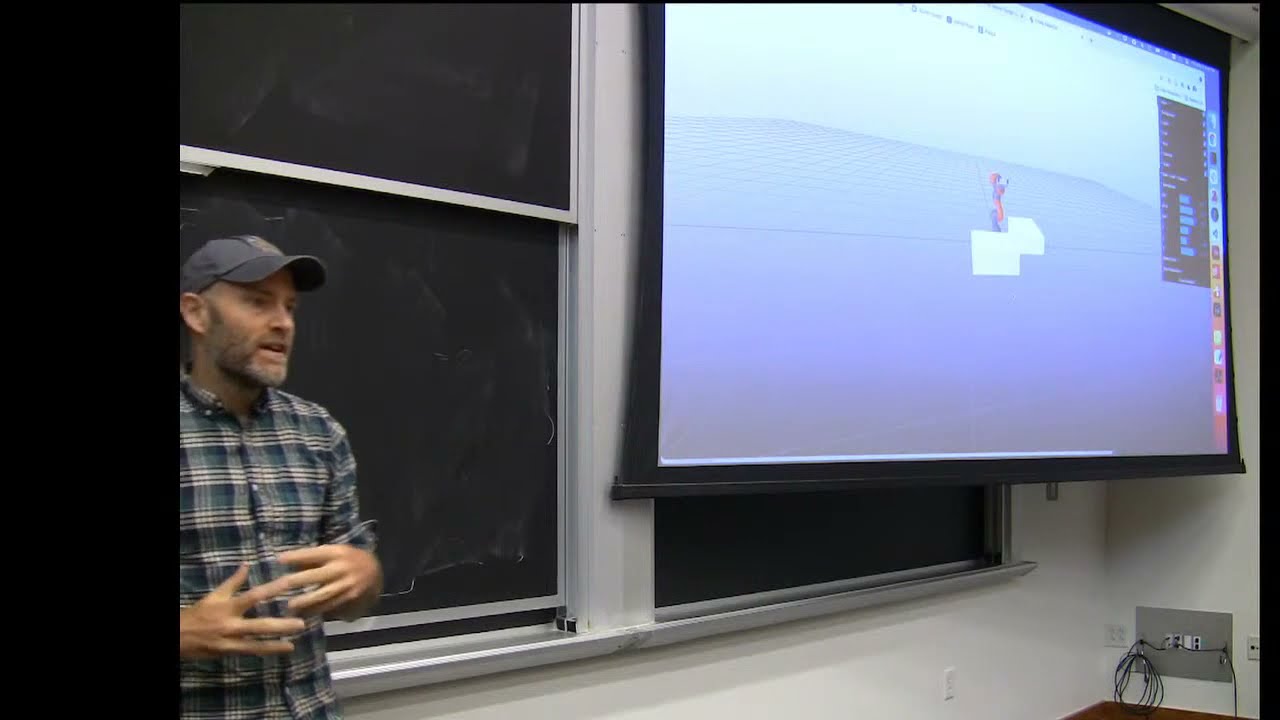
Lecture 1: MIT 6.800/6.843 Robotic Manipulation (Fall 2021) | "Anatomy of a manipulation system"
Keywords
Summary
181 words
Critical Evaluation
This lecture serves as an excellent introduction to the field of robotic manipulation, delivered by a recognized expert. The content is well-organized, progressing from administrative details to a conceptual overview of the course’s technical content. Tedrake’s emphasis on simulation as a key enabler for research and education is particularly timely and well-justified, given the recent advances in physics engines and rendering. The demonstration of the interactive simulation environment effectively illustrates the practical tools students will use. The lecture’s strength lies in its clear articulation of the course’s pedagogical approach: using dynamical systems as a unifying language for manipulation, spanning from low-level control to high-level planning. This provides a coherent framework that will help students connect disparate topics. The discussion of the field’s current state, including the challenges of reproducibility and the importance of clear communication, adds valuable context. However, the lecture is primarily an overview and does not delve deeply into any specific technical topic, which is appropriate for a first lecture. The reliance on the course website and interactive notes means that the lecture’s content is somewhat dependent on those resources, but they are well-designed and accessible. The instructor’s enthusiasm and clear teaching style enhance the learning experience. Overall, this is a high-quality lecture that sets a strong foundation for the course.
213 words
Title / Content Match
The title accurately reflects the content: the lecture provides an overview of the components and challenges of a robotic manipulation system.
Quality & Reliability
9/10
Lecture by a leading MIT professor, based on established course materials and interactive simulations. The content is well-structured and pedagogically sound, with a clear focus on the fundamentals of robotic manipulation. The presentation is rigorous and aligns with current research directions.
Key Moments
Markers derived by PSI from the transcript: the creator did not define chapters.
- Introduction and welcome; mention of TAs Rachel and Danny.
- Course logistics: 6.800 vs 6.843, communication intensive requirement, and use of Piazza.
- Overview of interactive lecture notes and the use of Deepnote for simulations.
- Demonstration of a browser-based physics simulation of a robot arm.
- Definition of manipulation and its importance in robotics.
- Discussion of the role of simulation in modern manipulation research.
- Introduction to the course's approach: using dynamical systems as a unifying framework.
- Preview of topics: kinematics, dynamics, planning, and learning.
- Emphasis on the final project and its role in the course.
- Conclusion and encouragement for students to explore the course website.
Cited Sources
- Course slides for Lecture 1 — Slides used during the lecture, providing visual aids and additional details.
Concurring Sources
- MIT OpenCourseWare: Underactuated Robotics — Related course materials that align with the lecture's themes of control and dynamics.
Contribution & Novelties
The lecture provides a comprehensive introduction to robotic manipulation, emphasizing the role of simulation and the use of dynamical systems as a unifying framework. It sets the stage for a course that integrates theory, simulation, and practical projects.
Pour aller plus loin :
- Robotic manipulation on Wikipedia — Provides a general overview of the field.
- Underactuated Robotics course — Related course by the same instructor, covering control and planning.
- Deepnote — The cloud-based notebook platform used for simulations.
78 words
Radar Profile
The radar profile shows high scores in information quality and reliability, reflecting the authoritative source and clear presentation. The technical level is moderate, suitable for an introductory lecture, while the quantity of information is substantial given the breadth of topics covered.