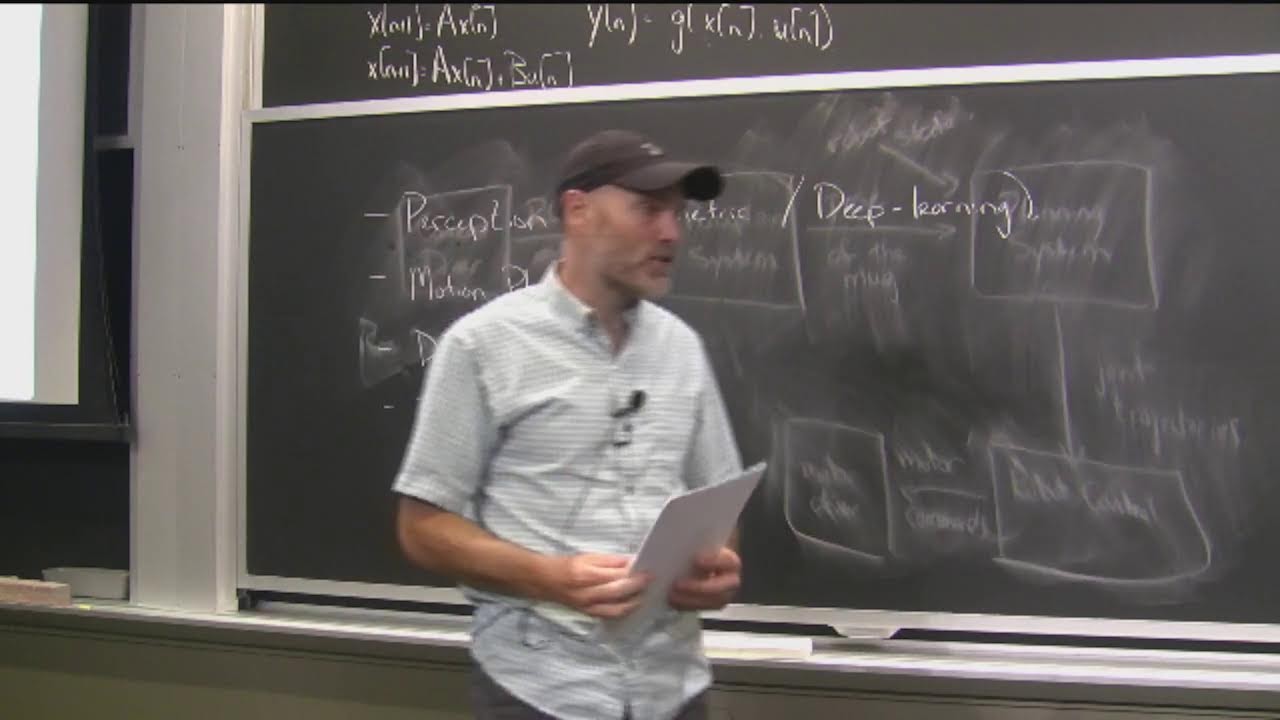
FALL 2023 6.4210/2 Lecture 1
Keywords
Summary
139 words
Critical Evaluation
The lecture provides a solid introduction to robotic manipulation, grounded in the expertise of Russ Tedrake, a prominent figure in the field. The content is well-organized, starting with course logistics and then delving into the conceptual foundations of manipulation. The use of Matt Mason’s definition as a starting point is appropriate, and the instructor’s expansion to include open-world and autonomous manipulation reflects current research trends. The emphasis on control theory is a distinctive perspective that adds value, as it bridges the gap between theoretical rigor and practical implementation. The interactive course notes are a notable strength, as they facilitate active learning and engagement. However, the lecture is primarily introductory and does not delve deeply into technical details, which is expected for a first lecture. The sources cited are limited to the course notes and a reference to Matt Mason’s review, but no specific publications are mentioned. The instructor’s affiliation with Toyota Research Institute adds credibility, but the examples shown are not described in detail. Overall, the lecture is informative and sets a strong foundation for the course, but it lacks the depth and critical analysis that would be present in a research seminar. The adéquation between title and content is excellent, as the lecture clearly fulfills its role as the first session of the course. The public comments are not provided, so no analysis of audience reception is possible.
229 words
Title / Content Match
The title accurately reflects the content: it is the first lecture of a course on robotic manipulation.
Quality & Reliability
8/10
The lecture is given by a recognized expert in robotics (Russ Tedrake) and is part of an MIT course. The content is well-structured, references established definitions (e.g., Matt Mason's definition of manipulation), and includes interactive course notes. However, it is primarily an introductory lecture with limited depth and no peer-reviewed sources cited directly.
Key Moments
Markers derived by PSI from the transcript: the creator did not define chapters.
- Introduction and welcome; course logistics overview.
- Discussion of course structure, including undergraduate and graduate tracks, and communication-intensive component.
- Overview of course website, interactive lecture notes, and problem sets.
- Introduction to the concept of manipulation; Matt Mason's definitions.
- Expansion of manipulation to open-world and autonomous scenarios; examples from Toyota Research Institute.
- Discussion of the importance of control theory in manipulation; course goals.
- Demonstration of interactive course notes and simulation tools.
- Further examples of manipulation systems and challenges.
- Q&A and closing remarks.
Cited Sources
- Course slides — The instructor refers to these slides during the lecture for visual aids and interactive content.
Concurring Sources
- MIT OpenCourseWare — MIT's open courseware platform often hosts similar course materials, supporting the educational approach.
Dissenting Sources
- No discordant sources found — No sources contradicting the lecture's content were identified.
Contribution & Novelties
The lecture provides a fresh perspective on robotic manipulation by emphasizing the integration of control theory with modern autonomy and open-world challenges. It introduces the concept of manipulation as ‘control of the environment through selective contact’ and expands it to include long-term task planning and perception. The interactive course notes are an innovative educational tool.
Pour aller plus loin :
- Robotic Manipulation: Perception, Planning, and Control — The course website with interactive notes and resources.
- Matt Mason’s review on manipulation — A comprehensive review of robotic manipulation definitions and research.
- Toyota Research Institute — The institute where the instructor works, known for advanced robotics research.
105 words
Radar Profile
The radar profile shows high scores in quality and reliability, reflecting the expert instructor and structured content. The quantity of information is moderate, typical for an introductory lecture, and the technical level is appropriate for a university course. The overall profile indicates a solid educational resource.