Bochum - In-Person Talk (No Q&A) - Wang: Development of Beliefs & Beliefs of Development
Keywords
Summary
160 words
Critical Evaluation
Value of the Information & Strength of the Argument
The talk provides valuable insights into intuitive theories of mind and development, using a combination of behavioral tasks and surveys. The argumentation is solid, with multiple experiments and replications across different populations. The speaker acknowledges limitations and invites criticism, demonstrating scientific rigor. The findings challenge the assumption that people are intuitive nativists, suggesting instead a pervasive intuitive empiricism.
Scientific Rigor, Source Quality, Title Accuracy
The talk is scientifically rigorous, with clear methodology and replication. However, specific sources are not cited in the talk, and the description provides no links. The title accurately reflects the content. The speaker mentions collaborations and prior work but does not provide detailed references. The lack of explicit citations limits the verifiability of the claims.
128 words
Title / Content Match
The title accurately reflects the content: the talk focuses on the development of beliefs about mental capacities and how these beliefs develop.
Quality & Reliability
7/10
The talk presents original research findings from a developmental psychologist, with clear methodology and replication across cultures. However, it is a conference presentation without peer-reviewed publication details, and some claims are based on unpublished data.
Key Moments
Markers derived by PSI from the transcript: the creator did not define chapters.
- Introduction and overview of the talk's focus on beliefs about mental capacities.
- Discussion of the 'mindreading superpower' and the nature-nurture question.
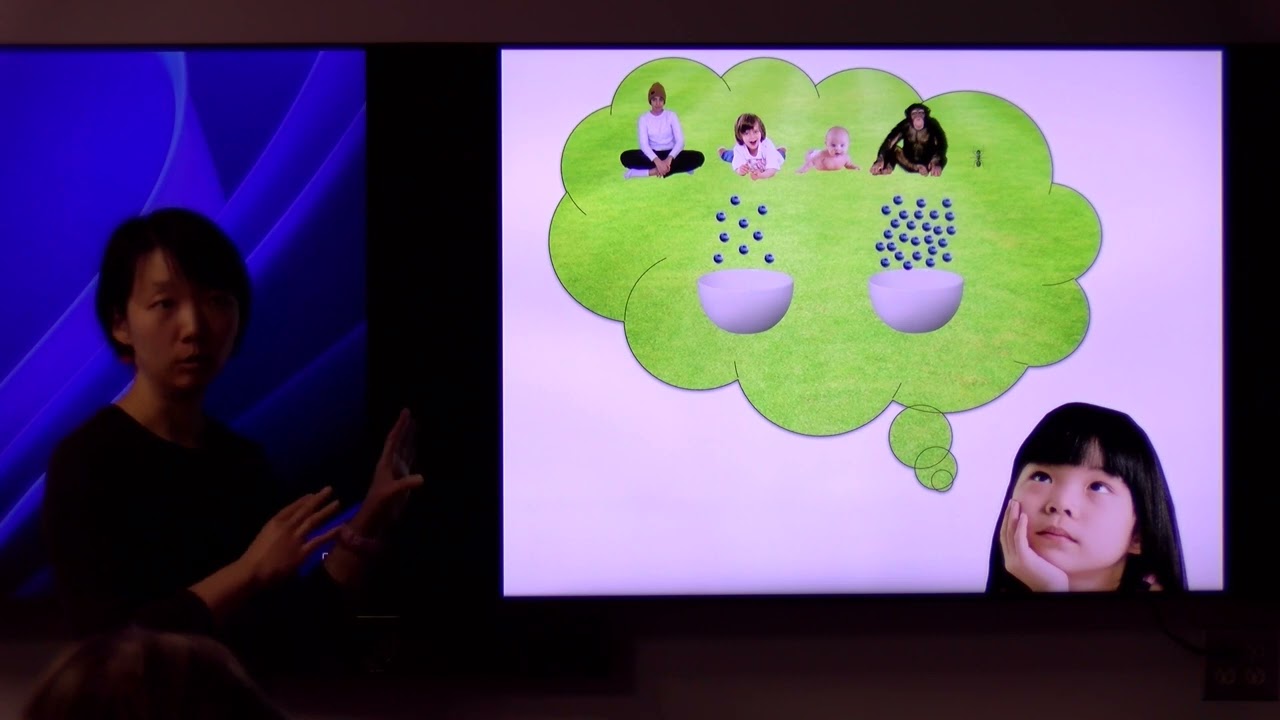
- Presentation of behavioral tasks used to study quantity discrimination across species.
- Results showing adults' predictions align with empirical data, except for ants.
- Children's predictions differ, underestimating apes and infants.
- Introduction to core knowledge theory and its relevance to intuitive beliefs.
- Studies on when people think abilities emerge, showing overestimation and preference for learning.
- Replications across cultures and with children and scientists.
- Bottom-up factor analysis revealing a two-dimensional structure of beliefs about development.
- Discussion of the structure's specificity to human development and relation to nature-nurture.
Contribution & Novelties
The talk contributes novel findings on intuitive theories of development, showing a pervasive empiricist bias across cultures and ages. It also introduces a bottom-up approach to map the structure of these beliefs, revealing a two-dimensional space that may reflect a natural framework. This challenges existing frameworks and opens avenues for further research.
Pour aller plus loin :
- Core knowledge theory — Provides background on the theory mentioned in the talk.
- Theory of mind — Relevant to the ‘mindreading’ superpower discussed.
- Nature versus nurture — Central to the talk’s theme.
89 words
Radar Profile
The radar profile shows high scores in quality of information and fiabilite, with moderate scores in quantity and technical level. This indicates a well-argued and reliable presentation, though not extremely technical or information-dense.