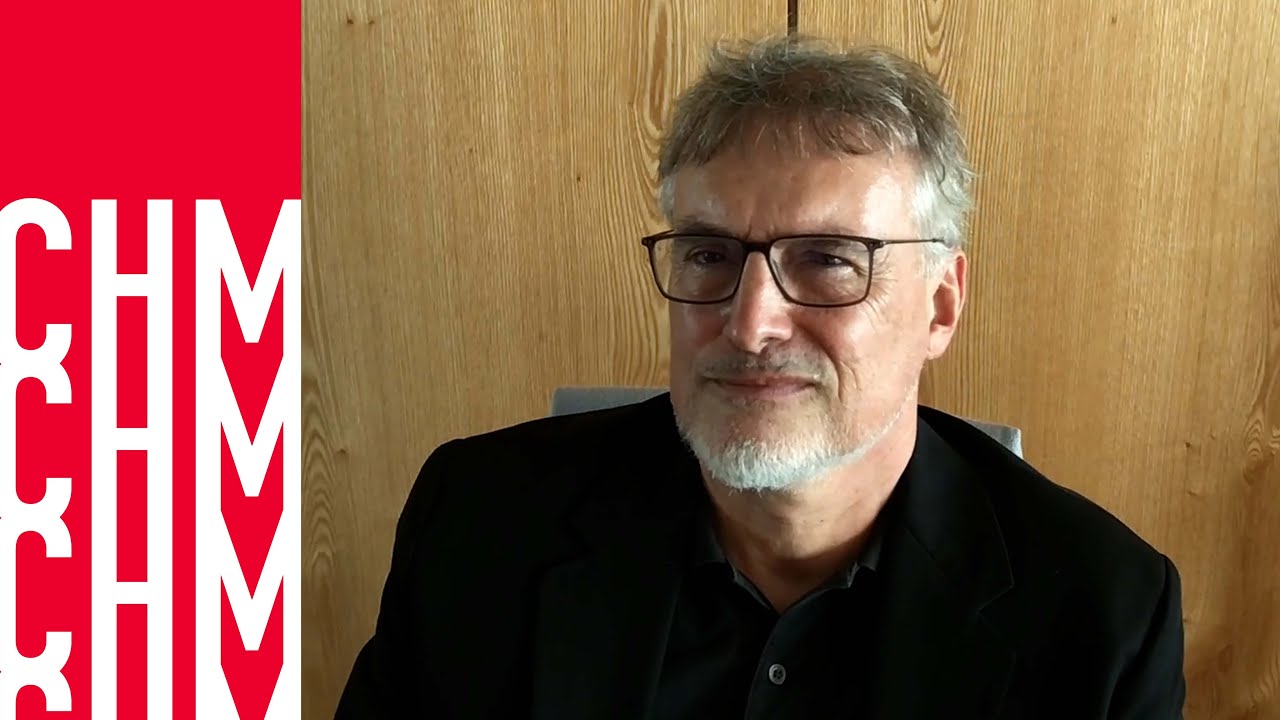
Jürgen Schmidhuber on Robotics, World Models, and NNAISENSE (Oral History Pt. 2)
Keywords
Summary
136 words
Critical Evaluation
The interview offers a valuable first-hand account of the development of recurrent neural networks and their theoretical advantages over transformers. Schmidhuber’s arguments are technically sound, drawing on well-established concepts in computation theory and his own published research. He effectively illustrates the limitations of transformers in tasks requiring systematic generalization, such as parity and context-free language recognition, and provides concrete examples. The historical context he provides, including his early work on attention and self-supervised pre-training, is a significant contribution to the understanding of AI’s evolution. However, the discussion is largely based on his personal opinions and retrospective interpretations, which may be subject to bias. While he references his own papers, he does not provide external validation or discuss potential counterarguments in depth. The interview also touches on speculative topics like self-replicating robots and galaxy exploration, which are more visionary than empirically grounded. Overall, the content is informative and thought-provoking, but it should be viewed as an expert’s perspective rather than a comprehensive, balanced review. The title accurately reflects the content, and the interview maintains a high level of technical rigor throughout.
180 words
Title / Content Match
The title accurately reflects the content, focusing on robotics, world models, and NNAISENSE, with a broader discussion of recurrent networks and AI history.
Quality & Reliability
8/10
Interview with a leading AI researcher, providing historical context and technical insights. Claims are generally well-supported by references to his own published work, though some statements are opinionated and not peer-reviewed in this context.
Key Moments
Markers derived by PSI from the transcript: the creator did not define chapters.
- Introduction and question about LSTMs vs transformers.
- Discussion on linear vs quadratic scaling of RNNs and transformers.
- Explanation of recurrent networks as general-purpose computers, with examples of context-free languages.
- Parity problem example illustrating the difficulty for transformers.
- Historical overview of attention mechanisms, referencing 1991 and 1993 work.
- Discussion on self-supervised pre-training in 1991 and its resurgence.
- Introduction to NNAISENSE and its focus on robotics and physical world AI.
- Industrial applications, including 3D printing of metals.
- Belief in world models and recurrent networks for robotics.
- Vision of self-replicating robots exploring the universe.
Cited Sources
- Computer History Museum Oral History Collection — Transcript and additional information about the interview.
Concurring Sources
- LSTM paper (Hochreiter & Schmidhuber, 1997) — Original paper introducing LSTM, supporting claims about recurrent network capabilities.
- World Models (Ha & Schmidhuber, 2018) — Paper on world models, aligning with Schmidhuber's discussion of world models in robotics.
Dissenting Sources
- Attention Is All You Need (Vaswani et al., 2017) — The transformer paper, which Schmidhuber criticizes for its limitations, but which has been highly influential and successful in practice.
Contribution & Novelties
The interview provides a unique insider perspective on the historical development of recurrent neural networks and attention mechanisms, clarifying misconceptions about the origins of these ideas. It also offers insights into the practical applications of AI in robotics through NNAISENSE, and presents a bold vision for the future of AI in space exploration.
Pour aller plus loin :
- LSTM paper (Hochreiter & Schmidhuber, 1997) — Original paper introducing LSTM.
- Attention and Augmented Recurrent Neural Networks (distill.pub) — Overview of attention mechanisms in RNNs.
- World Models (Ha & Schmidhuber, 2018) — Paper on world models for reinforcement learning.
- NNAISENSE official website — Company focused on AI for the physical world.
- Self-replicating robots concept — Wikipedia article on self-replicating machines.
118 words
Radar Profile
The radar profile shows high scores in information quantity, quality, and technical level, with a slightly lower but still strong reliability score. This indicates a content-rich and technically deep interview, though the reliability is somewhat tempered by the subjective nature of the expert's opinions.