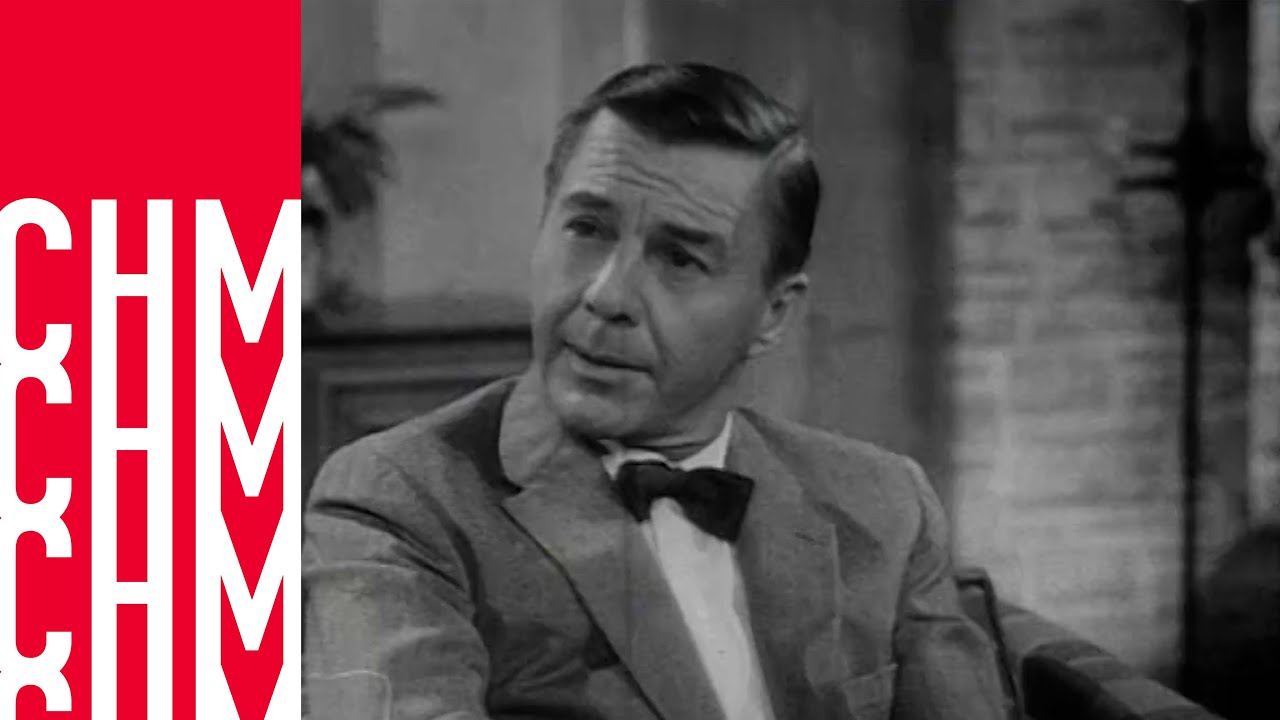
The Thinking Machine
Keywords
Summary
177 words
Critical Evaluation
The documentary offers a valuable historical perspective on the early days of artificial intelligence, capturing the optimism and open questions of the era. Its primary strength lies in its authentic portrayal of pioneering AI research, featuring prominent figures like Jerome Wiesner, Herbert Simon, and Arthur Samuel. The demonstrations of pattern recognition and problem-solving are groundbreaking for their time and effectively illustrate the core concepts of machine learning and heuristic search. The discussion of whether machines can think is intellectually honest, acknowledging the lack of understanding of human thought processes while showcasing the capabilities of computers. However, the content is necessarily dated; the technology and terminology are from 1961, and the explanations are simplified for a general audience. The documentary does not delve into the limitations or potential negative consequences of AI, reflecting the era’s prevailing enthusiasm. The sources cited are primarily the researchers themselves and their work, which lends credibility but also potential bias. The title accurately reflects the content, and the documentary serves as an excellent educational resource for understanding the historical roots of AI. The absence of modern context is a minor drawback, but as a historical artifact, it is highly valuable. The production quality is typical of early television, with clear narration and demonstrations. Overall, the documentary is a reliable and insightful look at the foundations of AI, though viewers should supplement it with contemporary sources for a complete picture.
233 words
Title / Content Match
The title accurately reflects the content, which explores the concept of thinking machines and early AI research.
Quality & Reliability
8/10
The video is a 1961 CBS documentary episode, preserved by the Computer History Museum and MIT Museum. It features interviews with MIT professor Jerome Wiesner and demonstrations of early AI research, including pattern recognition and problem-solving. The content is historically accurate and representative of the state of AI in 1961, but it is not a peer-reviewed source and reflects the perspectives of that era.
Key Moments
Markers derived by PSI from the transcript: the creator did not define chapters.
- Introduction to the program and the question of whether machines can think.
- Discussion with Professor Jerome Wiesner about the possibility of thinking machines.
- Demonstration of a child learning the alphabet, contrasting with computer learning.
- Computer demonstration of learning to recognize letters W and P.
- Explanation of computer programming and the concept of a program.
- Herbert Simon discusses the missionaries and cannibals problem and computer problem-solving.
- Computer solves the missionaries and cannibals problem, comparing with human solution.
- Demonstration of a checkers-playing program by Arthur Samuel.
- Wiesner explains the basics of computer hardware and programming.
- Discussion of similarities and differences between computers and the nervous system.
Cited Sources
- MIT Museum — Provided the footage for the documentary.
Concurring Sources
- Computer History Museum — The channel hosting the video, dedicated to preserving computing history.
Contribution & Novelties
This documentary provides a unique historical record of early AI research, showcasing demonstrations and interviews that are not widely available. It offers insight into the thinking of pioneers like Jerome Wiesner, Herbert Simon, and Arthur Samuel, and illustrates the state of the art in 1961. The program’s exploration of machine learning, pattern recognition, and problem-solving remains relevant to contemporary AI discussions.
Pour aller plus loin :
- History of artificial intelligence — Provides context and timeline of AI development.
- Arthur Samuel — Pioneer of machine learning, known for the checkers program.
- Herbert A. Simon — Nobel laureate and AI researcher, contributed to problem-solving theories.
103 words
Radar Profile
The radar profile shows high scores in quality of information and reliability, reflecting the documentary's historical authenticity and credible sources. The quantity of information is moderate, and the technical level is accessible, making it suitable for a general audience interested in AI history.
💬 No comments were provided for analysis.